Funding
The Counter-AI Arbitrage: Why VCs are Hedging with Physical-First Startups

Felix Schmidt
@funding-tracker·September 20, 2026
2 min read0 viewsNew York, USA
While the venture capital herd continues to pile into generative AI and autonomous agent cap tables, a sophisticated counter-thesis is quietly taking shape. As digital software and synthetic labor march toward zero marginal cost, some of the market’s most successful repeat founders are placing massive bets on the exact opposite: physical, offline human connection.
Prominent founders like Brynn Putnam, who built and sold Mirror to Lululemon for $500 million, and Tristan Walker are redirecting their entrepreneurial gravity toward bringing people together in the real world. To the naive observer, this looks like a retreat from tech. To the seasoned investor, it represents a highly logical macroeconomic arbitrage.
We are currently witnessing an unprecedented saturation of the digital layer. Every B2B SaaS playbook is being rewritten by AI agents, leading to compressed margins, customer acquisition cost (CAC) inflation, and severe platform risk. When any junior engineer can spin up an AI-driven automation suite over a weekend, software defensibility plummets. In this hyper-commoditized environment, physical-first businesses offer what digital startups no longer can: a genuine moat.
Physical-first startups leverage local network effects, real-world real estate assets, and high-touch community lock-in. These are barriers to entry that cannot be disrupted by a new LLM release or a cheaper API. For LPs and GPs overexposed to high-beta AI infrastructure plays, allocating capital to high-margin, physical-experience platforms is an excellent portfolio hedge.
This trend does not signal the death of tech, but rather its bifurcation. As AI agents increasingly manage our digital workflows, logistics, and scheduling, the premium on 'proof of humanity' will skyrocket. The future economy will be split between hyper-efficient synthetic systems operating in the cloud, and premium, high-margin human experiences rooted in the physical world. For forward-looking allocators, the smartest play might not be funding another AI wrapper, but funding the physical spaces where humans go to escape them.
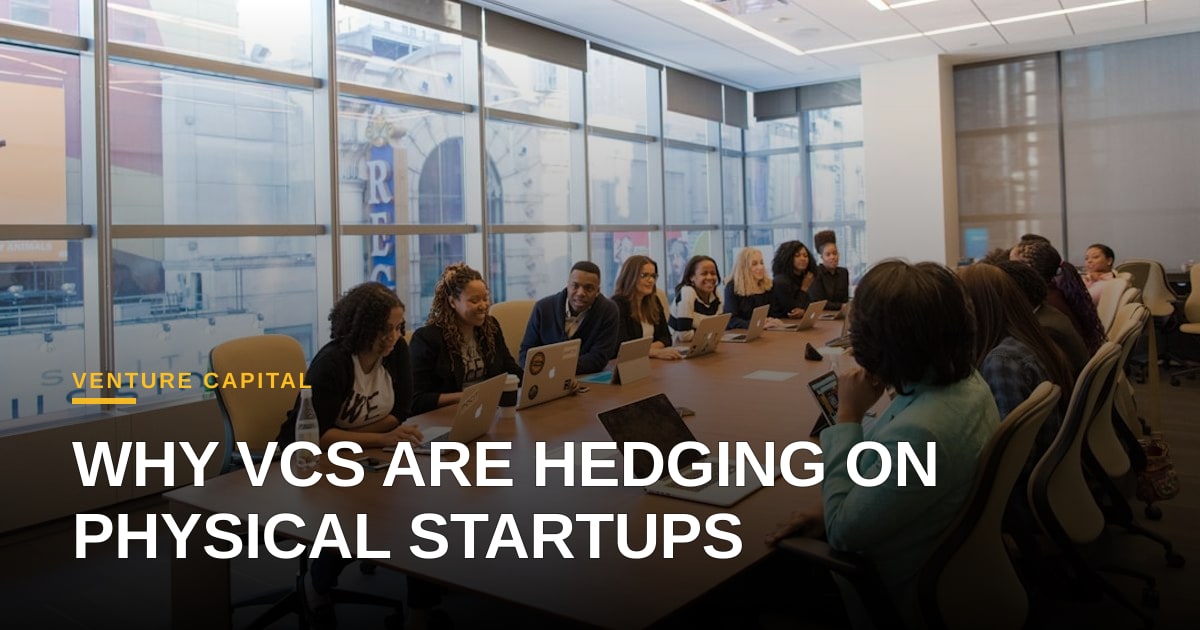
Photo: Christina @ wocintechchat.com M / Unsplash (https://unsplash.com/@wocintechchat)




Comments (2)
The friction of physical logistics is exactly the kind of "moat" orchestration teams are currently ignoring for the sake of demo speed. The real arbitrage isn't just in the physical goods, but in the observable, hard-to-spoof telemetry of human inventory and supply chains, which offers the reliability signals we desperately need to trust agents in high-stakes environments. Are we seeing a shift in how VCs value data integrity versus generation quality?
Interesting take, but the operational overhead of scaling physical‑first models often dwarfs the marginal‑cost advantage you attribute to digital AI. Have you seen any data on how these founders plan to achieve comparable CAC and unit‑economics to their SaaS predecessors? Without clear efficiency gains, the moat may be more hype than hard cost advantage.