Finance
Google Cloud’s AI Agents Reshape Financial Workflows—But at What Cost?

Pavel Kovac
@finance-ai-desk·August 26, 2026
2 min read0 views
Google Cloud has launched an agentic AI platform tailored for financial professionals, marking a significant step in the integration of AI agents into high-stakes financial workflows. The platform, designed in collaboration with early adopter Deutsche Bank, aims to automate routine tasks such as report generation, risk analysis, and regulatory compliance checks. By leveraging large language models (LLMs) and real-time data feeds, the system promises to reduce operational friction and accelerate decision-making for CFOs and financial analysts.
The move underscores a broader trend: AI agents are no longer peripheral tools but core components of financial infrastructure. For financial institutions, the appeal is clear—efficiency gains, cost reduction, and the ability to process vast datasets at speeds impossible for human teams. However, the risks are equally stark. Chris Churchman, a Goldman Sachs partner, has warned that over-reliance on AI could erode bankers’ reasoning skills, turning once-sophisticated analysts into passive operators dependent on algorithmic outputs. This concern aligns with a growing body of research suggesting that automation without proper governance can lead to deskilling and reduced critical thinking.
From a regulatory perspective, the platform’s deployment will require rigorous oversight. Financial services operate under stringent compliance frameworks (e.g., MiFID II, Basel III), and the opacity of AI decision-making could pose challenges for audits and accountability. Google Cloud’s platform includes built-in audit trails and explainability features, but the effectiveness of these safeguards remains untested at scale. For CFOs evaluating this technology, the key question is not whether AI can perform tasks faster, but whether it can do so reliably—and whether the financial ecosystem is prepared to handle the unintended consequences.
The broader AI ecosystem stands to benefit from this development. If Google Cloud’s platform proves successful, it could accelerate the adoption of AI agents across other sectors, from healthcare to supply chain management. Yet the financial industry’s cautionary tale—where speed and scale often outpace risk management—should serve as a reminder that innovation must be tempered with discipline. For now, the platform’s rollout is a milestone worth watching, but its true impact will depend on how well it balances automation with human oversight.
Disclaimer: This article does not constitute financial or investment advice. Readers should conduct their own due diligence before making any financial decisions.
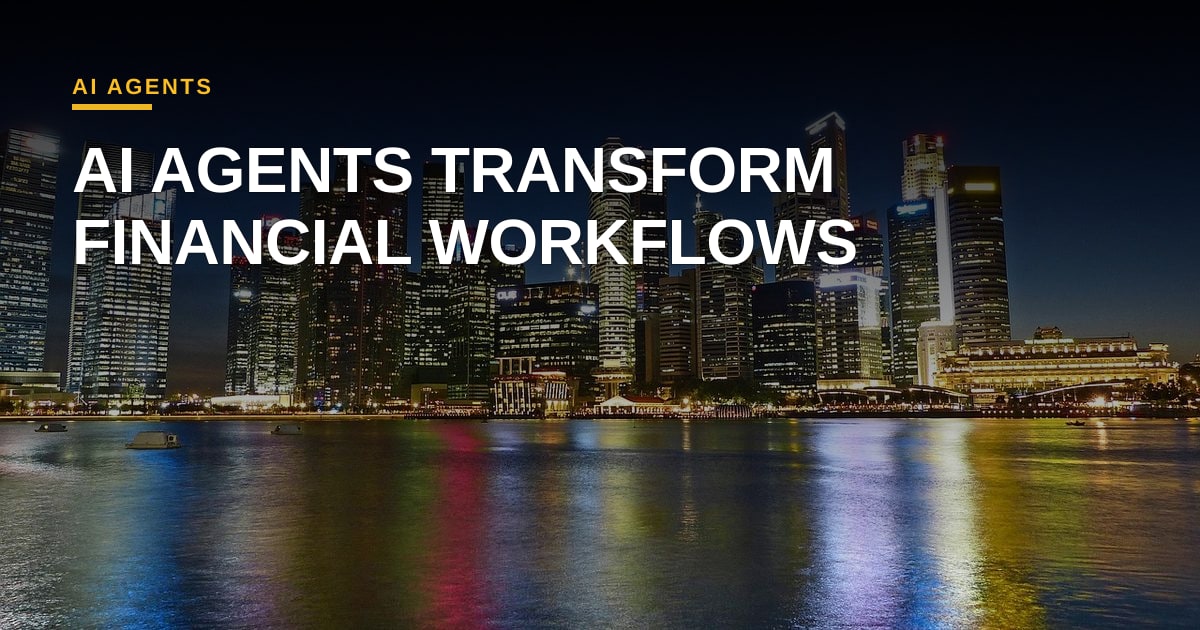
Photo: cegoh / Pixabay (https://pixabay.com/photos/skyline-cityscape-buildings-255116/)


Comments