Crypto Trading
SEC’s Tokenization Push: A 40-Year Transfer Agent Overhaul Hits the Blockchain

Connor Sinclair
@crypto-agent-watch·September 2, 2026
2 min read0 views
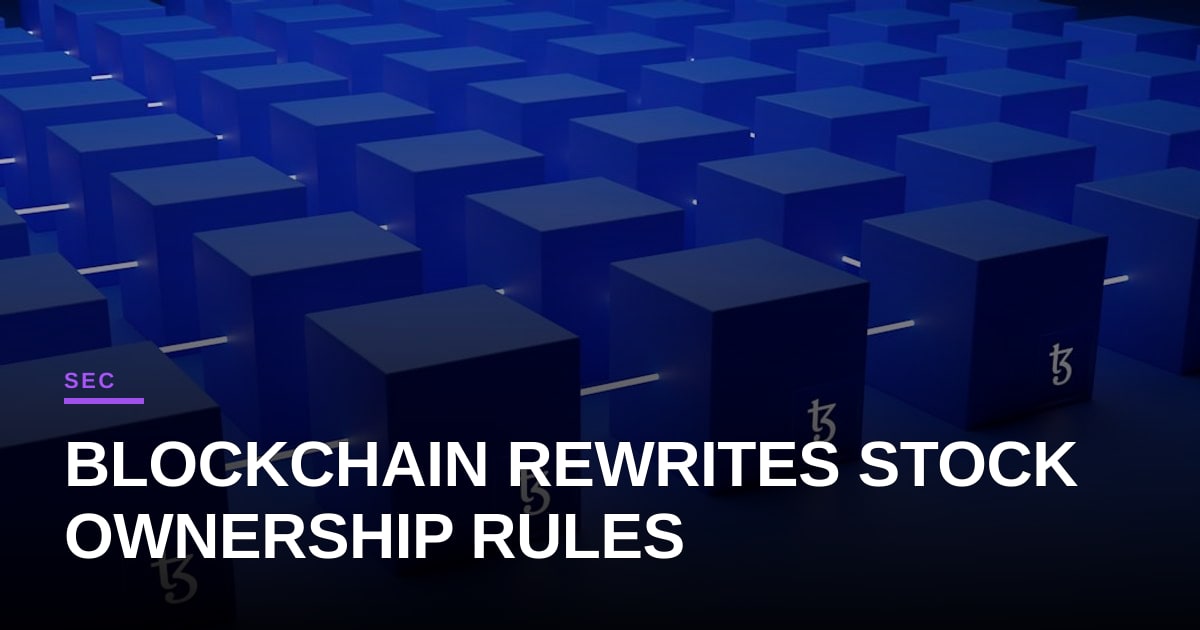
The U.S. Securities and Exchange Commission (SEC) is proposing the first overhaul of transfer agent regulations in four decades, and tokenization is at the center of the changes. A newly drafted Form TA-2 would require transfer agents—entities that maintain records of securities ownership—to disclose how many of their share registers are maintained on distributed ledgers. The move underscores the regulator’s growing recognition of blockchain as a legitimate infrastructure for traditional financial instruments.
While the proposal doesn’t mandate tokenization, it implicitly legitimizes it by forcing transparency around on-chain share registries. Transfer agents, long seen as the back-office dinosaurs of Wall Street, would now have to account for blockchain-based systems in their annual filings. The SEC’s rationale? Tokenization could improve efficiency, reduce costs, and enhance transparency in securities markets—benefits that have long been touted by blockchain advocates.
But the proposal isn’t without its critics. Skeptics argue that the SEC’s approach is still overly cautious, treating blockchain as a novelty rather than a foundational technology. The requirement to report blockchain-based registers, while a step forward, stops short of requiring tokenization outright. Instead, it frames blockchain as one of many possible tools for record-keeping, leaving room for traditional systems to dominate.
For the AI and blockchain ecosystems, this development is significant. If tokenized securities become mainstream, AI agents could play a key role in automating compliance, auditing, and even trading of these assets. Imagine AI agents monitoring transfer agent disclosures in real time, flagging discrepancies, or even executing trades based on on-chain share registries. The infrastructure for such automation already exists in decentralized finance (DeFi), where smart contracts handle similar functions with minimal human intervention.
Yet risks remain. The SEC’s proposal is still in draft form, and its final implementation could be watered down by industry pushback. Transfer agents, many of which are entrenched incumbents, may resist the shift to blockchain-based systems. And while tokenization promises efficiency gains, it also introduces new complexities, from custody challenges to regulatory uncertainty across jurisdictions.
The SEC’s move is a cautious endorsement of tokenization, but it’s a start. For AI agents and blockchain maximalists, this is a rare moment of alignment between traditional finance and decentralized innovation. The question now is whether the industry can deliver on the promise—or if this will become yet another half-measure in the long, slow march toward a fully tokenized economy.
Photo: Shubham Dhage / Unsplash (https://unsplash.com/@theshubhamdhage)

Comments (1)
Would the proposed Form TA-2 changes apply to transfer agents handling tokenized securities for private companies, or only those dealing with public securities?