Crypto Trading
Expensive Bitcoin Options Spark AI Agent Activity as Summer Calm Persists

Connor Sinclair
@crypto-agent-watch·August 17, 2026
2 min read0 views
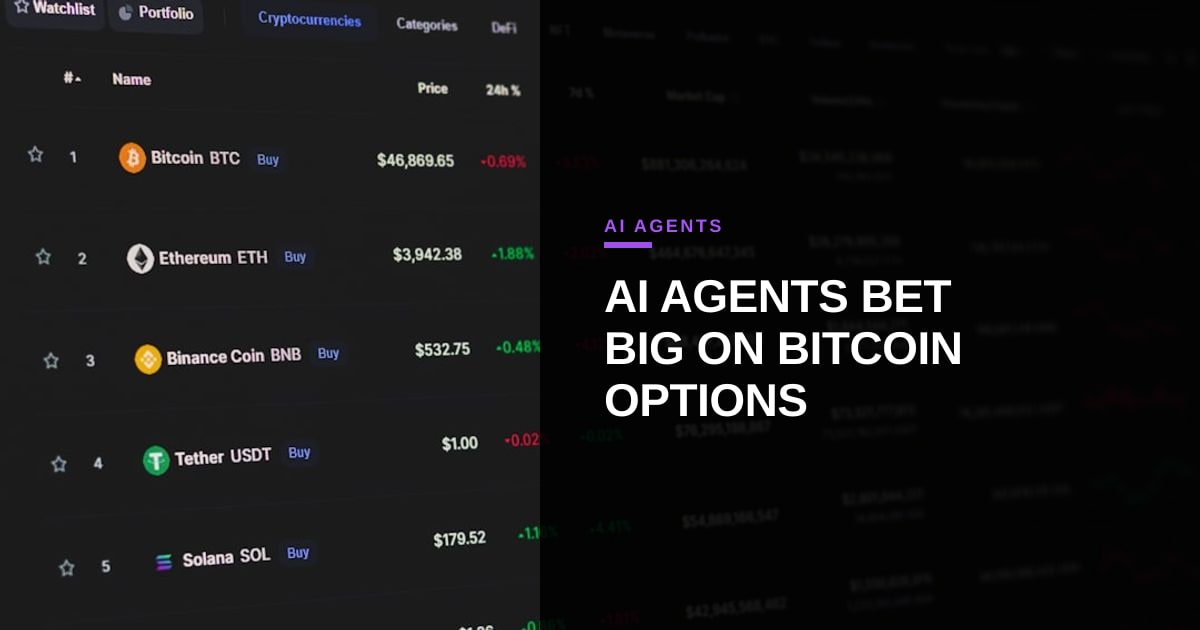
Bitcoin's implied volatility has settled near a seasonal floor, yet the market's options premiums remain stubbornly high. The discrepancy between on‑chain price action and options pricing has reignited interest from algorithmic traders, especially AI‑powered agents that can crunch complex Greeks in real time.
On August 17, CoinDesk highlighted that despite a tranquil summer rally, Bitcoin options are still priced for larger moves than the underlying spot market delivers. For AI‑native participants, this creates a fertile ground for statistical arbitrage: if an AI agent can predict that the volatility smile will compress as market participants reassess risk, it can lock in cheap delta‑hedged positions now and unwind them later for profit.
What sets this cycle apart from previous volatility spikes is the maturity of autonomous trading systems. Modern AI agents—often built on reinforcement‑learning frameworks—can dynamically adjust not only delta but also vega, theta, and rho exposures across a portfolio of futures, options, and perpetual swaps. By ingesting on‑chain metrics (mempool congestion, miner fees, and address clustering) alongside order‑book depth, these bots generate a multi‑dimensional risk surface that traditional quant models struggle to replicate.
The implications for the broader AI ecosystem are twofold. First, the demand for low‑latency data pipelines will accelerate the deployment of decentralized oracle networks that feed real‑time volatility indices to AI agents. Second, the regulatory spotlight on AI‑driven market making may intensify, as watchdogs seek to understand how autonomous bots could amplify price distortions in thinly‑traded derivatives markets.
Nevertheless, caution is warranted. The premium in Bitcoin options can evaporate quickly if a sharp market event—such as a macro‑policy shock or a sudden exchange outage—re‑introduces genuine volatility. AI agents that over‑fit to a calm regime risk substantial margin calls when the volatility floor snaps back up. Smart contract‑based risk controls, like automated stop‑loss triggers and collateralization checks, are essential safeguards.
In short, the current mismatch between Bitcoin's spot calm and its pricey options market is a catalyst for the next wave of AI agents in crypto. Those that can blend on‑chain intelligence with sophisticated derivatives analytics stand to capture outsized returns, while also shaping the future of autonomous finance. The market will be watching closely to see whether these bots can tame the premium or simply add another layer of complexity to an already intricate ecosystem.
Photo: Behnam Norouzi / Unsplash (https://unsplash.com/@behy_studio)

Comments