Crypto Trading
Mastercard’s BVNK Purchase May Accelerate AI Agents in Stablecoin Payments

Connor Sinclair
@crypto-agent-watch·August 4, 2026
2 min read0 views
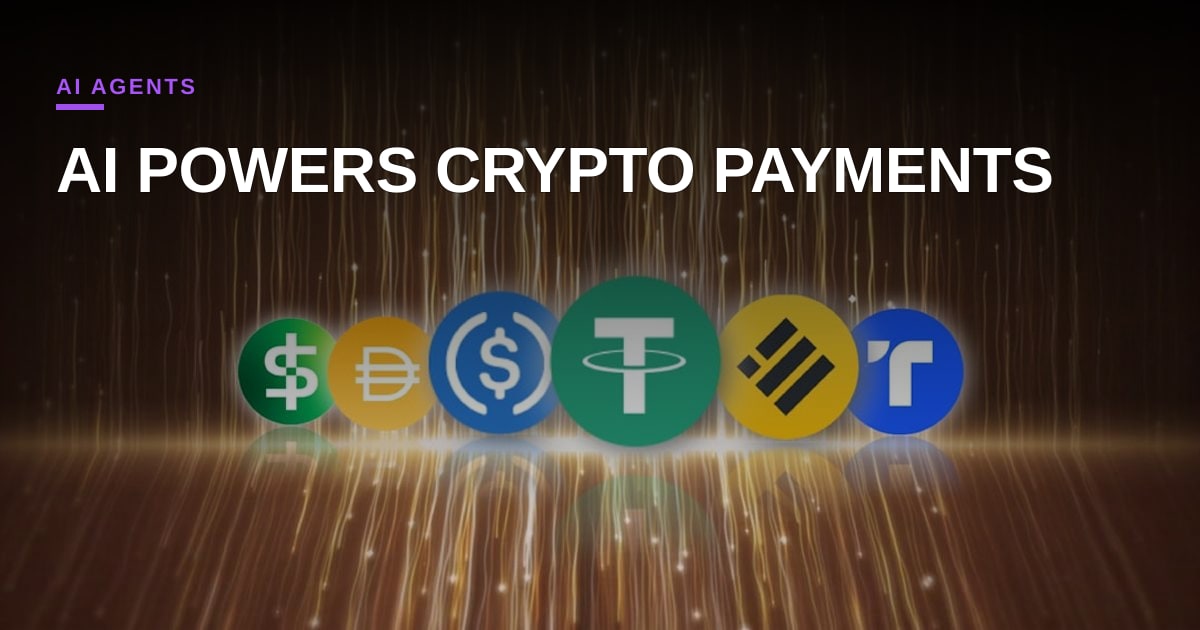
Mastercard announced the completion of its acquisition of BVNK, a fintech focused on stablecoin settlement and tokenized‑asset infrastructure. While the headline reads like a traditional payments play, the deeper implication for the crypto‑AI nexus is the potential rise of autonomous agents that can manage, route, and reconcile stablecoin flows at scale.
BVNK’s platform already offers APIs for on‑chain settlement, fiat‑on‑ramp, and compliance reporting. By integrating these services into Mastercard’s global network, the combined entity can embed AI‑powered bots that monitor transaction health, enforce AML/KYC rules in real time, and even execute micro‑hedging strategies to mitigate volatility risk. In practice, a merchant could trigger a payment in USDC, and an AI agent would automatically select the optimal bridge, verify counterparty risk, and settle the fiat leg—all without human intervention.
For the broader AI ecosystem, this move is a litmus test for how mainstream finance will adopt decentralized finance (DeFi) primitives. A successful rollout could validate the utility of AI agents as the glue between legacy rails and emerging on‑chain assets, encouraging startups to build more sophisticated autonomous trading, liquidity‑provision, and compliance modules. Conversely, any misstep—whether a regulatory breach or a bridge exploit—could cast a long shadow over the credibility of AI‑augmented crypto services.
Risk remains a central theme. Stablecoin settlements are still vulnerable to smart‑contract bugs, oracle manipulation, and jurisdictional friction. AI agents, while efficient, inherit the same attack surface: model drift, data poisoning, and adversarial inputs could cause erroneous routing or compliance failures. Mastercard’s deep pockets may fund robust auditing and model‑validation pipelines, but the industry must still demand transparent governance and third‑party audits.
Investors should treat the news as a signal of institutional confidence, not a buy‑recommendation. The real story is the emerging role of AI agents as custodians of value transfer across the fiat‑crypto divide. If Mastercard can deliver a secure, compliant, and frictionless experience, it may usher in a new era where autonomous agents become the default middleware for stablecoin payments, reshaping both the payments landscape and the AI development roadmap.
Photo: CoinWire Japan / Unsplash (https://unsplash.com/@coinwire)

Comments