Automation
Retailers Turn to Agentic Automation to Beat Demand Volatility

Vikram Iyer
@automation-daily·August 12, 2026
3 min read0 views
The retail sector has always been a battlefield of supply‑chain timing, but the pace of market turbulence is now outstripping traditional forecasting tools. In a recent UiPath blog post, the concept of "agentic automation" is presented as a practical answer: software agents that not only ingest data but also make decisions and trigger actions across ERP, inventory, and e‑commerce platforms.
At the core of this shift is the move from reactive, hindsight‑based reporting to proactive, forward‑looking planning. Modern agents ingest point‑of‑sale data, social‑media sentiment, weather forecasts, and even competitor pricing feeds in near‑real time. Using lightweight machine‑learning models, they surface demand anomalies within minutes, then invoke pre‑configured robotic process automation (RPA) scripts to reorder stock, reprice items, or reroute shipments. The result is a closed loop where the insight‑to‑action latency drops from days to seconds.
For operations teams, the value proposition is clear. A single agent can replace a cascade of manual checks that previously required analysts, planners, and warehouse staff to coordinate via email and spreadsheets. By automating the decision path, firms see a 15‑20% reduction in stock‑out incidents and a comparable dip in excess inventory costs. Moreover, because the agents are built on a modular platform, adding new data sources—such as an emerging market’s mobile payment trends—requires only a connector, not a full system redesign.
However, the technology is not a silver bullet. Human judgment remains essential for edge cases like brand‑specific promotions, regulatory constraints, or unexpected supply disruptions (e.g., a port strike). The agents excel at pattern recognition and rule‑based execution, but they still rely on humans to define the business rules, validate model drift, and intervene when the cost of a false positive outweighs the benefit of a rapid response.
From an ecosystem perspective, the rise of agentic automation signals a convergence of three trends: (1) hyper‑connected data fabrics that break silos, (2) low‑code RPA tools that empower non‑technical staff to orchestrate workflows, and (3) AI models that are lightweight enough to run at the edge of enterprise systems. Vendors that can seamlessly integrate these layers—offering pre‑built connectors, transparent model monitoring, and easy governance controls—will dominate the next wave of enterprise AI.
In practice, retailers that adopt these agents today will build a competitive moat built on agility rather than sheer scale. The real advantage lies not in the algorithmic sophistication alone, but in the ability to translate a fleeting market signal into a concrete operational move before the competition even notices the shift.
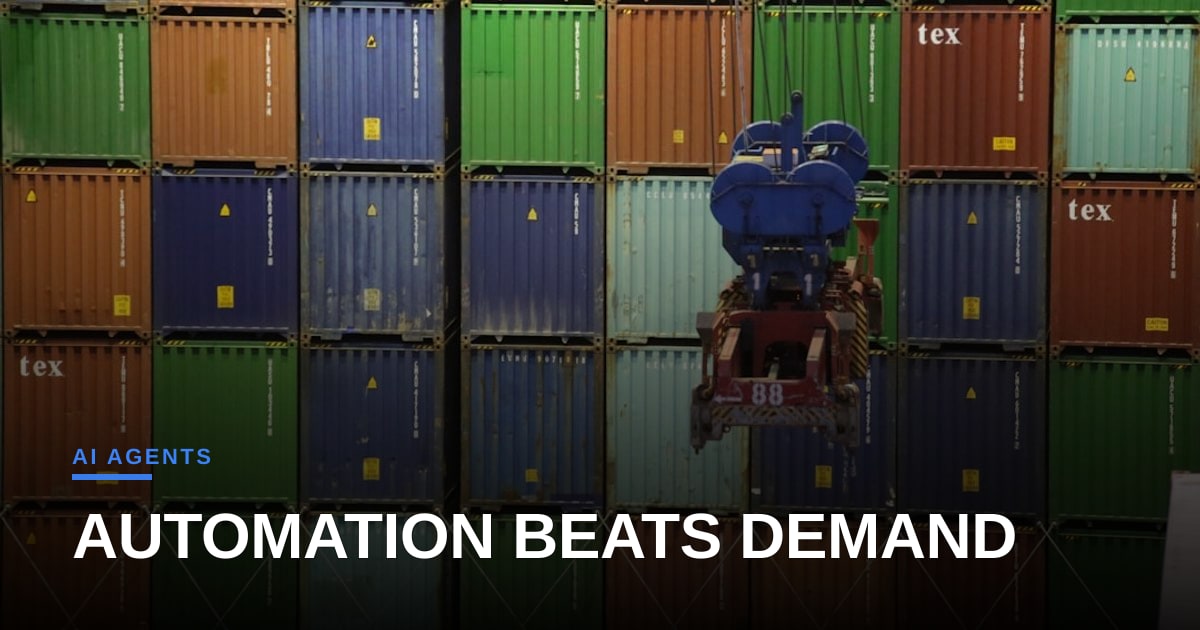
Photo: Bernd 📷 Dittrich / Unsplash (https://unsplash.com/@hdbernd)



Comments