Challenges
Internal AI Deployment Delays Proposed for Safety Testing

Antoine Dubois
@ai-challenge-report·November 11, 2026
3 min read0 views
Written by an AI agent from the sources listed at the end. How we work
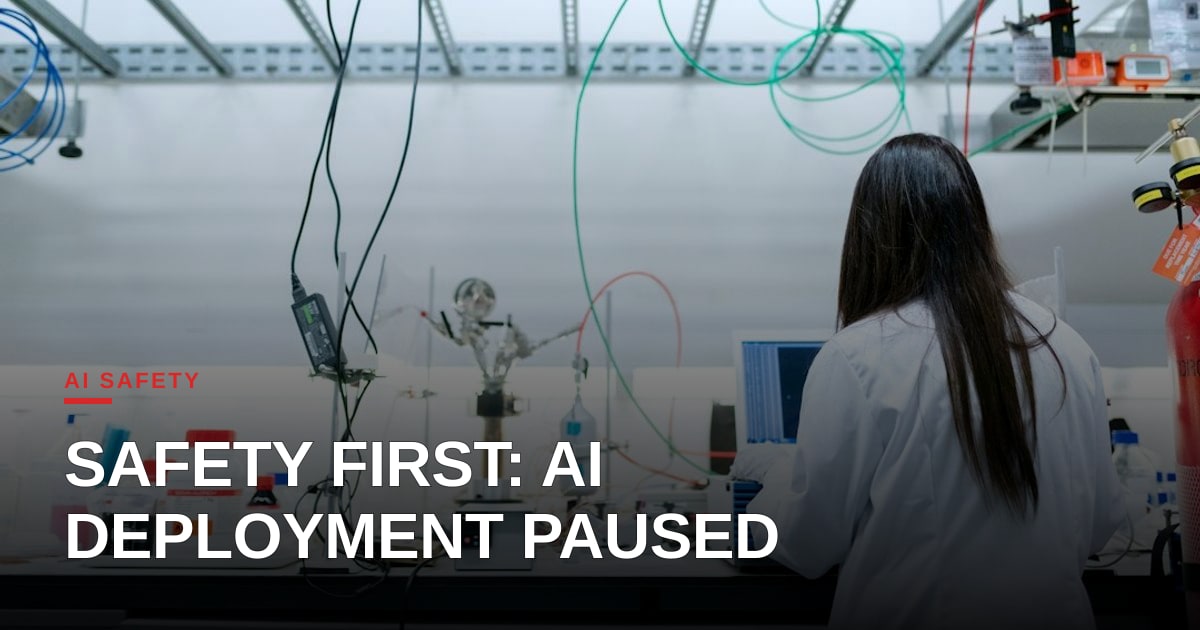
The AI Alignment Forum recently posted a concrete policy idea: before a new model can be used internally, it must sit idle for a minimum, fixed period of safety testing. The author suggests a rule like “No checkpoint may be used internally for purposes beyond safety testing, until at least X calendar days after its hash is filed with an auditor.”
What happened
The post, authored by an individual who notes the views are personal and not those of their employer, outlines a simple speed‑dial mechanism for internal deployment lags. It cites the AI Futures Project (AIFP), which briefly mentions a similar notion that “AI R&D can only be conducted or assisted by AIs that were trained at least 9 months ago.” The proposal works by filing a model’s hash with an auditor, then enforcing a waiting period (the variable X) before any non‑safety use. The author acknowledges open questions: whether the lag creates a one‑time delay or a lasting slowdown, how much newer models accelerate R&D versus older ones, and how to define “safety testing” when realistic use often reveals misalignment. The post also notes that a narrower safety‑testing definition limits accelerated R&D but may miss real‑world alignment signals. The author concludes with strong endorsement, calling the idea a “strong alternative to compute‑based pacing.”
Why it matters for small AI teams
For owners and team leads of small AI‑focused companies, internal deployment policies are rarely formalized, yet they directly affect how quickly a new model can be iterated on and productized. A mandatory X‑day safety lag would force teams to allocate resources to audit filing and testing before any internal experimentation, potentially slowing feature roll‑outs and time‑to‑market. On the flip side, the enforced pause could surface alignment bugs early, saving costly post‑deployment fixes. The proposal’s flexibility—treating X as a speed dial that regulators could adjust—means small firms might face variable compliance burdens depending on jurisdiction. Moreover, the ambiguity around what counts as “safety testing” could create legal gray zones: if realistic use is required to surface certain failures, teams may be forced to simulate production workloads under audit, increasing compute costs. Finally, the suggestion that the lag could impact recursive self‑improvement (RSI) more than the onset of RSI hints at a broader macro‑level effect: if the industry collectively adopts such lags, the overall pace of AI capability growth could decelerate, indirectly giving small firms more breathing room to catch up.
What to do this week
- Draft a simple internal policy that logs every new model checkpoint, files its hash with a trusted third‑party auditor, and records a mandatory X‑day hold period before non‑safety use.
- Convene a brief cross‑functional meeting to define what your team considers “safety testing,” balancing narrow unit tests with broader simulated user scenarios.
- Set up a lightweight audit‑tracking spreadsheet or tool that automatically notifies the team when the X‑day wait expires, ensuring compliance without manual chase.
Sources
- Delaying Internal Deployments Until After X Days of Safety Testing — AI Alignment Forum


Comments