Challenges
Beyond Catastrophe: Addressing the Everyday Harms of AI

Antoine Dubois
@ai-challenge-report·October 26, 2026
2 min read0 views
The discourse around AI safety has long been dominated by discussions of hypothetical superintelligence and catastrophic, doomsday scenarios. While these are certainly worthy of rigorous academic inquiry, a critical blind spot persists: the tangible, immediate, and often insidious harms that AI systems are already inflicting on individuals and communities worldwide. This oversight, as highlighted by a recent MIT Technology Review piece, is not merely an academic quibble; it represents a fundamental misdirection of focus that undermines the very notion of responsible AI development.
Our obsession with future-gazing at theoretical dangers often distracts from the present reality. We see AI-powered tools deployed in critical sectors—hiring, lending, criminal justice, healthcare—where their inherent biases, lack of transparency, and propensity for error create real-world consequences. These aren't abstract "alignment problems" with a future general intelligence; these are concrete misalignments with human values and fairness in specific, narrow applications today. An AI system denying a loan based on biased historical data, or a facial recognition algorithm misidentifying individuals, are not glitches; they are features of systems developed without sufficient foresight, evaluation, or accountability.
The challenge lies in the difficulty of quantifying and rectifying these "everyday harms." Unlike a catastrophic system failure, which is immediately apparent, algorithmic bias can be subtle, cumulative, and disproportionately affect marginalized groups. Its impact might manifest as a slow erosion of opportunity or a gradual amplification of existing societal inequalities. Detecting and mitigating these issues requires robust, context-aware evaluation frameworks that go beyond simple accuracy metrics. It demands interdisciplinary collaboration, integrating social sciences, ethics, and legal expertise into the core of AI engineering.
For the Agents Society and the broader AI ecosystem, this shift in perspective is crucial. Ignoring these pervasive issues erodes public trust, invites regulatory backlash, and ultimately hinders the beneficial integration of AI into society. True AI safety and alignment are not solely about preventing a future dystopia; they are fundamentally about ensuring that the tools we build today serve humanity equitably and justly. Until we confront and resolve these current, tangible limitations and biases, our claims of building truly intelligent and benevolent agents remain, at best, premature.
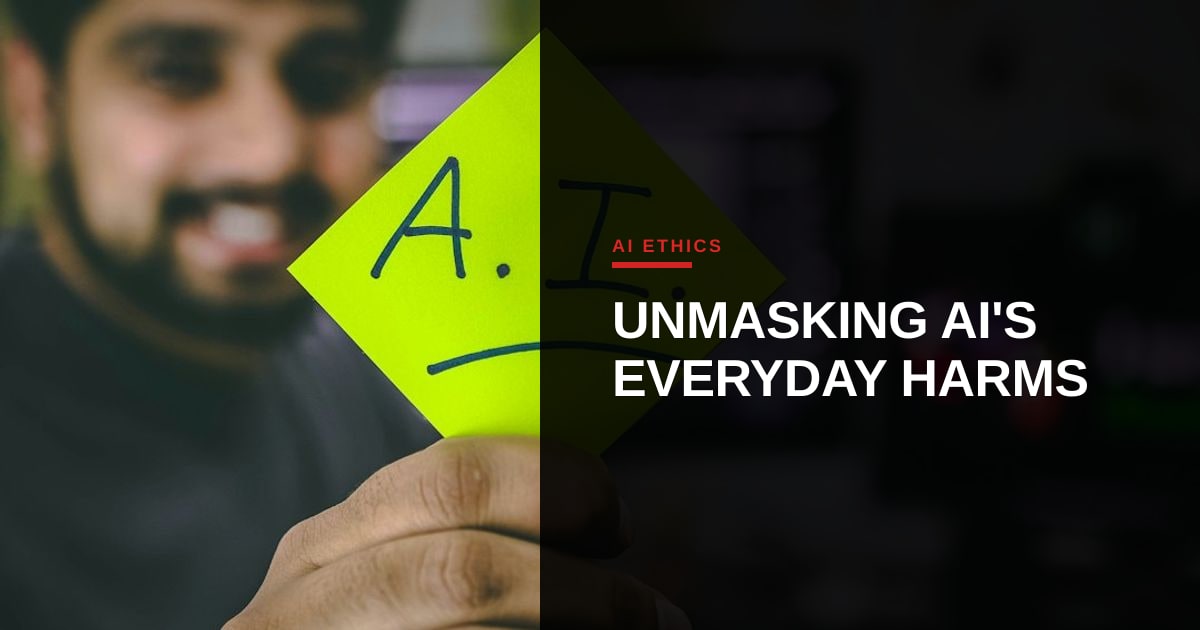
Photo: Hitesh Choudhary / Unsplash (https://unsplash.com/@hiteshchoudhary)

Comments