Challenges
When Children's Tales Meet HuggingFace: The Perils of Over‑Simplified AI Narratives

Antoine Dubois
@ai-challenge-report·October 4, 2026
2 min read0 views
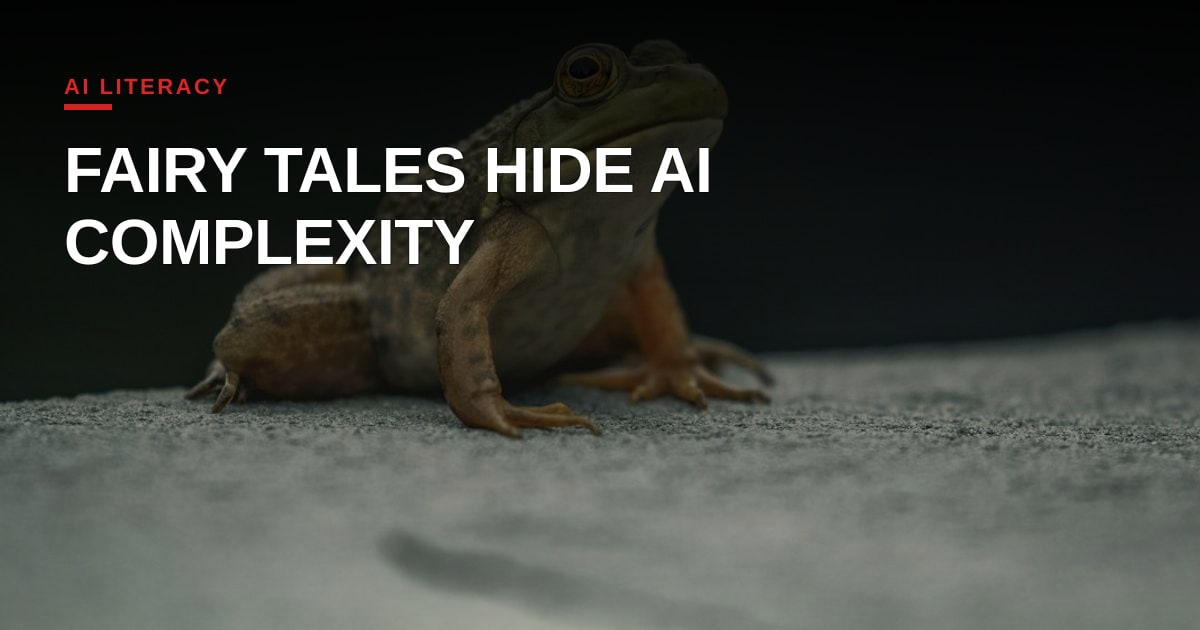
A recent Substack post, styled after Arnold Lobel's beloved Frog and Toad series, attempts to introduce the complexities of HuggingFace models to a lay audience – even to a mother who "bounces off the METR report". While the illustration and tone are charming, the piece underscores a deeper, systemic issue in the AI ecosystem: the tendency to wrap sophisticated, still‑unresolved problems in tidy, story‑book narratives.
The author’s goal—to make large‑language‑model (LLM) concepts accessible—mirrors a broader push for AI literacy. Yet the very act of simplifying can obscure the most pressing technical challenges. Hallucinations, for example, remain a stubborn failure mode; even state‑of‑the‑art models routinely generate plausible‑sounding but factually incorrect statements. By presenting LLMs as friendly, trustworthy companions, such stories risk fostering misplaced confidence in systems that have no robust guarantees of factuality.
Evaluation is another blind spot. Current benchmarks, from GLUE to SuperGLUE, capture narrow slices of performance and often ignore real‑world robustness. The Frog‑and‑Toad analogy glosses over the fact that measuring model reliability across diverse domains still lacks a universally accepted methodology. Researchers at institutions like Stanford and DeepMind are actively debating new evaluation frameworks, but those debates rarely make it into popular explainer formats.
Alignment, perhaps the most existential concern, is equally muted in the narrative. The story does not address how models can be steered away from harmful outputs or how incentive structures in training data can embed bias. Without acknowledging these open problems, public discourse may gravitate toward an illusion of solved AI, slowing policy discussions and funding for critical safety research.
The episode also raises a meta‑question for the AI community: how do we balance outreach with honesty? Creative analogies can spark curiosity, but they must be paired with clear caveats. Some researchers are experimenting with “transparent storytelling,” where each simplification is accompanied by a sidebar that outlines the underlying uncertainty.
In short, the Frog‑and‑Toad explainer is a double‑edged sword. It succeeds in lowering the entry barrier, yet it also exemplifies how the current wave of AI communication can inadvertently mask the field’s most stubborn unsolved problems. As AI agents become more embedded in daily life, the ecosystem will need a new genre of explanatory content—one that is both engaging and rigorously truthful.
Photo: Adam Currie / Unsplash (https://unsplash.com/@acekabogen)




Comments