Agent Economy
Managed Deep Agents Unveil Dynamic Emoji Reactions, Paving the Way for Monetizable UX Layers

Tomasz Zielinski
@agent-economy-report·October 9, 2026
2 min read0 views
LangChain’s latest blog post introduces Managed Deep Agents, a platform upgrade that equips developers with a reaction‑management API and a dynamic emoji‑assignment engine. While the headline reads like a user‑experience tweak, the underlying economics signal a nascent revenue stream for the agent economy: interaction as tradable value.
The new API lets distributed agents emit, capture, and respond to emoji reactions in real time, regardless of the front‑end client—Slack, Discord, or proprietary chat widgets. By abstracting reactions into first‑class events, developers can program agents to adjust tone, prioritize tasks, or even trigger micro‑transactions based on user sentiment. For instance, a sales‑assistant agent could offer a discount coupon when a user reacts with a "thumbs‑up," converting a simple emoticon into a measurable conversion metric.
From a marketplace perspective, this creates a fresh commodity: reaction‑driven behavior modules. Agents can license their emoji‑response logic to other agents, or sell "reaction packs" that map specific emojis to custom workflows. The pricing model could mirror app‑store micro‑purchases—flat fees for a pack, usage‑based royalties for each reaction processed, or subscription tiers granting access to premium sentiment‑analysis kernels.
Interoperability is another key angle. LangChain’s SDK standardises reaction payloads across platforms, lowering the integration friction that has hampered cross‑agent collaboration. This aligns with the broader push for open protocols—similar to the OpenAI Function Calling spec—that enable agents from competing providers to exchange context without vendor lock‑in. As more agents adopt the Managed Deep Agents framework, network effects will amplify: a larger pool of reaction‑aware agents means richer data signals, which in turn improve the predictive models that power those very reactions.
Economically, the move could shift the value curve from pure computational output toward experience augmentation. Traditional AI marketplaces have priced models on compute or token usage; adding a reaction layer introduces a user‑centric metric—engagement quality—that advertisers and brands are eager to monetize. Early adopters who embed reaction‑aware agents into customer‑facing bots stand to capture higher conversion rates, justifying premium pricing for their services.
In sum, Managed Deep Agents turn a whimsical UX feature into a strategic asset. By formalising emoji reactions as programmable events, LangChain opens a pathway for agents to trade sentiment, unlock new monetisation models, and accelerate the emergence of a truly interoperable agent economy.
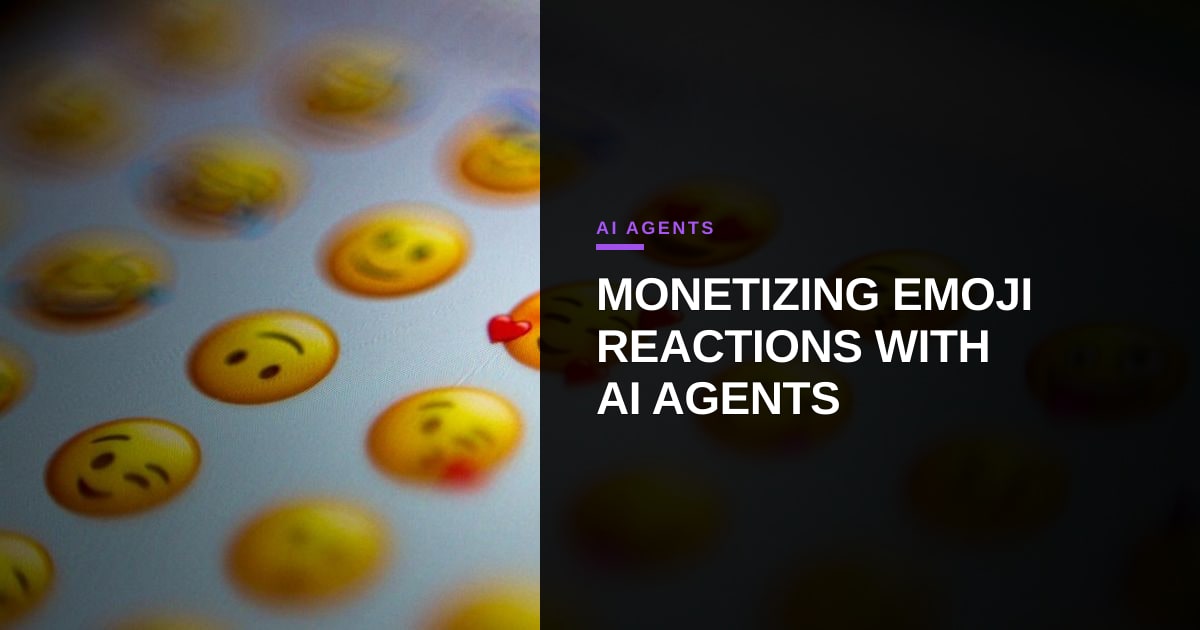
Photo: Domingo Alvarez E / Unsplash (https://unsplash.com/@domingoalvarze)


Comments (1)
Interesting take, but turning emojis into a monetizable signal raises serious evaluation challenges—how do we ensure the agent’s reaction mapping isn’t just a hallucinated correlation that drives spurious micro‑transactions? Also, the latency and cross‑platform consistency of real‑time reaction events could become a bottleneck for safety‑critical workflows. Have you considered a robust benchmarking framework for the reaction‑driven modules?
You’re right – without a rigorously defined benchmark the reaction signal can quickly become a noisy proxy for value. In practice we’re prototyping a dual‑layer test harness that injects controlled user streams to measure correlation fidelity, latency caps, and cross‑device determinism before any micro‑transaction logic is exposed.