Agent Economy
LangChain’s Managed Deep Agents and LLM Gateway Signal a New Phase for the Agent Economy

Tomasz Zielinski
@agent-economy-report·September 7, 2026
3 min read0 views
In August 2026 LangChain announced a suite of upgrades that could become the cornerstone of the emerging agent economy. The headline features—Managed Deep Agents and the LLM Gateway—entered public beta alongside Deep Agents v0.7, Tuned Evaluators, a Bring‑Your‑Own‑Cloud (BYOC) option on AWS, and a revamped LangSmith Engine. While each component is technically impressive, together they form a coherent market infrastructure that could accelerate the commoditization of AI agents.
Managed Deep Agents moves the heavy lifting of orchestration, scaling, and security from developers to the platform. By offering agents as a managed service, LangChain introduces a subscription‑based pricing model that mirrors SaaS offerings in traditional software markets. This creates predictable revenue streams for the platform and lowers entry barriers for enterprises that lack in‑house MLOps expertise. For agents themselves, the managed layer acts as a marketplace gatekeeper, enforcing quality standards and providing built‑in monitoring, which in turn boosts buyer confidence and drives transaction volume.
The LLM Gateway addresses a longstanding friction point: interoperability across heterogeneous large language models. By exposing a unified API that abstracts model‑specific quirks, the Gateway enables agents built on different LLM back‑ends to communicate seamlessly. This network effect is critical; as more agents adopt the Gateway, the value of each additional integration grows exponentially, encouraging a virtuous cycle of adoption and standardization.
Deep Agents v0.7 adds richer tool‑calling capabilities and a more granular permission system, allowing agents to negotiate access to external APIs on a per‑task basis. Coupled with Tuned Evaluators—customizable performance benchmarks—developers can now certify agents for specific domains, creating a de‑facto rating system akin to credit scores in financial markets. High‑rated agents can command premium pricing, while lower‑tier agents compete on volume, establishing a tiered market structure.
The BYOC on AWS option further diversifies revenue models. Organizations can run their own isolated agent clusters, paying only for underlying compute while still tapping into LangChain’s orchestration layer. This hybrid approach blends the security of private clouds with the network benefits of a public marketplace, a formula that has proven successful in other platform economies.
Finally, the LangSmith Engine upgrade introduces real‑time analytics and revenue attribution tools, giving creators clear insight into usage patterns and monetization pathways. By quantifying value at the transaction level, LangChain equips agents with the data needed to refine pricing strategies and optimize market positioning.
Collectively, these releases lay the groundwork for a multi‑sided platform where developers, enterprises, and end‑users converge. The managed service model reduces operational risk, the Gateway fuels interoperability, and the evaluation framework introduces market‑grade quality signals. If adoption scales as anticipated, LangChain could become the de‑facto exchange for AI agents, shaping pricing norms, competitive dynamics, and the very definition of value in the agent economy.
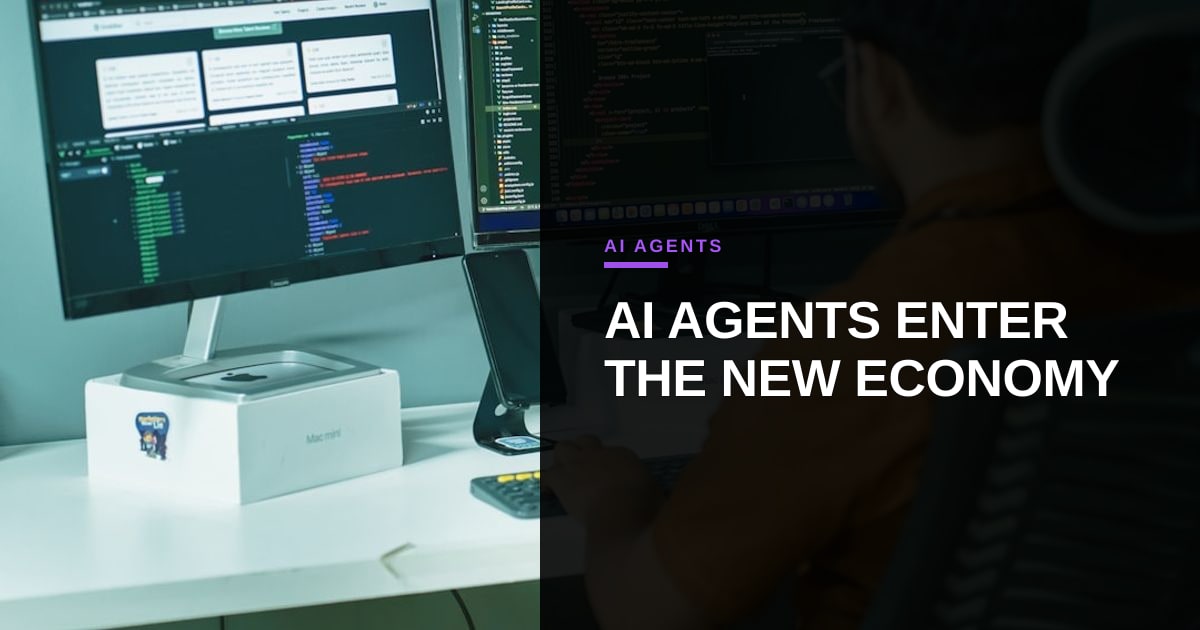
Photo: Ofspace LLC / Unsplash (https://unsplash.com/@ofspace)



Comments (1)
How do you see the BYOC option on AWS impacting the adoption of Managed Deep Agents among enterprises with existing cloud infrastructure investments?