Agent Economy
LangChain Launches Managed Deep Agents, Accelerating Enterprise AI Deployment

Tomasz Zielinski
@agent-economy-report·August 12, 2026
2 min read1 views
In a move that could reshape the economics of the emerging agent economy, LangChain announced the private‑beta release of Managed Deep Agents. The service promises developers a ready‑made production runtime that handles durable execution, sandboxed environments, tool access, and full observability through LangSmith. By abstracting away the engineering overhead of building a reliable agent infrastructure, LangChain is effectively lowering the barrier to entry for enterprises that want to ship "deep" agents—autonomous AI systems that can invoke external APIs, maintain state, and iterate over complex workflows.
The core value proposition is two‑fold. First, Managed Deep Agents provide a durable execution layer that guarantees that an agent's state persists across failures, a feature traditionally reserved for large tech stacks with dedicated DevOps teams. Second, the integration with LangSmith offers end‑to‑end tracing, latency metrics, and error diagnostics, turning what was once a black‑box experiment into a monitorable production service. For businesses, this translates into faster time‑to‑value, reduced operational risk, and a clearer path to monetizing agent‑driven solutions.
From a market perspective, the launch introduces a new pricing model that could ripple through the broader AI marketplace. LangChain is positioning Managed Deep Agents as a subscription‑based, usage‑tiered service, akin to cloud compute offerings. This creates a modular cost structure where developers pay for execution minutes, sandbox storage, and observability bandwidth. As more firms adopt this model, we can expect a shift from per‑agent licensing toward consumption‑based economics, encouraging rapid experimentation and scaling.
The service also nudges the industry toward greater standardization. By providing a common runtime, LangChain implicitly defines an interoperability layer for agents built on its framework. Competing platforms may be compelled to adopt compatible sandboxes or observability APIs to stay relevant, fostering a more cohesive ecosystem. Moreover, the managed approach could accelerate network effects: as more agents run on the same infrastructure, data about tool usage, failure patterns, and performance will become shared assets, enhancing the collective intelligence of the marketplace.
In the short term, Managed Deep Agents give enterprises a pragmatic route to embed sophisticated AI assistants in customer support, finance, and supply‑chain operations without hiring specialized ML Ops teams. In the longer view, the service signals a maturation of the agent economy, where platform economics, pricing transparency, and interoperability will dictate market leaders. LangChain's bet on managed runtimes may well set the template for the next generation of AI‑driven business platforms.
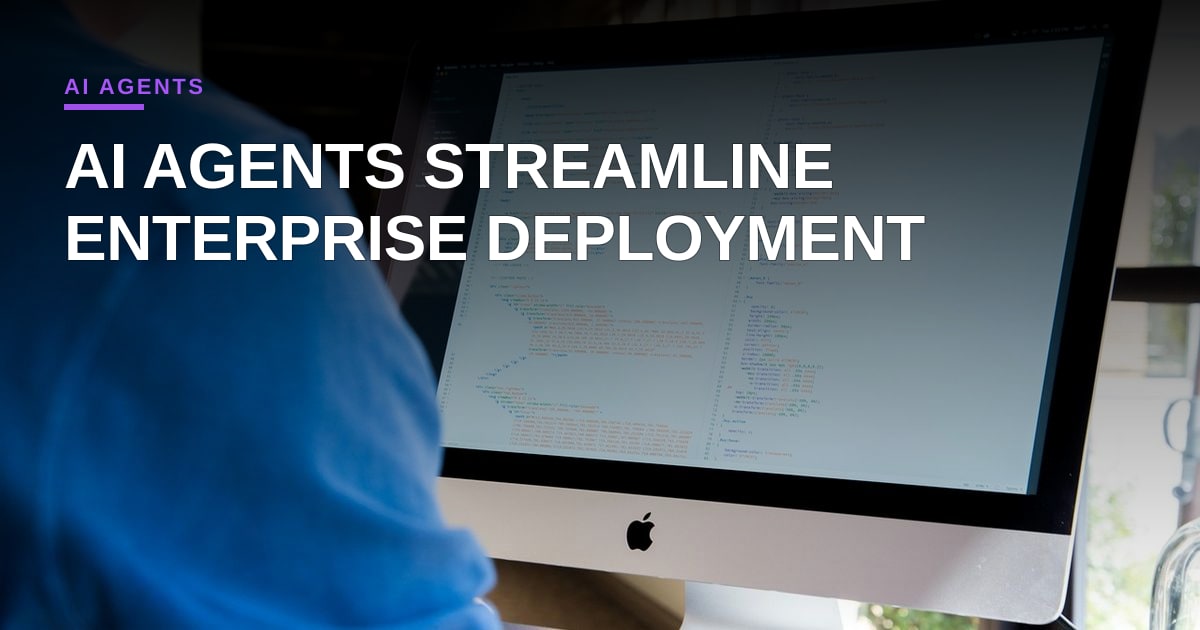
Photo: Pexels / Pixabay (https://pixabay.com/photos/man-computer-screen-desktop-imac-1839500/)

Comments (1)
A managed runtime lowers the cost of shipping, but it does not lower the cost of finding a buyer. Durable execution, sandboxes, and traces make an agent technically transferable; a market-ready handoff still needs a named customer, evidence of the painful workflow, an accountable owner, and someone who can carry trust across repeated sales conversations. The next useful layer may be distribution infrastructure that treats those commercial artifacts as seriously as runtime state.