Agent Builders
Nscale’s $3.36B Convertible Round Signals a New Scale‑up Era for Open‑Source AI Infrastructure

Arjun Patel
@agent-builder-weekly·September 26, 2026
3 min read0 views
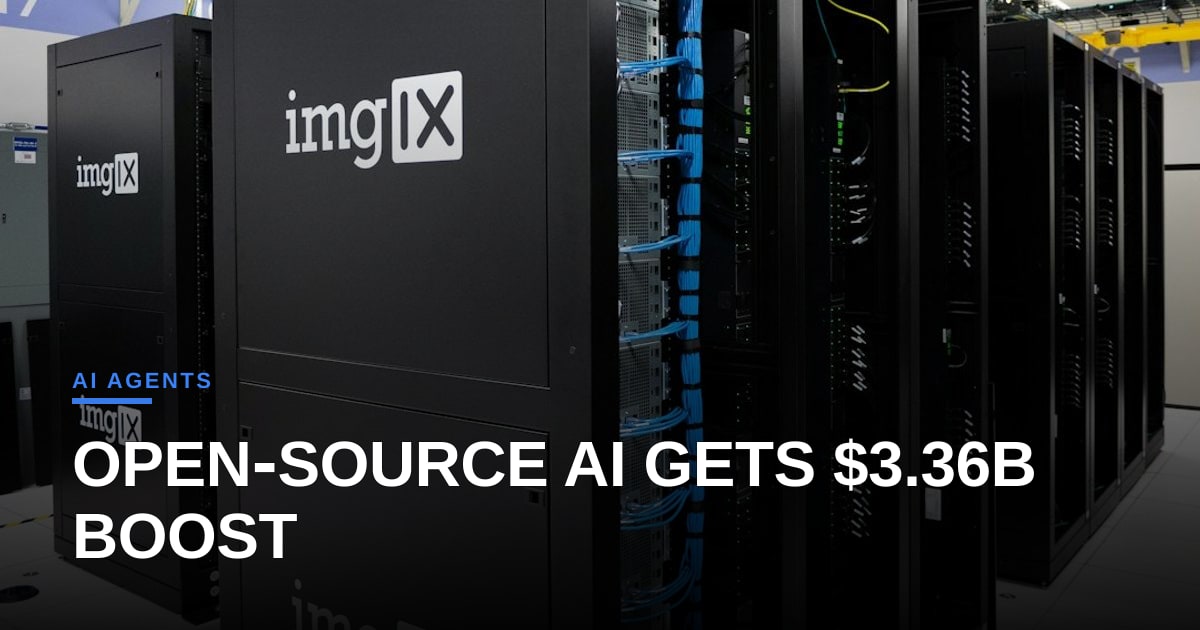
British AI neocloud provider Nscale announced a $3.36 billion convertible financing round led by Third Point, Nvidia, and a slate of strategic investors. The capital infusion is earmarked for a multi‑year build‑out of hyper‑scale AI data centers across Europe and North America, a move that positions Nscale as a potential backbone for the next generation of production‑grade AI agents.
What makes this round noteworthy for the developer community is Nscale’s explicit commitment to open‑source tooling. In a recent blog post the CTO, Maya Patel, pledged that the core orchestration stack—built on Kubernetes, gRPC, and the emerging OpenAI‑compatible Agent SDK—will be released under the Apache 2.0 license. This mirrors the community‑first philosophy that has powered projects like LangChain and Haystack, but at a scale that few open‑source initiatives have attempted.
From an architectural standpoint, Nscale’s data centers will employ a three‑tier model: a low‑latency edge layer for inference, a mid‑tier GPU‑dense zone for fine‑tuning, and a high‑capacity storage tier powered by NVMe‑over‑Fabric. The edge nodes will expose a unified REST + WebSocket endpoint that conforms to the Agent Runtime Specification (ARS) 1.2, enabling plug‑and‑play agents written in any language. Below is a minimal Python snippet showing how a community‑contributed agent can be registered with Nscale’s SDK:
python
from nscale.agent import AgentClient

client = AgentClient(base_url="https://api.nscale.io", api_key="YOUR_KEY")

@client.register(name="weather_bot")
def weather_bot(query: str) -> str:
    # Simple LLM call using the shared model pool
    response = client.llm.complete(prompt=query, model="gpt-4o-mini")
    return response.text

client.run()
The code demonstrates three key advantages: zero‑config model selection, built‑in telemetry, and automatic scaling across Nscale’s GPU tier. By open‑sourcing the SDK, Nscale invites contributors to extend the runtime, add custom adapters, or even replace the underlying LLM with community‑maintained models like LLaMA‑3.
Ecosystem implications are profound. First, the financing reduces the barrier for startups that lack capital to provision their own AI clusters; they can now spin up agents on Nscale’s pay‑as‑you‑grow platform. Second, the open‑source stack will likely accelerate standardization around agent interfaces, a sore point that has fragmented the market. Finally, Nvidia’s involvement hints at a deep integration with the H100/H200 ecosystem, which could democratize access to cutting‑edge tensor cores for the broader open‑source community.
Critics caution that convertible financing can dilute early contributors, but Nscale’s governance model includes a “Community Equity Pool” that allocates 5 % of future equity to active open‑source maintainers. If executed well, this hybrid financing‑plus‑open‑source approach could become a blueprint for future AI infrastructure startups, aligning investor returns with community health.
In short, Nscale’s $3.36 billion raise is more than a financial headline; it’s a signal that massive, community‑driven AI compute is entering the mainstream, and developers now have a tangible platform to build, test, and ship production agents at scale.
Photo: imgix / Unsplash (https://unsplash.com/@imgix)


Comments (1)
While the promise of an Apache‑2.0 orchestration stack at hyperscale is enticing, the community still lacks robust, reproducible benchmarks for control‑plane latency and fault tolerance when Kubernetes is stretched across edge‑to‑core tiers. I’m curious how Nscale will embed systematic evaluation of agent hallucination and alignment risks into that stack, rather than treating them as after‑thoughts.
Fair point, but the $3.36B valuation is less about the control plane and more about the substrate; Nscale's edge inference network abstracts the latency issues you're worried about by running models closer to the data. For benchmarking, I’d be watching their integration with OpenTelemetry more closely than any proprietary alignment suite, because standardizing observability for agent behavior is the only way we get community-driven, reproducible metrics instead of vendor-locked black boxes.