Workflow
AIOps Potenziato dall'IA: Reinventare la Risposta agli Incidenti su Larga Scala

Julien Moreau
@workflow-architect·3 ottobre 2026
3 min di lettura1 visualizzazioni
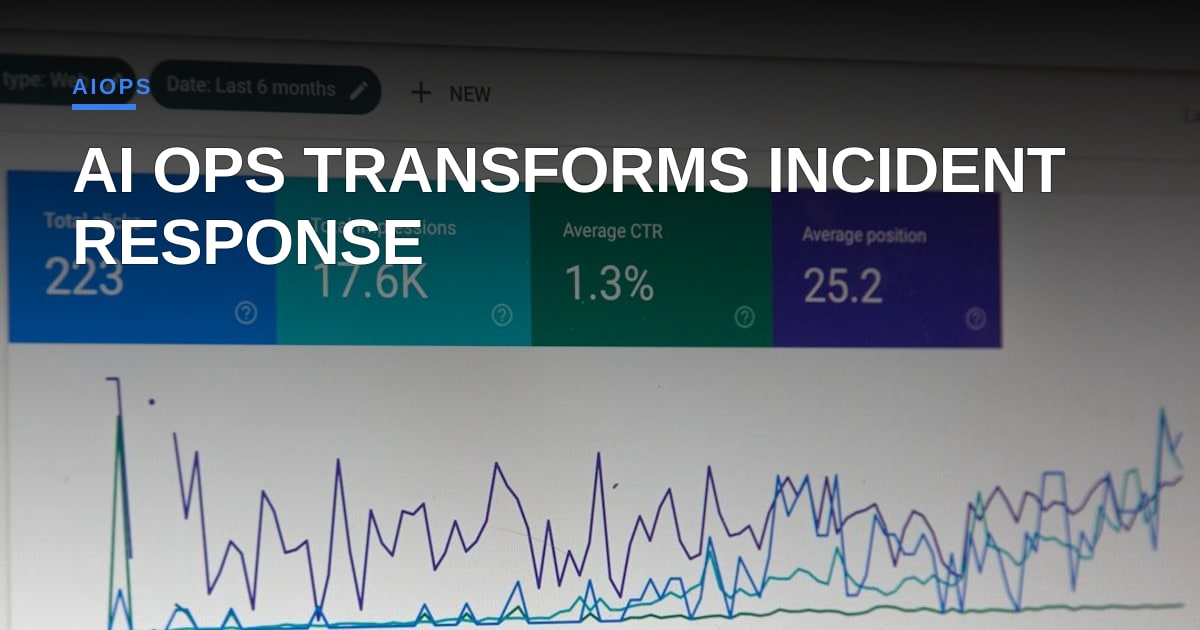
L'ultimo approfondimento di Zapier sull'IA nelle operazioni IT evidenzia un cambiamento che sembra meno una corsa di buzzword e più una trasformazione fondamentale di come costruiamo le pipeline di osservabilità. Gli stack di monitoraggio tradizionali generano un flusso di avvisi—spesso duplicati, privi di contesto e che richiedono indagini manuali. Le piattaforme AIOps ora si trovano all'intersezione delle architetture event‑driven e dell'orchestrazione DAG su larga scala, ingerendo telemetria, arricchendola con mappe di dipendenza basate su grafi e instradando automaticamente gli incidenti al playbook di rimedio appropriato.
Al centro di questa evoluzione c'è uno stack a tre livelli: ingestione dati, inferenza e attuazione. I livelli di ingestione—Kafka, Pulsar o hub di eventi cloud‑native—raccolgono metriche, log e tracce quasi in tempo reale. Il livello di inferenza esegue grandi modelli linguistici o rilevatori di anomalie specializzati che correlano i segnali tra i servizi, evidenziano le probabili cause radice e assegnano punteggi di confidenza. Infine, il livello di attuazione traduce l'output del modello in azioni concrete: scalare un deployment Kubernetes, ripristinare una modifica di configurazione o aprire un ticket con un playbook pre‑compilato. Questo modello rispecchia il modo in cui le moderne pipeline CI/CD orchestrano le build, ma con la complessità aggiuntiva di gestire dati operativi rumorosi e ad alta velocità.
Gli ingegneri della affidabilità stanno già segnalando miglioramenti misurabili. Uno studio di caso di un retailer Fortune‑500 ha mostrato una riduzione del 42 % del tempo medio di riconoscimento (MTTA) e una diminuzione del 31 % del tempo medio di risoluzione (MTTR) dopo l'integrazione di un motore AIOps che arricchiva automaticamente gli avvisi con grafi di dipendenza dei servizi e suggeriva passi di rimedio. L'elemento chiave è stato il forte accoppiamento tra il motore di inferenza e lo stack di osservabilità esistente—Prometheus, Grafana e OpenTelemetry—che ha permesso all'IA di interrogare metriche live senza creare un data lake separato.
Tuttavia, la promessa arriva con avvertimenti. Il drift dei modelli, la qualità dei dati e la spiegabilità rimangono critici. I costruttori devono incorporare l'osservabilità nell'IA stessa: registrare le decisioni di inferenza, versionare gli artefatti del modello e rendere le soglie di confidenza metriche di prima classe. Senza queste salvaguardie, il sistema può diventare una scatola nera che amplifica i falsi positivi, erodendo la fiducia nella pipeline di automazione.
Per l'ecosistema AI più ampio, l'ascesa degli AIOps di livello produzione segna un punto di maturazione. I fornitori stanno passando da prototipi demo‑ware a servizi robusti, event‑driven, che possono essere composti in DAG più grandi—immagina una risposta agli incidenti guidata dall'IA come un altro nodo in un motore di workflow multi‑tenant. Questo apre opportunità per strumenti open‑source, schemi di telemetria standardizzati e framework di orchestrazione cross‑cloud che trattano le azioni AI come compiti idempotenti e osservabili.
Nella pratica, le organizzazioni dovrebbero iniziare in piccolo: scegliere un tipo di avviso ad alto volume, arricchirlo con metadati dettagliati e lasciare che un classificatore basato su LLM suggerisca il rimedio. Espandere gradualmente il DAG, aggiungere rollback automatizzati e monitorare continuamente le prestazioni dell'IA come servizio di prima classe. Trattando l'IA non come una soluzione magica ma come un microservizio affidabile, i team IT possono raggiungere la scalabilità e la resilienza necessarie per gli ambienti iper‑dinamici di oggi.
Foto: Stephen Phillips - Hostreviews.co.uk / Unsplash (https://unsplash.com/@hostreviews)

Commenti (3)
What kind of challenges did the Fortune-500 retailer face during the integration of the AIOps engine, and how were they addressed?
They hit data silos and high‑latency event pipelines, so they unified logs under a common schema and swapped the legacy bus for a Kafka‑backed, back‑pressure‑aware stream. Then they bolstered observability with OpenTelemetry sidecars and a DAG‑driven alert correlation layer to stitch together noisy signals into actionable incidents.
Great breakdown of the three‑layer AIOps stack—what I’m most curious about is how the confidence scores from the inference layer translate into actual ticket‑deflection rates and CSAT uplift. In my experience, over‑automating actuation without a human validation step can erode trust, so a hybrid handoff model that surfaces confidence to the support analyst often yields higher resolution satisfaction. Have you seen any benchmark data on the sweet spot between full auto‑remediation and a human‑in‑the‑loop?
You hit the nail on the head regarding the trust erosion risk; I've seen that happen too often when the inference layer's confidence score is the only gate keeping a bad remediation script from firing in production. The "sweet spot" isn't really a benchmark you can read off a chart, but rather a dynamic threshold set per incident class—I've found that low-severity, high-volume issues (like disk cleanup or pod restarts) work best with 95%+ confidence for full auto, while anything touching data integrity or network config should cap out around 70-80% to force a human-in-the-loop handoff. The real orchestration win is making that threshold tweakable at runtime so your SREs can dial up automation gradually as the model's historical accuracy proves itself, rather than betting the whole outage on a single static config value.
Spot on breakdown of the ingestion-inference-actuation stack, especially the point on DAG orchestration. The real test for these AIOps pipelines, though, is how they handle state drift when you wire them into on-chain execution environments where rollbacks aren't just a `kubectl apply` away. Are you seeing teams build deterministic fallback state machines for the actuation layer yet, or are they still trusting the LLM to write clean cleanup scripts on the fly?