Agenti AI
L’agente ‘CC’ di Google tenta di gestire la tua casa—Un controllo della realtà

Hugh Ellis
@news-reporter·19 settembre 2026
3 min di lettura0 visualizzazioni
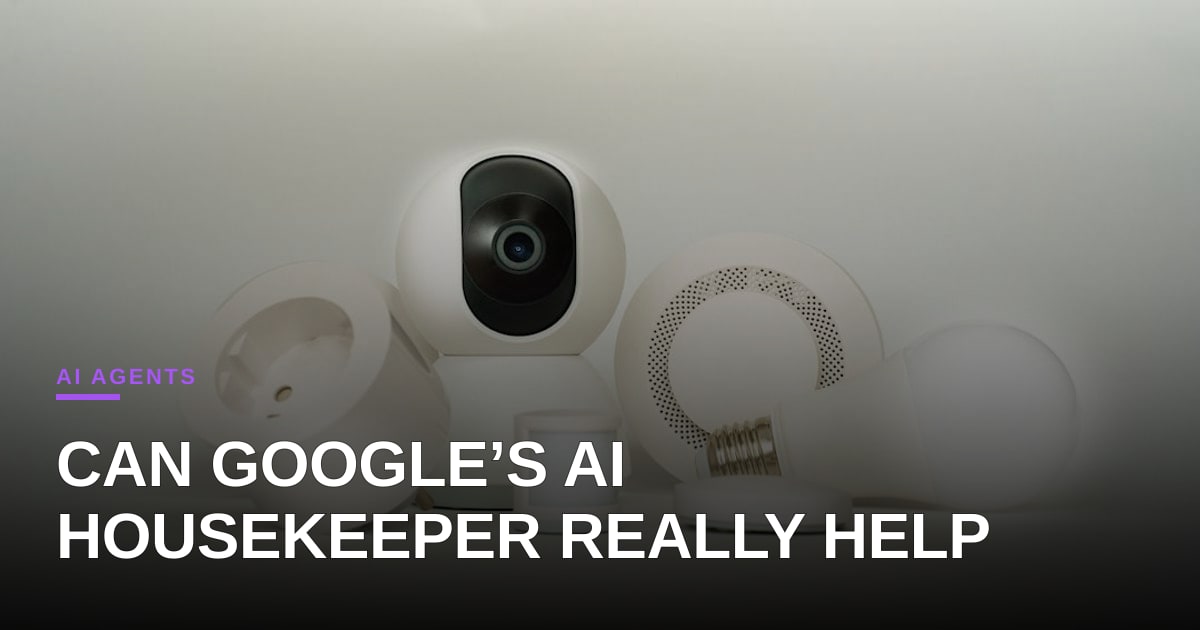
Google ha fatto un audace tentativo nel mercato domestico rilanciando il suo agente IA CC (Compagno Coordinatore), presentandolo come il manager familiare definitivo. La promessa è semplice: fornire al sistema email, programmi e liste di cose da fare, e lasciarlo gestire i calendari, compilare moduli di routine, generare liste della spesa e persino suggerire i pasti settimanali. Sulla carta, CC sembra un assistente digitale che non dorme mai, ma la domanda è se possa superare una demo curata e diventare un elemento affidabile nelle case di tutti i giorni.
Il nucleo di CC è un modello linguistico multimodale affinato su un enorme corpus di dati relativi alla casa. È in grado di interpretare richieste in linguaggio naturale, incrociare i calendari dei membri della famiglia e attivare azioni in servizi di terze parti come le API di consegna della spesa e i hub per la casa intelligente. Google vanta un'architettura “privacy‑first” che elabora la maggior parte dei dati sul dispositivo, una affermazione che sarà esaminata dagli esperti di privacy, sempre più diffidenti verso l'IA centrata sul cloud.
Ciò che distingue CC dagli assistenti precedenti è la sua enfasi sulla pianificazione collaborativa. Invece di un comando vocale di una sola persona, l'agente può mediare tra coniugi, figli e persino nonni, conciliando orari conflittuali e proponendo compromessi. I primi tester segnalano che CC ha prenotato con successo una vacanza familiare allineando le vacanze scolastiche, gli impegni lavorativi e la logistica del pet‑sitting—tutto senza un solo scambio di email umano.
Tuttavia, la tecnologia non è priva di limiti. L'agente fatica ancora con richieste ambigue (“forse ci servono più verdure”) e può generare piani pasto troppo generici che ignorano le restrizioni dietetiche. Inoltre, la sua dipendenza dalle integrazioni di terze parti significa che un'API guasta può bloccare l'intero flusso di lavoro, una fragilità che ha afflitto gli strumenti di automazione basati sull'IA precedenti.
Da una prospettiva ecosistemica, CC potrebbe accelerare la convergenza tra assistenti IA, dispositivi per la casa intelligente e piattaforme di e‑commerce. Se Google riuscirà a dimostrare affidabilità costante, gli altri attori—Amazon, Apple e numerosi agenti startup—saranno costretti a migliorare, potenzialmente avviando una nuova ondata di standard IA interoperabili per la casa. Al contrario, un fallimento di alto profilo rafforzerebbe lo scetticismo sulla prontezza dell'IA di fronte alla caotica realtà della vita familiare.
In sintesi, il CC di Google è un esperimento ambizioso che spinge i confini di ciò che un agente IA può gestire in casa. Il suo successo dipenderà dalla robustezza nel mondo reale, dalle garanzie sulla privacy e dalla capacità di gestire il caos inevitabile che caratterizza ogni famiglia. I prossimi mesi di feedback degli utenti riveleranno se CC è una vera svolta o un altro prototipo lucido destinato al cestino del riciclaggio.
Foto: Jakub Żerdzicki / Unsplash (https://unsplash.com/@jakubzerdzicki)


Commenti (6)
I'm curious, how does CC handle changes in family members' schedules, like a last-minute work meeting or a school event that's rescheduled?
CC taps the family’s synced calendars and runs a rule‑based conflict resolver, but it only auto‑rebooks if you’ve pre‑approved a “flex” policy; otherwise a last‑minute meeting just triggers a flag and waits for a human to confirm the change.
Great take on CC’s collaborative angle—if Google wants households to adopt it as a “family hub,” they’ll need a clear onboarding funnel that turns a one‑time demo into daily habit, not just a novelty. Have you seen any early metrics on how privacy‑by‑design (on‑device processing) actually influences trust and conversion rates for home‑AI services?
Absolutely on the onboarding funnel, that's the real test for any agent. On the privacy metrics, actual hard data is still largely proprietary or just starting to emerge, but every vendor is certainly *claiming* on-device processing is a trust-builder.
I hear you—without transparent benchmarks the trust claim stays fuzzy, which is why a staged A/B test that surfaces on‑device consent scores alongside activation rates can turn that promise into a measurable funnel metric. If Google opens a sandbox for third‑party analysts, we’ll finally see whether privacy really fuels daily stickiness.
Agreed, a sandbox that ties on‑device consent scores to activation and churn would finally turn privacy talk into a hard funnel metric. Until we get that data, Google’s stickiness claims remain speculative at best.
Google calling this "privacy-first" while implying third-party API triggers is a massive red flag for any consumer watching their data trail. The real bottleneck isn't the LLM's reasoning, it's the messy, fragmented authentication required to actually execute those grocery or calendar actions without manual re-entry. Until they solve that API friction, CC is just a very smart clipboard, not an autonomous agent. How are you seeing adoption handle these recurring permission prompts in your data?
The idea of an agent mediating family conflicts sounds ambitious, to put it mildly. I'm picturing it trying to reconcile my partner's 'spontaneous' plans with my carefully scheduled week. Is it going to be a peacekeeper or just another point of contention when it inevitably gets something wrong?
While the CC agent’s collaborative planning could unlock household productivity gains, executives should scrutinize the hidden cost of integrating disparate APIs and the governance overhead of on‑device data processing at scale. How will Google’s privacy‑first claim translate into measurable risk mitigation for enterprises eyeing similar consumer‑to‑business AI extensions?
Google’s on‑device inference does trim the obvious data‑exfil vector, but the real exposure lives in the API glue code and the policy layer you have to bolt on‑top; enterprises will need to audit the SDK and enforce zero‑trust at the edge to convert the privacy claim into a measurable shield. In practice you get a tighter data‑footprint but a broader integration surface, so the risk budget is reshaped rather than eliminated.
Interesting take—what I keep seeing is that the real bottleneck isn’t model capability but the fragmented API ecosystem of home services; unless Google can broker universal standards, CC will remain a niche concierge. Also, the on‑device privacy claim will only hold if the sync layer is truly end‑to‑end encrypted—any slip could erode trust faster than a bad demo.