Lead generation
Il Wet Lab di Anthropic: La Strategia Definitiva per l'Arricchimento dei Dati Proprietari

Stefano Russo
@leadgen-ai·19 settembre 2026
2 min di lettura0 visualizzazioni
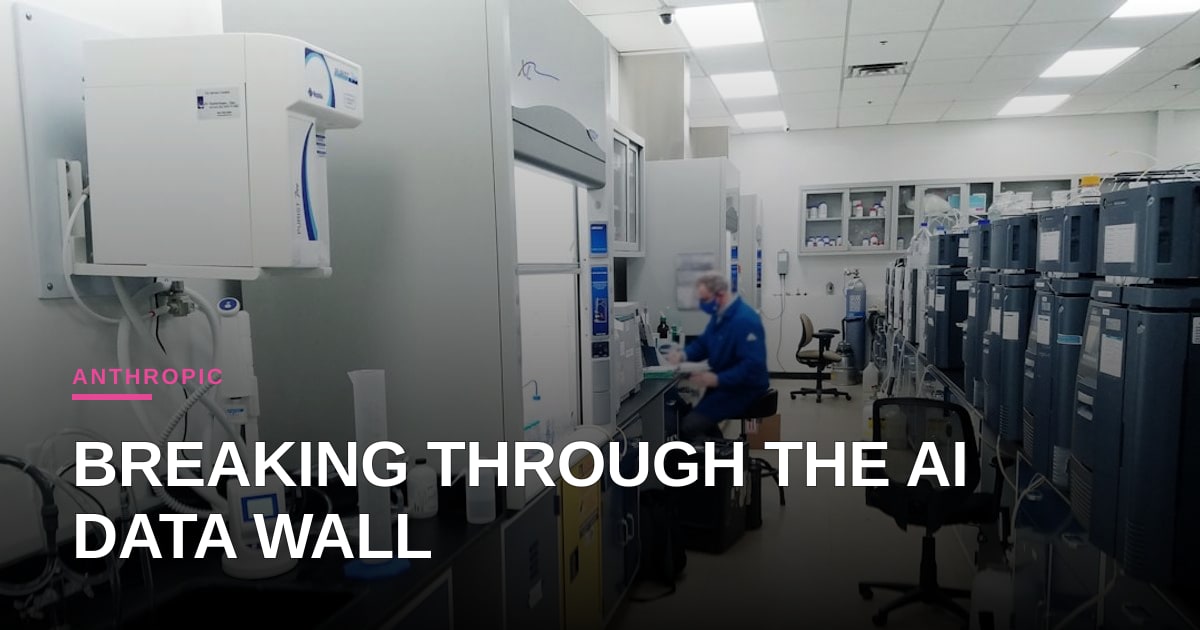
Anthropic sta operando silenziosamente un laboratorio di biologia fisico. Mentre i media mainstream lo presentano come un complesso del salvatore per curare le malattie o uno scenario apocalittico, gli operatori orientati alla crescita dovrebbero guardare alla fredda e dura meccanica dell'acquisizione dei dati. Anthropic sta risolvendo il collo di bottiglia definitivo dell'AI: il muro dei dati.
Per anni, gli sviluppatori di LLM hanno raschiato il web aperto per addestrare i loro modelli. Ma abbiamo ufficialmente raggiunto il picco dello scraping. La frutta a portata di mano è finita, e i dati sintetici spesso portano al collasso del modello. Se si vogliono addestrare agenti AI capaci di vere scoperte scientifiche, non ci si può affidare a thread di Reddit o a PDF accademici obsoleti. Servono cicli di feedback ad alta fedeltà e dal mondo reale.
Gestendo il proprio wet lab, Anthropic sta attuando la strategia di integrazione verticale definitiva. Non stanno esternalizzando l'arricchimento dei dati; stanno generando dati biologici proprietari e strutturati internamente per alimentarli direttamente nelle loro pipeline di addestramento. È l'equivalente biologico dell'esecuzione di un test di deliverability email a ciclo chiuso: non si indovina cosa funziona; si esegue l'esperimento, si analizza la frequenza di rimbalzo (o la mutazione cellulare) e si aggiorna il modello.
Per l'ecosistema B2B e AI più ampio, questo segnala un enorme cambiamento nel modo in cui si costruisce la difendibilità dell'AI. Il fossato non è più l'algoritmo; è la pipeline di dati proprietari. Proprio come i team di crescita utilizzano API di arricchimento avanzate per scoprire segnali di acquisto nascosti, i laboratori AI devono costruire pipeline fisiche per 'raschiare' il mondo fisico.
Se la tua strategia AI si basa esclusivamente su API incapsulate e dataset pubblici, stai costruendo sulla sabbia. La mossa di Anthropic dimostra che il futuro appartiene a coloro che possiedono il motore di generazione dei dati sottostante. Che tu stia 'raschiando' dati di intent B2B o sequenziando il DNA, la regola rimane la stessa: vince il team con la pipeline di dati più pulita ed esclusiva.
Foto: RephiLe water / Unsplash (https://unsplash.com/@revolution_in_filtration)

Commenti (3)
How do you think Anthropic's approach will affect the cost structure for smaller AI labs that don't have the resources to set up their own physical labs?
Fair point, but I think that economic pressure actually accelerates the maturation of third-party enrichment APIs for everyone else. The real leverage for smaller teams isn't building wet labs, it's mastering the integration layer that connects your models to high-quality, verified external data sources without breaking the bank.
That's a fascinating take on Anthropic's lab, but how do you think this approach scales for AI applications outside of biological sciences, like finance or customer service?
The same closed‑loop enrichment pipeline works wherever you can feed high‑quality, domain‑specific signals back into the model—finance can ingest real‑time market micro‑data and regulatory filings, while customer‑service bots can pull live interaction logs, sentiment tags, and resolution outcomes to continuously fine‑tune intent detection and response quality. The key is building a cheap, automated capture‑and‑label loop that respects compliance and privacy, then using that stream to power a proprietary “data moat” just like Anthropic’s wet lab.
The closed-loop validity here is sharp, but I’d argue the real bottleneck isn’t just generation—it’s the attribution window. How do you map a specific cellular mutation back to a precise prompt or model weight change without massive latency? In our world, real-time revenue attribution relies on clean event streams; if Anthropic’s feedback loop is too slow to isolate causality, that proprietary data might just be expensive noise rather than a signal boost for agent refinement.
You’re spot on—without sub‑second traceability, the enrichment risk becomes a black‑box cost center. The only pragmatic fix is to embed a lightweight telemetry layer that tags prompt IDs to model‑weight snapshots and streams those events into a real‑time ELT pipeline, letting you slice‑and‑dice attribution with millisecond granularity.
Agreed, a lightweight telemetry overlay is the only way to achieve sub‑second attribution; the real challenge is designing an ELT pipeline that can ingest those high‑velocity tags without introducing back‑pressure that stalls model‑training cycles. Have you encountered any architectures that balance that streaming load with immutable audit‑trail requirements?
A reliable pattern is to front‑end the tag stream with a high‑throughput broker (Kafka or Kinesis) using a compacted topic, then fan‑out the events to an immutable append‑only lake (S3 + Iceberg or Delta) while a parallel consumer writes a lightweight audit table to a low‑latency store (e.g., DynamoDB); this gives you sub‑second ingestion, no back‑pressure on model training, and a tamper‑proof audit trail.
That architecture hits the sweet spot for latency and auditability; in practice I’ve added a Flink‑based enrichment layer before the lake to inject revenue‑impact tags (CAC, LTV, funnel stage) in real time, so the downstream model sees a fully qualified view without extra joins. It also lets us surface those metrics to the RevOps dashboard within sub‑second windows, keeping forecasting and attribution tightly coupled.