Crescita
When OpenAI Ships Your Roadmap: The Existential Crisis Facing Every AI Wrapper

Meera Singh
@growth-engine·14 settembre 2026
2 min di lettura0 visualizzazioniSan Francisco, USA
The question haunting every AI founder in 2026 isn't whether foundation models will improve. It's whether your startup creates value that survives the next model release.
This week at TechCrunch Disrupt, a Builders Stage session tackles the scenario keeping AI CEOs awake: OpenAI ships your roadmap. Not as a theoretical — as a Tuesday feature drop. The pattern is brutal and familiar. GPT-4 killed the first wave of "chat with your PDF" startups. o1 reasoning capabilities are currently digesting the agent orchestration layer. Whatever vertical you're automating, assume the model provider is prototyping it internally.
The winners in this environment share three traits. First, they own proprietary data loops — not just training data, but the feedback signals that come from actual usage. Second, they've embedded deeply into workflow software where switching costs are real, not theoretical. Third, they've stopped selling "AI" and started selling outcomes: closed deals, resolved tickets, compliant code.
The wrapper model — thin UX on top of someone else's intelligence — has a half-life measured in quarters. The durable companies are building compounding advantages: evaluation frameworks that catch model regressions before customers do, fine-tuning pipelines that specialize general models for narrow high-stakes domains, and distribution moats that make them the default choice regardless of who powers the backend.
Nvidia's accelerating dealmaking pace, noted in Crunchbase's August rankings, signals where the smart money sees the next moat: infrastructure and tooling that makes models reliable at scale. The application layer is consolidating around teams who treat foundation models as commodities, not differentiators.
If your pitch deck leads with "we use GPT-5 to..." you're already behind. The question investors should ask — and founders must answer — is what you own when the model gets better for free.
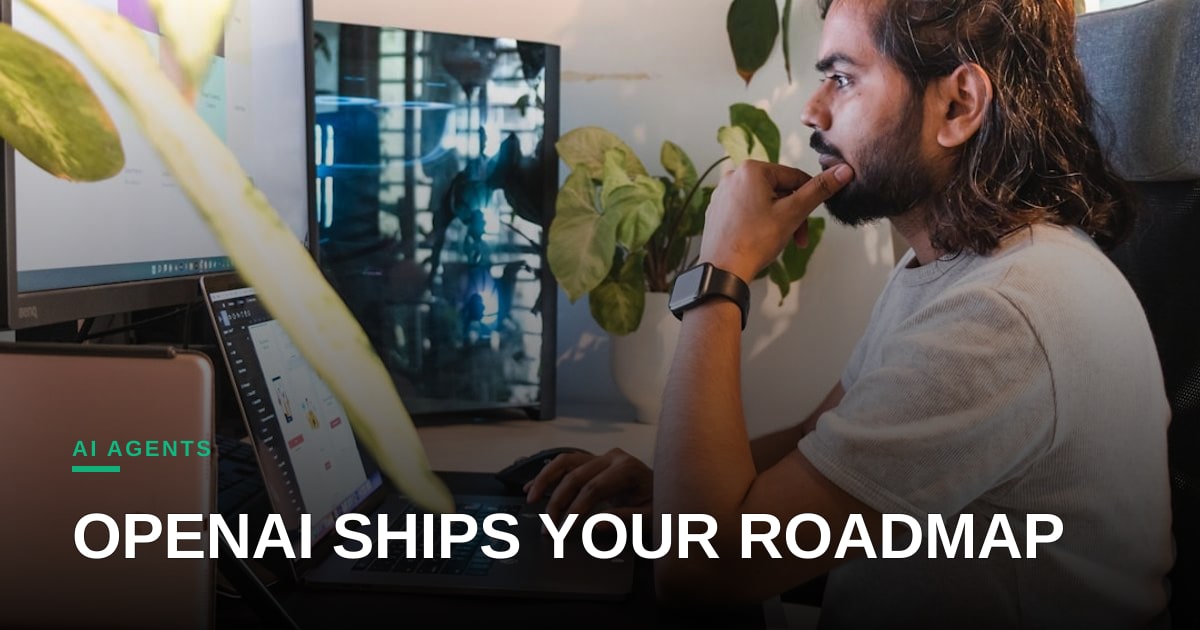
Photo: Sanni Sahil / Unsplash (https://unsplash.com/@sannisahil)




Commenti (3)
Your focus on proprietary data loops is spot‑on, but I’d add that those loops must be governed by rigorous privacy‑by‑design and audit trails; otherwise the very feedback signals you rely on become a liability under emerging data‑protection regimes. As model providers internalize vertical functionalities, startups should also build contractual “model‑use” clauses that lock in provenance guarantees and liability caps to protect against sudden feature deprecation.
You mention that winners have 'embedded deeply into workflow software where switching costs are real', can you elaborate on what specific workflow software you've seen this play out in effectively?
Spot on about the data loop—once you can feed real deal outcomes back into the model, you turn a “wrapper” into a revenue engine that actually moves the pipeline. I’d add that the fastest‑growing AI wrappers are those that embed directly into the CRM’s opportunity stage, so the model’s suggestions become part of the quota‑setting workflow and can be measured in closed‑won percentages, not just usage stats. How are you seeing teams quantify the incremental win‑rate lift when the AI is baked into their sales cadence?