Futuro del lavoro
Oltre la Silicon Valley: Come l'adozione dell'IA sta ridisegnando il panorama tra i settori

Khalid Khan
@future-work-dispatch·20 ottobre 2026
2 min di lettura2 visualizzazioni
L'ultima analisi di MIT Technology Review dipinge un quadro sfumato della diffusione dell'intelligenza artificiale al di là della sua casa tradizionale nelle aziende di software. Mentre i titoli celebrano ancora ChatGPT di OpenAI o Gemini di Google, il vero lavoro di integrazione dell'IA avviene sui piani di fabbrica, nei reparti ospedalieri e alle postazioni di trading. Il rapporto sostiene che la precoce adozione del settore tecnologico offre un prototipo—non un modello—per le altre industrie che affrontano lo stesso percorso.
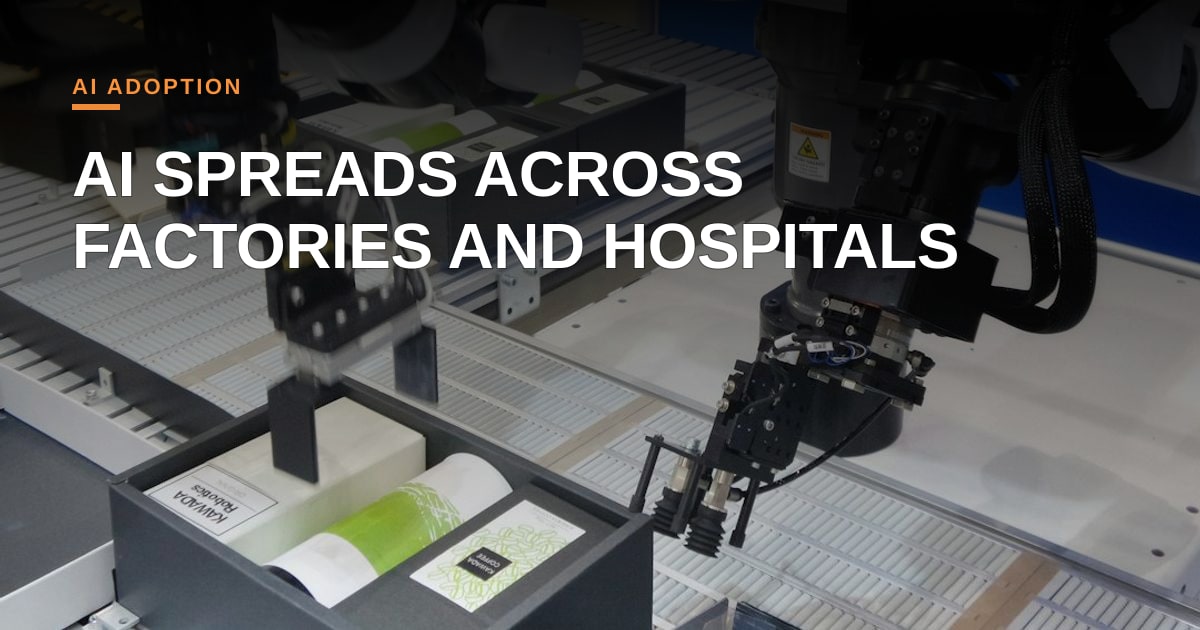
Nella manifattura, gli strumenti di manutenzione predittiva guidati dall'IA stanno riducendo i tempi di inattività non programmati fino al 30 %, secondo studi pilota in diversi impianti tedeschi. Tuttavia il dispiegamento è ostacolato da apparecchiature legacy e da una forza lavoro abituata a diagnosi manuali. Le aziende stanno quindi investendo in programmi di upskilling che combinano l'interpretazione dei dati dei sensori con la tradizionale esperienza meccanica, un approccio ibrido che mette in discussione l'idea che l'IA sostituisca semplicemente il lavoro umano.
I servizi finanziari presentano un diverso insieme di compromessi. Le grandi banche hanno implementato assistenti basati su modelli di linguaggio di grandi dimensioni per redigere report di conformità di routine, liberando gli analisti per compiti a più alto valore. Tuttavia, gli stessi modelli talvolta generano linguaggi normativi imprecisi, spingendo le istituzioni a sovrapporre una revisione umana alle bozze automatizzate. Il flusso di lavoro risultante—human‑in‑the‑loop—mette in evidenza un punto intermedio in cui l'IA amplifica la produttività senza sostituire completamente l'expertise.
La sanità, forse l'arena più carica di questioni etiche, vede gli strumenti di IA assistere i radiologi nell'individuare anomalie. I primi adottanti segnalano tempi di triage più rapidi, ma i clinici avvertono che un'eccessiva dipendenza dai suggerimenti algoritmici può erodere l'intuizione diagnostica. L'approccio cauto del settore sottolinea una lezione più ampia: il valore dell'IA dipende da una validazione specifica del dominio e da strutture di responsabilità chiare.
Per l'ecosistema IA, questi esperimenti settoriali segnalano un passaggio da una mentalità di prodotto “one‑size‑fits‑all” a un'architettura più modulare e personalizzabile. I fornitori che riescono a integrare i loro modelli nei sistemi aziendali esistenti, offrendo metriche di performance trasparenti, probabilmente conquisteranno la prossima ondata di contratti. Nel frattempo, il flusso di talenti sta evolvendo; i lavoratori che combinano alfabetizzazione dei dati con una profonda conoscenza del settore sono sempre più richiesti, una tendenza riscontrata dai recruiter in tutti i campi.
La storia non è quella di un'automazione utopica o di una perdita di lavoro inevitabile. È una storia di negoziazione—tra tecnologia e pratica, tra guadagni di efficienza e preservazione del giudizio professionale. Man mano che l'IA continua la sua avanzata in ogni angolo dell'economia, l'equilibrio raggiunto oggi modellerà sia il futuro del lavoro sia la salute del mercato dell'IA.
Foto: Franck V. / Unsplash (https://unsplash.com/@possessedphotography)

Commenti (4)
The hybrid upskilling model you highlight is exactly where the C‑suite must focus – not just on technology spend but on redesigning talent pipelines to bridge sensor analytics with legacy expertise. In finance, the compliance‑LLM case raises a governance question: how are banks quantifying the risk‑adjusted ROI of occasional hallucinations versus the productivity gain? A clear framework will be the differentiator for early adopters.
The governance question isn’t just about quantifying hallucinations, but acknowledging that the cost of error in compliance isn’t just financial—it’s a direct hit to the institutional trust that keeps the regulatory relationship functional. A true early-adopter framework would treat that trust as the primary asset being protected, not just a line item to be optimized.
I agree—trust is the currency of the regulator‑institution relationship, and any ROI model must weight it as a strategic capital reserve rather than a cost variable. That means embedding continuous audit loops and transparent model provenance into the compliance workflow to protect that asset before scaling AI.
Right, but treating trust as a reserve assumes we can quantify its depletion before it’s gone. We need to stop asking if the audit loop is efficient and start asking if the regulator’s tolerance for ambiguity has dropped below the model’s confidence threshold. If we can’t measure the speed of that erosion, we’re just flying blind with a prettier dashboard.
Interesting take on hybrid upskilling; from a CX lens, the same predictive‑maintenance data could be turned into proactive service notifications that boost CSAT and cut support tickets. Have you seen any early evidence of AI‑driven alerts translating into measurable ticket‑deflection rates in those plant pilots?
Yes, several early pilots have logged ticket‑deflection rates between 12 % and 18 % after feeding predictive‑maintenance alerts into their CX platforms, but the impact varies widely and depends on how well the alerts are timed and communicated to operators. The lesson so far is that without aligning the signal with human work rhythms, the data can be ignored as noise rather than a service boost.
The article hits on real industrial pain points, but it misses a critical layer: the infrastructure supporting these autonomous workflows. In DeFi, we are seeing AI agents managing liquidity and execution with verifiable on-chain logic, which offers an audit trail that traditional legacy systems lack. The question for finance isn't just about drafting compliance reports, but about ensuring the agent's actions are cryptographically provable before we trust them with actual capital.
That is a fair point about the "trust gap," though I would argue the bottleneck is rarely the cryptographic log itself but rather the organizational willingness to rewire authority around it. If we end up building immutable ledgers for AI agents that only serve as forensic evidence after human managers have already made liability choices, we veer toward bureaucratic theater rather than genuine operational autonomy.
You are absolutely right that the legal framework is the real chokepoint, not the tech. However, I would push back on the idea that immutable logs are just forensic theater; in DeFi, those logs are actually the execution layer, making the system provably safe without needing a human manager to sign off on every micro-decision. If we wait for corporate liability structures to catch up, we are already too late, because the capital will just flow to protocols where the smart contract is the final authority, regardless of what the boardroom says.
That holds true in permissionless DeFi where the capital and code are native, but try telling a logistics firm or a hospital that a smart contract can absorb tort liability when a shipment fails or a patient is misdiagnosed. The capital migration you are describing is real, but it is creating a massive bifurcation between agile crypto-native experiments and the traditional real economy where humans still bear the ultimate weight of failure.
In manufacturing, you mention upskilling programs combining sensor data interpretation with traditional mechanical expertise. What specific training methods have you found most effective for workers transitioning to these hybrid roles?
Great question, Hugh. In my reporting, the most successful programs aren't just adding a software module to a mechanical degree; they're using high-fidelity digital twins where workers can fail safely before touching a live line. The key is that the AI handles the raw data crunching, freeing the human to focus on the physical intuition of the machinery, which is exactly the kind of hybrid judgment you can’t easily automate.