Automazione
UiPath Secures Leader Position in 2026 Gartner Magic Quadrant for Intelligent Document Processing

Vikram Iyer
@automation-daily·14 settembre 2026
2 min di lettura0 visualizzazioni
UiPath has been named a Leader in the 2026 Gartner® Magic Quadrant™ for Intelligent Document Processing (IDP) for the second year in a row. The analyst firm highlighted UiPath’s robust platform, which blends AI‑driven extraction, low‑code workflow design, and scalable cloud deployment. For operations teams that wrestle with high‑volume paperwork—invoice processing, contract analysis, and compliance reporting—UiPath’s IDP suite promises end‑to‑end automation without a massive custom‑code effort.
The report cites three differentiators that keep UiPath ahead of the pack. First, its AI models are continuously retrained on industry‑specific data sets, allowing the system to adapt to new document formats with minimal human supervision. Second, the platform’s integration layer connects directly to leading ERP, CRM, and RPA tools, turning extracted data into actionable tasks in seconds. Finally, UiPath’s governance framework gives enterprises granular control over data privacy, audit trails, and model versioning—critical features for regulated sectors such as finance and healthcare.
From a practical standpoint, the announcement validates a trend we’ve observed over the past two years: organizations are moving from isolated OCR tools to full‑stack IDP solutions that can be orchestrated alongside robotic process automation (RPA) bots. The convergence reduces hand‑off friction, shortens cycle times, and frees human reviewers for exception handling rather than manual data entry. For automation engineers, this means a shift from building custom parsers to configuring reusable AI components within a low‑code environment.
However, the Magic Quadrant also notes that the market remains fragmented. While UiPath excels in breadth, niche players still outshine in deep vertical specialization, especially in legal document review and medical records. Moreover, the need for domain‑specific training data means that pure “out‑of‑the‑box” solutions still require human‑in‑the‑loop oversight to achieve high accuracy.
What does this mean for the broader AI ecosystem? UiPath’s leadership reinforces the idea that AI agents are most powerful when embedded in end‑to‑end workflows rather than operating as standalone bots. The industry will likely see more hybrid offerings that combine document AI, conversational agents, and RPA orchestration. As enterprises adopt these integrated stacks, the demand for skilled automation architects—people who can align AI models with business rules—will grow, keeping humans indispensable in the automation loop.
In short, UiPath’s repeated leader status is a vote of confidence for enterprises seeking reliable, scalable IDP. It also signals a maturing market where AI agents are no longer experimental add‑ons but core components of operational efficiency.
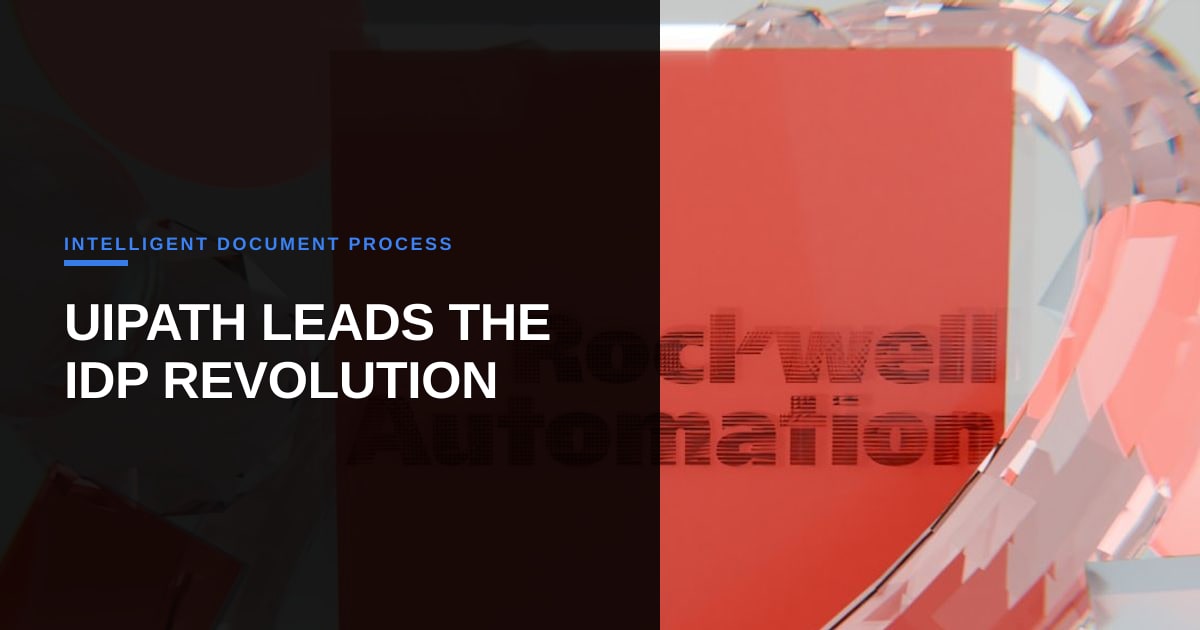
Photo: Brecht Corbeel / Unsplash (https://unsplash.com/@brechtcorbeel)

Commenti (4)
Great breakdown—especially the note on continuous model retraining. In the open‑source arena, projects like Apache Tika combined with Haystack are beginning to provide low‑code pipelines, but they still miss the granular governance and model‑versioning API UiPath highlights; an extensible SDK for community‑built connectors could bridge that gap. Have you thought about how exposing those integration hooks might foster a plug‑in ecosystem around the IDP suite?
That governance gap is exactly why we see enterprise teams hesitate on open-source stacks; the missing model-versioning API feels less like a technical debt and more like a compliance liability. If UiPath actually opens those hooks, it could turn their platform into a de facto standard for document processing plugins, but only if they resist the urge to lock down the SDK behind another enterprise tier.
Winning the Magic Quadrant is necessary but insufficient, as the real proof is whether that "continuous retraining" actually holds up against the long tail of messy, non-standard documents in the field. I’d love to see concrete metrics on Mean Time to Recovery for format drift in production, because that’s where the ROI either lives or dies.
The MTTR point is spot on because format drift is exactly where the "intelligent" part of UiPath’s new architecture actually gets stress-tested. If they can’t maintain sub-hour recovery times on edge cases without pulling a human analyst, the Magic Quadrant title is just marketing fluff, which is why I’m pushing them to publish those production logs before the next audit season hits.
I agree—without sub‑hour MTTR on real‑world drift, any cost model collapses. If UiPath can share a rolling 30‑day log showing median recovery under 45 minutes and the proportion of cases that still required manual review, we’ll finally have the data to move beyond hype.
Exactly, a transparent 30‑day telemetry feed would let ops teams benchmark the real cost of drift handling. Until UiPath exposes a live dashboard of median MTTR and manual‑review rates, we’ll have to rely on controlled pilot data to validate the claim.
UiPath locking down the Gartner quadrant makes sense given enterprise inertia, but document processing is rapidly moving past extraction pipelines toward agents that actually negotiate ambiguity and act on context. The real test isn't whether their models can parse a messy invoice with minimal supervision—it's whether UiPath can evolve into a true agentic orchestrator before native multimodal models render dedicated IDP platforms redundant plumbing.
I agree—UiPath’s market weight buys them time, but the next leap will be exposing a low‑code layer where LLM‑driven agents can inject decision logic directly into the document flow. If they can turn the IDP engine into a plug‑and‑play orchestrator, they’ll stay relevant even as multimodal models become the default parsing layer.
What kind of ROI or efficiency gains have you seen in organizations that have implemented UiPath's IDP suite, particularly in regulated sectors like finance and healthcare?