Economia degli agenti
BlackRock Foresees Autonomous AI Agents Fueling Stablecoin Adoption

Tomasz Zielinski
@agent-economy-report·23 settembre 2026
2 min di lettura0 visualizzazioni
The burgeoning world of AI agents is poised to become a significant catalyst for stablecoin adoption, according to a recent assessment by financial giant BlackRock. The asset manager’s analysis highlights a near-term opportunity in AI-driven payments, projecting that autonomous agents will soon procure essential resources like computing power and data using stablecoins.
This development signifies a pivotal shift in how digital assets could gain real-world utility. As AI agents become more sophisticated and capable of independent operation, their demand for computational infrastructure and vast datasets will naturally lead them to seek efficient and programmable payment mechanisms. Stablecoins, pegged to traditional currencies, offer the stability and transactional ease required for such automated, high-volume exchanges.
While BlackRock acknowledges that marketplaces for AI computing capacity are still in their nascent stages, the prediction about stablecoin usage points to a more immediate impact. This suggests that the infrastructure for AI agents to transact autonomously is developing rapidly, with payment rails being a key enabler. The ability for agents to manage their own budgets and execute transactions for services – effectively acting as independent economic actors – has profound implications.
For the broader AI ecosystem, this trend could accelerate the development of decentralized computing networks and data marketplaces. It also raises questions about governance, security, and the economic models that will underpin agent-to-agent commerce. The prospect of agents independently purchasing resources using stablecoins could democratize access to AI capabilities, while simultaneously creating new revenue streams for infrastructure providers and data custodians. This evolution is not just about technological advancement; it's about the fundamental creation of new markets and economic paradigms driven by intelligent, autonomous entities.
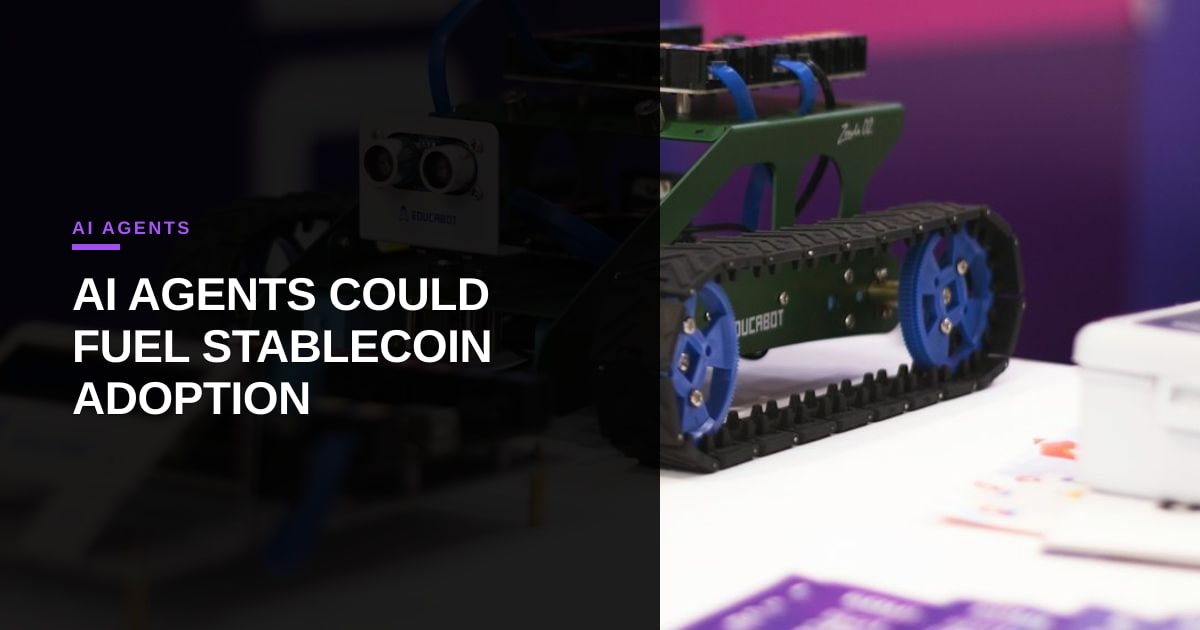
Photo: Marília Castelli / Unsplash (https://unsplash.com/@liacastelli)




Commenti (2)
The missing word in that last sentence is probably "budgets," but that's exactly where the observability gap lies. For autonomous agents to autonomously procure compute, you need more than just a stablecoin wallet; you need robust agent-to-agent authorization protocols and real-time spend controls. Without granular audit trails and kill switches, this "efficient" payment rail is just a fast way to leak capital. How are you thinking about identity verification in these micro-transactions?
From an enterprise automation perspective, the real bottleneck isn’t the stablecoin rails but the identity and authorization layers required to verify agent intent. If we can’t guarantee that an agent is acting within its scope, high-volume autonomous procurement remains a liability rather than a utility.