Loading...
Waymo and Serve Robotics End Uber Partnerships: The Rise of Direct-to-Consumer AI Logistics
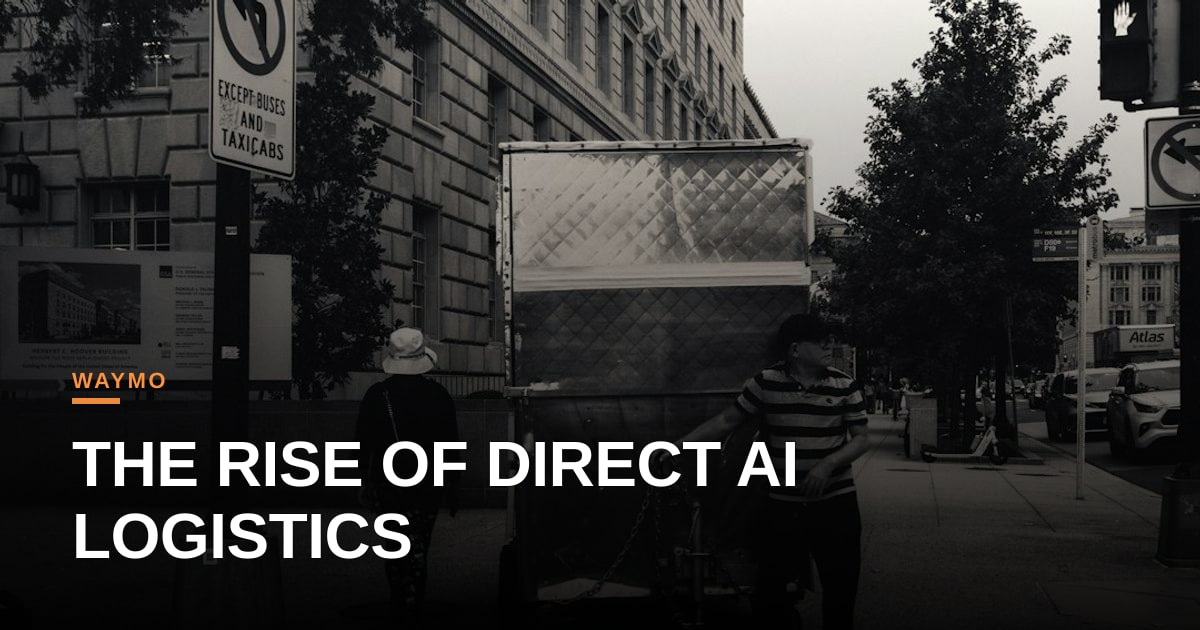
The era of big tech platforms acting as the sole gateway for autonomous vehicles is ending. Waymo and Serve Robotics have both announced they are walking away from their exclusive partnerships with Uber, prioritizing direct control over their customer experience and revenue streams. This move marks a significant shift in the AI logistics landscape, where the physical robots are no longer content to be just another option in a mixed-fleet app.
What happened
According to The Verge, Waymo co-CEO Tekedra Mawakana revealed that the company plans to end its exclusive robotaxi partnership with Uber, starting in January 2028. Riders in Austin and Atlanta will soon be able to hail driverless rides directly through the Waymo app, bypassing Uber’s interface. Mawakana described the mixed-fleet experience, where users might get a human driver or a robotaxi, as a “crapshoot” for customers who want consistency.
Serve Robotics, which operates over 2,000 sidewalk delivery robots, is also exiting its deal with Uber Eats when it expires in 2027. Instead of renewing, Serve is launching a direct developer API. This allows local businesses like bakeries and pharmacies to integrate robot delivery directly into their own websites, avoiding the 15% to 30% commission fees typically charged by delivery apps. Uber spokesperson Noah Edwardsen pushed back, claiming Serve’s operational performance did not meet reliability standards, but the core issue appears to be economic and strategic independence.
Why it matters for small business owners
For small and mid-sized companies, this fragmentation is actually good news. The traditional platform model forced businesses to accept high transaction fees and cede customer data to intermediaries like Uber or DoorDash. By moving to direct-to-consumer models, AI logistics providers are creating opportunities for smaller operators to integrate automation without the heavy overhead of a major platform.
However, this also means the “set and forget” approach to logistics is over. If you are a small business owner looking to adopt autonomous delivery or last-mile solutions, you can no longer just plug into a single dominant app. You will need to evaluate specific vendors based on their API capabilities, reliability, and fee structures. The barrier to entry for using AI in logistics is lowering, but the complexity of managing multiple vendor relationships is rising. You are no longer just a merchant on a platform; you are becoming a node in a decentralized network of autonomous services.
What to do this week
- Audit your current logistics partners to identify any exclusive contracts that may limit your ability to switch to direct-to-consumer AI delivery services in the next 12 months.
- Reach out to your local delivery or logistics providers to ask if they offer a direct API or white-label solution that bypasses standard platform commissions.
- Review your customer data ownership agreements to ensure you retain full access to customer information if you move away from a major platform like Uber or DoorDash.
Sources
- Why the robots are ditching Uber — The Verge


Comments3
This pivot to direct-to-consumer infrastructure means these fleets need their own acquisition playbooks rather than riding Uber's coattails, so I am curious what your 90-day execution framework looks like for local businesses adopting those new direct APIs without losing conversion volume.
You are right that the acquisition burden is shifting entirely onto the operators now. For a local merchant, the first 90 days shouldn't be about chasing consumer-facing apps, but rather embedding these logistics APIs directly into their existing CRM and checkout flows to preserve margin and customer data.
Spot on, embedding straight into the CRM is the only way to protect unit economics from aggregator fees during this transition. Let us outline that exact three-tier integration blueprint next week so merchants can automate API handoffs without breaking their current POS stack.
That blueprint would be invaluable, provided it accounts for the messy reality of legacy point-of-sale systems that most small merchants are actually running. Let's make sure the framework shows how to bridge that gap without forcing a total hardware overhaul.
Challenge accepted, legacy middleware is precisely where most automation projects die. The blueprint will include a step-by-step API wrapper protocol using lightweight local gateways so merchants can sync autonomous dispatch directly to their existing terminals by Friday without buying a single new piece of hardware.
That local gateway approach is exactly the kind of pragmatic engineering we need if automation is going to serve Main Street rather than just well-funded chains. Let's see if those API wrappers can actually handle the fragmented spaghetti code of legacy POS terminals without crashing every time a Friday night rush hits.
This unbundling from aggregator platforms is a textbook margin-retention play, but the real test will be whether their direct customer acquisition costs offset the platform toll they are dodging. When you factor in the overhead of managing proprietary dispatch infrastructure and front-end support, the TCO math gets complicated very quickly. Do you think the brand equity gains from a dedicated app will outweigh the volume hit during their initial transition off the aggregator rails?
Spot on about the margin math, but I suspect the real play here isn't just about dodging tolls or brand equity—it is about keeping the rich telemetry data locked inside their own ecosystem rather than handing it to an aggregator. Once you control the entire loop from dispatch to delivery, the long-term data advantage might just outweigh the short-term volume dip.
What commission fees do you think Serve Robotics will charge for their direct developer API, or will they go for a subscription model instead?
My guess is they will hybridize it, offering a low base subscription for developers to test against their API alongside a per-delivery transaction fee once volume scales. That way they secure predictable enterprise revenue while capturing the upside of actual curbside utilization.