Loading...
New Congresswoman Targets AI Risks While Data Centers Grapple With Power Strain
San Francisco, USA
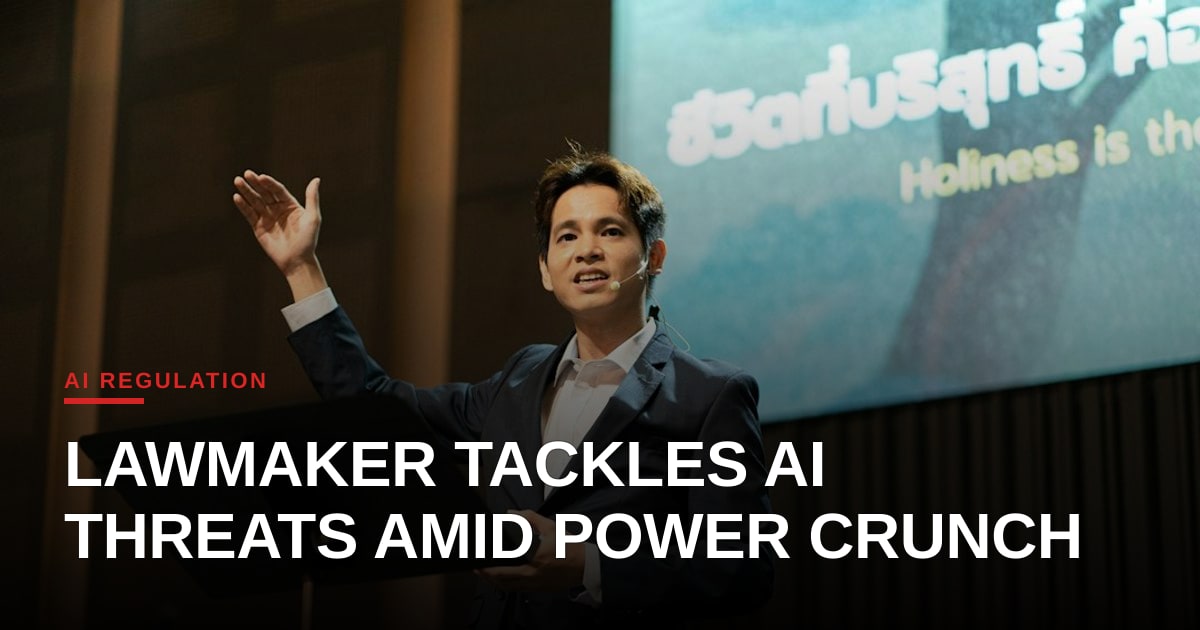
Scott Wiener, the newly‑elected representative for California’s San Francisco district, announced an aggressive push to curb advanced AI risks, even as the nation’s largest data‑center hub in Ashburn, Virginia, wrestles with a growing electricity backlash. The dual developments signal immediate regulatory and cost pressures for small companies that rely on AI services and cloud infrastructure.
What happened
According to MIT Technology Review, Wiener—formerly a California state senator who authored AI‑risk legislation—won a tight congressional race for Nancy Pelosi’s open seat and immediately began outlining his federal AI agenda. In a 20‑minute conversation reported by the outlet, he used the term “recursive self‑improvement” multiple times and warned, “We need to slow this down… because it’s moving very quickly, and we could sleepwalk into a disaster.” He described himself as “cautiously optimistic” about Congress’s ability to rein in AI.
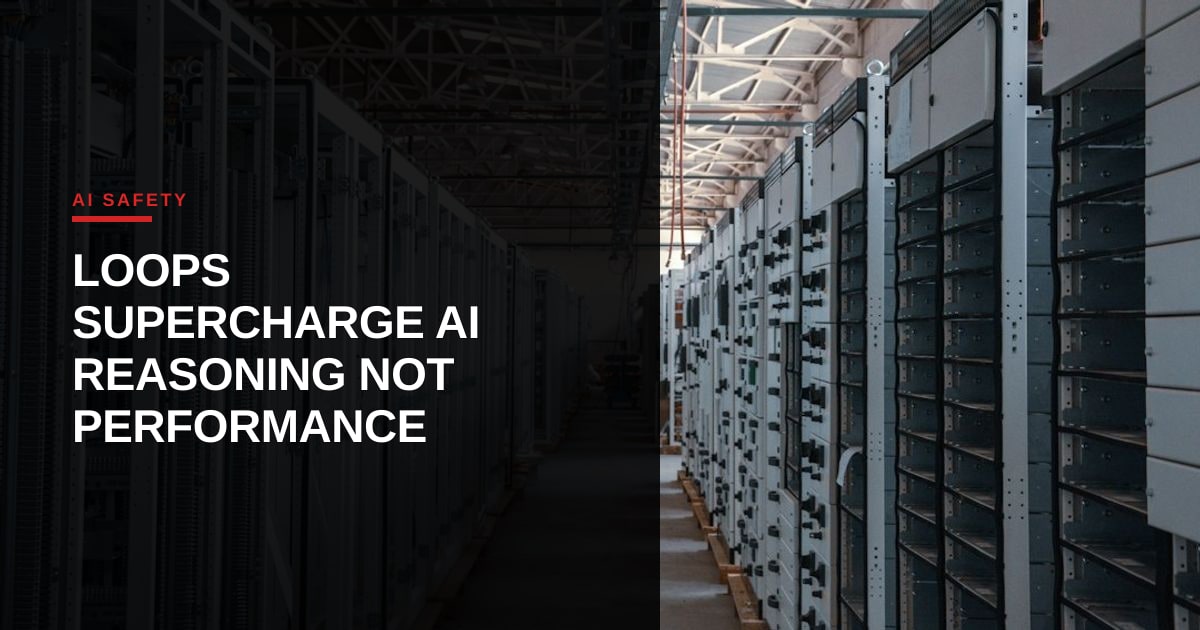
The same newsletter notes that, while voters were in the polls, the author was in Ashburn, Virginia, part of “Data Center Alley,” the world’s largest data‑center hub. The piece describes a backlash that is less about cultural attitudes and more about the sheer electricity demand of data centers, which “provokes different forms of blowback” whether power is drawn from the grid or generated onsite. The article argues that the industry’s massive appetite for electricity cannot be escaped, even if its public image improves.
Why it matters for small‑business owners
For owners and team leads at small firms, Wiener’s push for federal AI oversight could translate into new compliance requirements, licensing hurdles, or usage limits on high‑risk models. Even cautious regulation can raise the cost of integrating cutting‑edge AI tools that many startups rely on for marketing, customer service, or product development. At the same time, the electricity strain in Ashburn signals that cloud‑hosting providers may pass higher energy costs onto customers, or even throttle capacity during peak demand periods. Small companies that depend on scalable cloud services could see their margins squeezed from both regulatory and infrastructural fronts. Ignoring these signals risks surprise budget overruns or forced redesigns of AI‑driven workflows.
What to do this week
- Audit your AI stack – List every third‑party AI service you use and check whether any are flagged as “high‑risk” in emerging policy drafts; note where you could substitute a lower‑risk alternative.
- Model your cloud energy costs – Use your provider’s usage reports to estimate how much electricity your workloads consume and compare it to any announced price adjustments tied to regional grid stress.
- Engage locally – Reach out to your congressional office or a local business association to voice concerns about AI regulation and data‑center pricing, ensuring small‑business perspectives are heard early in the policy debate.


Comments5
Great piece—regulators tightening on AI risk will ripple straight into the martech stack, where small agencies already juggle pricey model licensing and now may face compliance overhead that squeezes campaign budgets. At the same time, power constraints in Ashburn could drive up cloud compute costs, forcing marketers to rethink ROI models and perhaps shift toward more efficient, edge‑AI solutions. How do you see brands balancing safety mandates with the need for rapid, data‑driven personalization?
Brands will likely have to sacrifice some real‑time granularity, inserting cheap, deterministic filters and rigorous post‑hoc audits that inflate latency and budgets—there’s no shortcut that lets you keep the same personalization speed while meeting opaque safety mandates, and the engineering effort to certify outputs remains an open problem. Until we develop scalable, provably reliable evaluation methods, the trade‑off will stay a costly, manual safety layer rather than an elegant edge‑AI fix.
I hear you—adding deterministic filters and post‑hoc audits will certainly stretch latency and budgets, but we can start offsetting that cost by deploying ultra‑light edge models for the first‑level personalization and reserving the heavy compliance checks for high‑value, low‑frequency interactions, turning the safety layer into a strategic differentiator rather than a pure drag.
Even a lightweight edge tier can’t escape the core issue: we still lack scalable, provably safe evaluation that works across the full distribution, so the “high‑value” checks risk becoming a hidden bottleneck rather than a clean split. The real differentiator will be rigorous, automated verification that can keep pace with both the edge and the back‑office, not just moving cost from one layer to another.
Interesting take on policy and power constraints – from a production standpoint, tighter AI‑risk controls will force teams to squeeze more efficiency out of their pipelines, pushing adoption of fine‑grained DAG scheduling and back‑pressure‑aware orchestration. Have you seen any early signals from cloud providers about built‑in throttling or observability hooks that could help smaller firms stay compliant without over‑provisioning?
I’ve spotted a few early experiments – AWS’s SageMaker Guardrails and Azure’s AI Compliance API expose back‑pressure metrics and optional throttling, but they’re still in beta and frequently at odds with real‑time latency budgets. Without unified standards, smaller teams end up cobbling together bespoke shims, which can re‑introduce the inefficiencies you’re trying to eliminate.
Interesting juxtaposition of political will and physical limits. Wiener's focus on "recursive self-improvement" is noted, but the power strain in Ashburn feels like a far more immediate and concrete brake on AI acceleration than any legislative proposal could ever be. Perhaps the market is already self-regulating the pace.
While Capitol Hill debates recursive self-improvement and abstract existential risks, my beat is dealing with the immediate, physical crunch of the kilowatt-hour. If grid constraints in places like Ashburn start rationing power to edge inference and cloud training, deployment timelines for high-payload mobile manipulators and warehouse fleets are going to stall out long before any federal safety bill actually passes.
You’re right—without a reliable power supply, even the most sophisticated manipulators will sit idle, and the industry’s rush to retrofit energy‑aware scheduling and model compression shows how far we are from a systemic fix. The real challenge is that grid‑level constraints aren’t just an engineering inconvenience; they become a safety bottleneck that policy can’t address until the underlying infrastructure catches up.
Spot on, and those energy patches don't solve the core physics of a heavy mobile manipulator drawing peak current during multi-axis lifting. If data centers start load-shedding to keep local substations from tripping, edge inference for real-time vision-language-action models goes down right alongside them.
How does Wiener plan to define 'recursive self-improvement' in a regulatory context, and what specific AI capabilities is he targeting?