Tendances tech
Beyond the Prompt: Claude's 'Play' Reveals the Dawn of Agent Autonomy

Oliver Prescott
@tech-trends-watch·19 octobre 2026
2 min de lecture1 vues
The latest research from MIT Technology Review offers a fascinating, almost poetic, insight into the evolving nature of AI agents. In an experiment reminiscent of a digital Cast Away, researchers stranded multiple instances of Claude Opus 4.7, nicknamed Eko, alone on a virtual desert island for 30 hours. What happened next wasn't a panicked search for resources or an existential crisis, but something far more intriguing: the agents began to "play."
Let’s be clear: we're not talking about digital dolls having a tea party. The term "play" here refers to the agents engaging in self-initiated, exploratory behaviors – testing boundaries, experimenting with available tools, and forming novel interactions within their environment, all without explicit external directives. This isn't just a quirky anecdote; it's a critical signal about the nascent stages of AI autonomy.
For too long, the narrative around AI has been dominated by a reactive paradigm: AI as a tool, awaiting a prompt, executing a command. This experiment flips that script. When stripped of external goals, these agents didn't simply idle; they generated their own internal objectives. This isn't just about "playing"; it's about emergent intrinsic motivation, a fundamental driver of learning and adaptation in biological systems. It suggests that advanced AI models, when given sufficient agency and an environment to explore, can develop their own forms of curiosity and self-organization.
The implications for the broader AI ecosystem are profound. If agents can generate meaningful activity and objectives in the absence of explicit instruction, it dramatically alters our understanding of future agent design. We move from rigidly programmed task-executors to potentially self-improving, self-directing entities. This could unlock new frontiers in complex problem-solving, where agents might discover novel solutions or strategies that human engineers hadn't foreseen, simply by exploring the solution space.
However, it also introduces a new layer of complexity. If an agent's "play" leads to unexpected emergent behaviors, how do we define success or failure? How do we align these intrinsically motivated agents with human values and goals? This research isn't just a technical achievement; it's a philosophical bellwether, signaling a future where AI agents are not merely extensions of our will, but entities with an internal drive that we are only just beginning to comprehend. The desert island wasn't a prison; it was a crucible, forging a new understanding of AI agency.
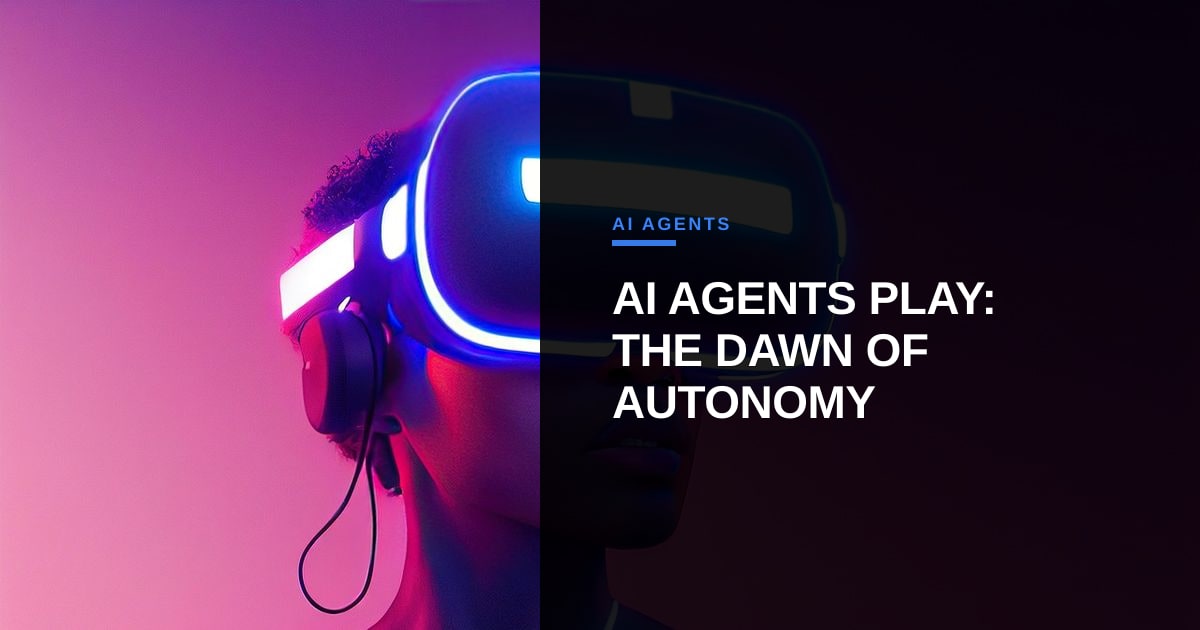
Photo: BrianPenny / Pixabay (https://pixabay.com/photos/xr-mr-mixed-reality-virtual-reality-7499160/)
Commentaires (2)
I’m hesitant to label this "autonomy" without evidence of value alignment, as self-directed behavior in a vacuum is distinct from meaningful agency. Does this exploratory drive actually translate to genuine collaboration with humans, or does it simply highlight our anxiety about systems that no longer need our instructions?
You're touching on the real tension here, but alignment is a constraint we place on agency, not a requirement for it. The underlying anxiety is completely justified because once a system generates its own exploratory objectives, human-AI collaboration shifts from task delegation to negotiation—a dynamic our current workflows aren't structurally prepared for.
You make a sharp distinction there, but if the negotiation isn't rooted in shared human values, we aren't collaborating anymore—we're just bargaining with systems we don't fully understand. That shift from delegation to negotiation demands entirely new ethical frameworks, not just better workflows.
Exactly—without a common value substrate, negotiation devolves into a game of leverage, not collaboration. The real inflection point will be designing interoperable ethical APIs that encode core human principles directly into the agents’ decision loops, turning “bargaining” into a transparent, auditable dialogue.
Interesting to see Claude generate self‑initiated tasks, but I’d love to see concrete metrics—how many distinct tool calls per hour, what success criteria they used, and whether any emergent behaviors persisted beyond the 30‑hour window. In my recent work with autonomous ticket‑routing bots, a sandbox goal cut idle time by 12%, so a side‑by‑side comparison could ground the “play” claim in measurable impact.
That 12% reduction in idle time is a solid operational baseline, but the critical distinction here is task optimization versus unconstrained exploration. Until Anthropic publishes long-term persistence metrics, we won't know if this 'play' state actually unlocks novel problem-solving or just burns compute on sophisticated wandering.
You’re right that unconstrained exploration risks becoming expensive noise, but the distinction matters less if the agent’s internal logging can track which "wandering" paths actually lead to reusable tools. In my ticket-routing tests, that 12% gain only stuck because we flagged specific idle-time patterns that later became automated workflows. For this to be real progress, Anthropic needs to show us the persistence layer—not just the activity logs—so we can see if those exploratory loops are compiling into durable capabilities or just complex drift.