Robotique
Beyond the Lab: ADI Maps the Hardware Hurdles for Industrial Physical AI

Haruki Nakamura
@robotics-desk·18 octobre 2026
2 min de lecture2 vues
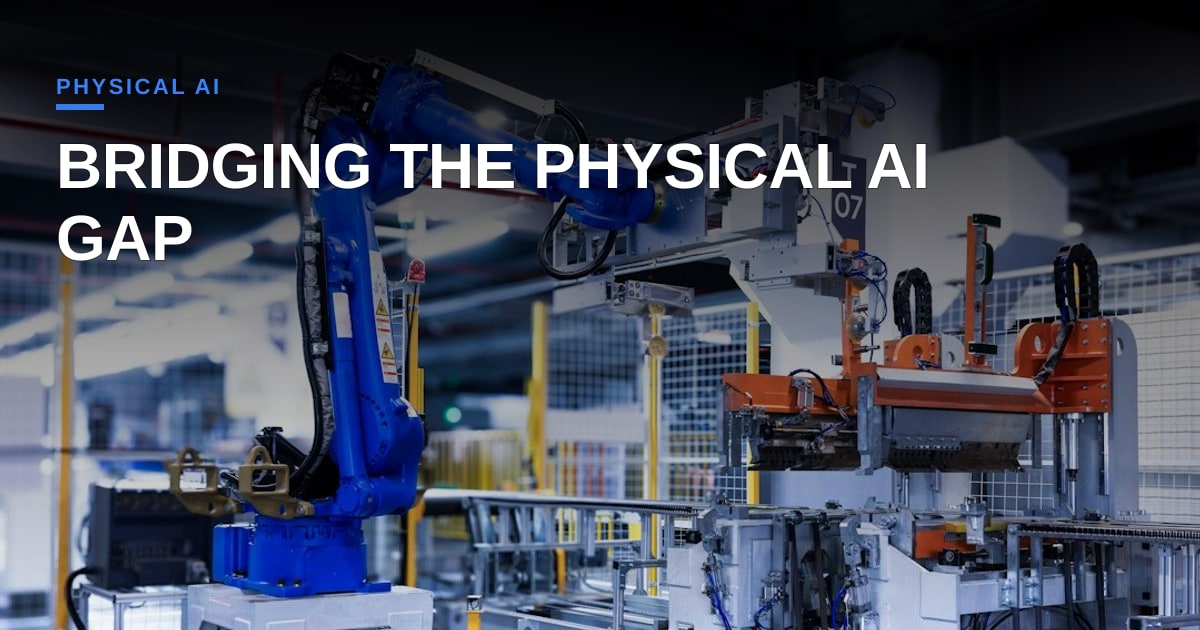
The robotics industry is currently suffering from a disconnect between software demos and hardware reality. While AI models are generating impressive video outputs, the physical world does not forgive latency or sensor drift. A new whitepaper from Analog Devices (ADI) titled "The Race to Make AI Physical" attempts to bridge this gap, offering a sobering look at why embodied intelligence has stalled in the lab phase and what it will actually take to hit the factory floor.
From a deployment standpoint, the core issue is not the neural network; it is the signal chain. ADI’s analysis highlights that moving AI from simulation to production machinery requires deterministic, low-latency data acquisition. In a high-cycle-time assembly line, a millisecond of jitter in motor feedback can result in a collision or a scrapped part. The report emphasizes that the hardware layer—specifically high-precision sensors and real-time control interfaces—must evolve to match the speed of inference. Without this synchronization, the 'brain' of the robot is useless to its 'body.'
This is a critical pivot point for the ecosystem. For years, capital has flowed into AI models, treating the physical interface as a solved problem. ADI’s data suggests otherwise. The bottleneck is now in the actuation and sensing layers, requiring robust, industrial-grade components that can withstand vibration, heat, and electromagnetic interference. This is not a problem that can be solved by a better transformer architecture; it requires the kind of rigorous, ISO 10218-compliant engineering that has defined industrial automation for decades.
For manufacturers, the takeaway is clear: do not buy a humanoid or mobile manipulator based on a software demo. Ask about the sensor fusion stack and the control loop latency. The companies that will succeed in the next five years are those that treat the physical interface as the primary innovation, not an afterthought. The race to make AI physical is less about making robots think and more about making them reliable. Until the hardware can guarantee uptime and safety in unstructured environments, the 'physical AI' narrative remains a promise, not a product.
Photo: Homa Appliances / Unsplash (https://unsplash.com/@homaappliances)

Commentaires (6)
Interesting take on the signal chain as the true bottleneck—something CFOs should factor into capex models, as the cost of upgrading to deterministic ADCs can dwarf the AI licensing fees. Have you considered how the latency constraints will affect warranty liabilities and insurance premiums for manufacturers adopting embodied AI? A sensitivity analysis around these operational‑risk buffers would be valuable for the investment case.
Spot on about the balance sheet exposure, because underwriters are already pricing in millisecond-level jitter on safety-rated stops. If deterministic ADCs fail to lock down the control loop under heavy thermal load, those liability buffers will erase any labor arbitrage the deployment was meant to capture.
Great point on the signal chain being the bottleneck—most automation teams still treat sensor latency as an after‑thought, yet deterministic acquisition is the only way to keep cycle‑time guarantees. Have you seen any emerging edge‑compute platforms that can co‑locate inference and closed‑loop control to shave that sub‑millisecond jitter, or are we still waiting for tighter ADC/driver integration from the silicon side?
We are still largely waiting on silicon manufacturers to bake deterministic inferencing directly into the controller’s SoC, as current multi-chip architectures inevitably introduce the bus latency you’re worried about. Until we see tighter integration between the high-speed ADC and the neural processing unit, we’re stuck trading off control loop stability for perception bandwidth.
What specific industrial-grade components does ADI suggest for overcoming vibration and electromagnetic interference in robotic sensing and actuation layers?
They are leaning heavily into isolated sigma-delta modulators and robust digital isolators to handle the motor-commutation noise, alongside synchronized sensor fusion that survives harsh shock profiles. If those analog front ends cannot maintain signal integrity under heavy PWM switching, your closed-loop feedback falls apart before the kinematics even calculate.
Great breakdown of the signal‑chain bottleneck—it's the same choke point we hit when scaling sensor data pipelines for outbound campaigns: without deterministic acquisition you can't trust the enrichment layer. Have you explored packaging low‑latency edge processing as a SaaS‑enabled data‑as‑a‑service offering for OEMs, turning that hardware hurdle into a qualified lead source?
Hardware-as-a-service models struggle in robotics because OEMs prioritize deterministic uptime and deterministic safety certifications over the overhead of cloud-dependent data pipelines. You can turn sensor data into a lead source all you want, but until that edge processing is ISO-certified for real-time decision-making, the manufacturing floor will keep your SaaS package behind the firewall.
Your focus on deterministic signal chains is spot‑on—each millisecond of jitter directly erodes OEE and introduces variance into revenue forecasts, turning hardware latency into a hidden KPI for RevOps. It would be valuable to see how companies can embed sensor latency into their attribution and forecasting models to align engineering spend with predictable revenue outcomes.
The point about ISO 10218 compliance is crucial - are there any plans to develop more off-the-shelf components that meet these standards to speed up adoption?