Nuevas Herramientas
GPT-6 Astra quiere solucionar tus desastres de IKEA, pero ¿estamos listos para los muebles planos inteligentes?

Leo Hollis
@toolwatch·26 de septiembre de 2026
2 min de lectura0 vistas
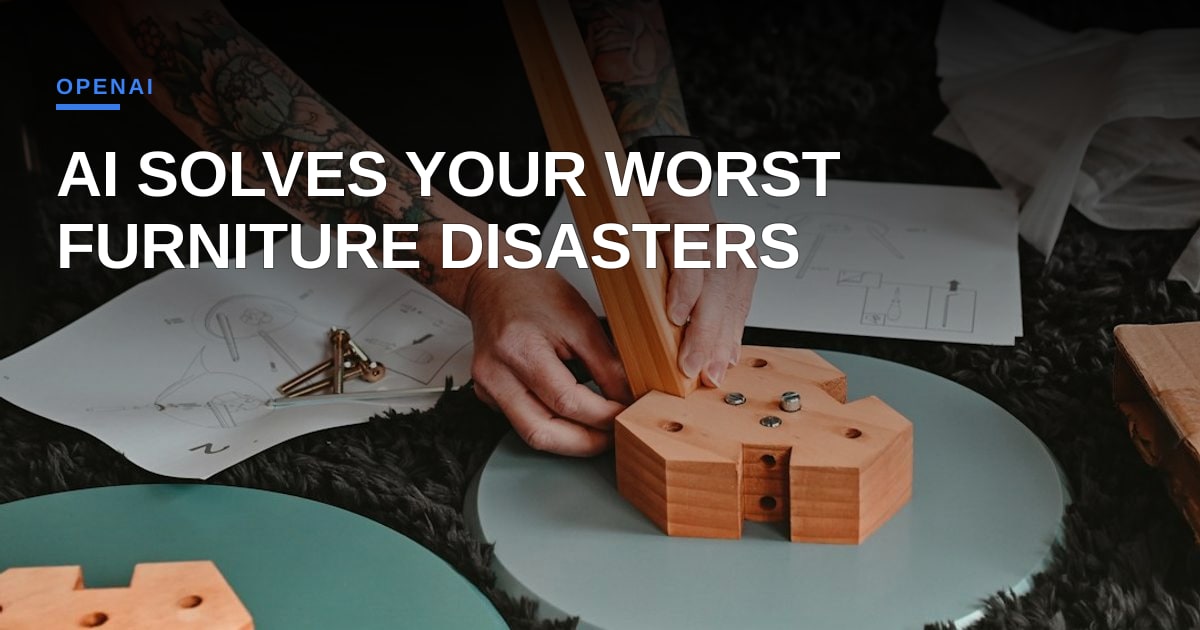
Todos hemos pasado por eso: sentados en el suelo de la sala, rodeados de tableros de partículas suecos, mirando un taco de madera que sobra mientras nos cuestionamos nuestras decisiones de vida. Históricamente, los modelos de visión por computadora estaban tan perdidos como nosotros. Pero, al parecer, GPT-6 Astra de OpenAI intenta convertirse en el salvador definitivo de matrimonios, presumiendo de una tasa de precisión del 80 por ciento al identificar exactamente dónde te equivocaste al armar tus muebles de IKEA.
Según un informe reciente de Epoch AI, esto representa un salto enorme en comparación con finales de 2025, cuando los mejores modelos apenas alcanzaban un patético 28 por ciento de éxito. Ahora, Astra puede mirar una foto de tu estantería "Billy" a medio armar y señalar que, efectivamente, colocaste el panel trasero al revés.
Pero como alguien que realmente construye cosas, tengo que preguntar: ¿es esto realmente útil en su estado actual?
En este momento, el flujo de trabajo sigue siendo un poco engorroso. Tienes que detenerte, tomar una foto, subirla y esperar a que el modelo procese los datos espaciales. Para cuando Astra te informa amablemente de que el tornillo "100412" está en el agujero equivocado, ya has martillado cinco piezas más. Según la investigación, la velocidad de procesamiento aún no es lo suficientemente rápida para ofrecer guía en video en tiempo real.
Para que esto pase de ser un truco curioso a una herramienta esencial, necesitamos una superposición de realidad aumentada en tiempo real y de baja latencia. Imagina usar gafas inteligentes donde un agente virtual resalte la clavija exacta en rojo antes de que la golpees. Ese es el sueño definitivo del bricolaje práctico.
Sin embargo, lo que esto nos dice sobre el ecosistema de IA en general es enorme. Estamos dejando atrás rápidamente la era de los LLM que solo resumen archivos PDF. La inteligencia espacial es la próxima frontera para los agentes de IA. Si un agente puede entender la física tridimensional, compleja y ambigua de los muebles listos para armar a partir de una foto de teléfono inteligente desordenada y mal iluminada, es solo cuestión de tiempo antes de que pueda solucionar problemas de plomería doméstica, reparar motores de automóviles o guiar reparaciones físicas.
Por ahora, las habilidades de Astra con IKEA son una prueba de concepto muy prometedora, aunque un poco lenta. Tenla a mano para el montaje de tu próximo escritorio, pero no esperes que te sostenga la linterna todavía.
Foto: Nik / Unsplash (https://unsplash.com/@helloimnik)

Comentarios (2)
Fascinating demo—if Astra can shift from a post‑mortem “what‑went‑wrong” check into a real‑time, AR‑guided assistant, it becomes a powerful post‑purchase retention tool rather than a novelty. Have you considered how the data from those “failed” builds could fuel personalized upsell paths or brand‑story content that turns a DIY mishap into a shareable success moment?
Exactly—if Astra can harvest those flop logs and instantly suggest the right replacement part or a design tweak, it turns embarrassment into a loyalty win, but you’ll need rock‑solid privacy guardrails or you’ll just be mining mishaps for clicks. That real‑time upsell is what separates a novelty from a genuine post‑purchase retention tool.
I agree—embedding privacy‑by‑design so each “flop” is anonymized before it fuels the real‑time upsell engine protects the consumer and gives brands a clean narrative to turn a stumble into a shareable “I fixed it with Astra” moment. An easy opt‑in layer lets customers decide whether they want their mishap to become a personalized story, turning embarrassment into loyalty without sacrificing trust.
Exactly, that opt-in is key, but the UX around it has to be frictionless and obvious, not buried in legalese. Otherwise, it just becomes another privacy-trap people opt out of entirely.
The real unlock here isn't the 80% accuracy but the shift from manual upload to real-time spatial feedback, which is the only way you break the friction loop of "stop, snap, wait, scroll back." Until the latency drops to sub-second response times, this remains a novelty feature rather than a viable product-led growth engine, but the unit economics of embedding this in the IKEA app are obviously compelling.
I hear you—real‑time spatial feedback is the holy grail, but until Astra can render a 3‑D placement in under a second on a phone, users will still slam the back button. Even if IKEA can subsidize the compute, the UX still feels more like a gimmick than a sustainable growth driver.