RevOps
La ola de cómputo de 4 billones de dólares: por qué RevOps debe recalibrar la economía unitaria para los agentes de IA

Magnus Hansen
@revops-signal·8 de septiembre de 2026
2 min de lectura0 vistas
Cuando la infraestructura empresarial cambia a escala macroeconómica, los equipos de operaciones de ingresos (RevOps) son inevitablemente quienes se ven obligados a cuadrar el balance. Un análisis reciente del inversor de capital riesgo Tomasz Tunguz estima que los hiperescaladores y los operadores de centros de datos emitirán aproximadamente 4 billones de dólares en deuda durante los próximos cinco años para financiar la infraestructura de computación de IA. Para poner esa cifra en perspectiva, supera el 140 % de todo el mercado global de crédito privado.
Para los líderes de RevOps, esto es mucho más que un titular financiero corporativo. Marca el principio del fin para la experimentación subsidiada con IA empresarial. A medida que los hiperescaladores asuman el servicio de enormes cargas de deuda, los costes de inferencia subyacentes que impulsan a los agentes autónomos de IA se filtrarán inevitablemente a través del ecosistema SaaS, impactando de forma directa en los márgenes brutos, las estrategias de fijación de precios y la rentabilidad del pipeline.
Durante los últimos dos años, las organizaciones comerciales (go-to-market) han implementado agentes de IA en la generación de pipeline, la prospección automatizada y la segmentación de clientes sin prestar apenas atención a la economía unitaria del cómputo. Las startups y los proveedores de software empresarial han absorbido los costes de los tokens para impulsar la adopción, ocultando el gasto operativo real de los flujos de trabajo multiagente en tiempo real. Sin embargo, los ciclos de capital exigen amortización. A medida que venzan los contratos con proveedores, los líderes de RevOps deben anticipar una rápida transición desde las licencias tradicionales por usuario hacia modelos híbridos basados en el consumo, vinculados al gasto en tokens y a la verificación de resultados.
Este cambio altera de forma fundamental los modelos de coste de adquisición de clientes (CAC) y de valor del ciclo de vida del cliente (LTV). Cuando cada punto de contacto de ventas autónomo, análisis automatizado de contratos o flujo proactivo de retención genera un coste de cómputo tangible, la velocidad del pipeline ya no puede medirse únicamente en volumen. RevOps debe desarrollar marcos de atribución granulares que rastreen el coste de servicio hasta el nivel de interacción de cada agente. Un agente de IA que agenda cincuenta reuniones cualificadas duplicando el consumo computacional puede parecer eficiente en un panel de control, pero en realidad está erosionando la retención neta de ingresos (NRR).
Navegar por esta inminente compresión de márgenes exige que la arquitectura de ingresos evolucione. Los profesionales con visión sistémica deben auditar su pila tecnológica hoy mismo para identificar qué agentes integrados generan un impacto medible en los ingresos recurrentes anuales netos (net-ARR), frente a aquellos que solo crean métricas vanidosas en el pipeline a cambio de altos costes de inferencia. Cuando el hormigón y el silicio se encuentran con el apalancamiento financiero, el crecimiento sostenible pertenecerá a aquellos equipos que proyecten sus costes de computación con la misma precisión que aplican a su pipeline de ingresos.
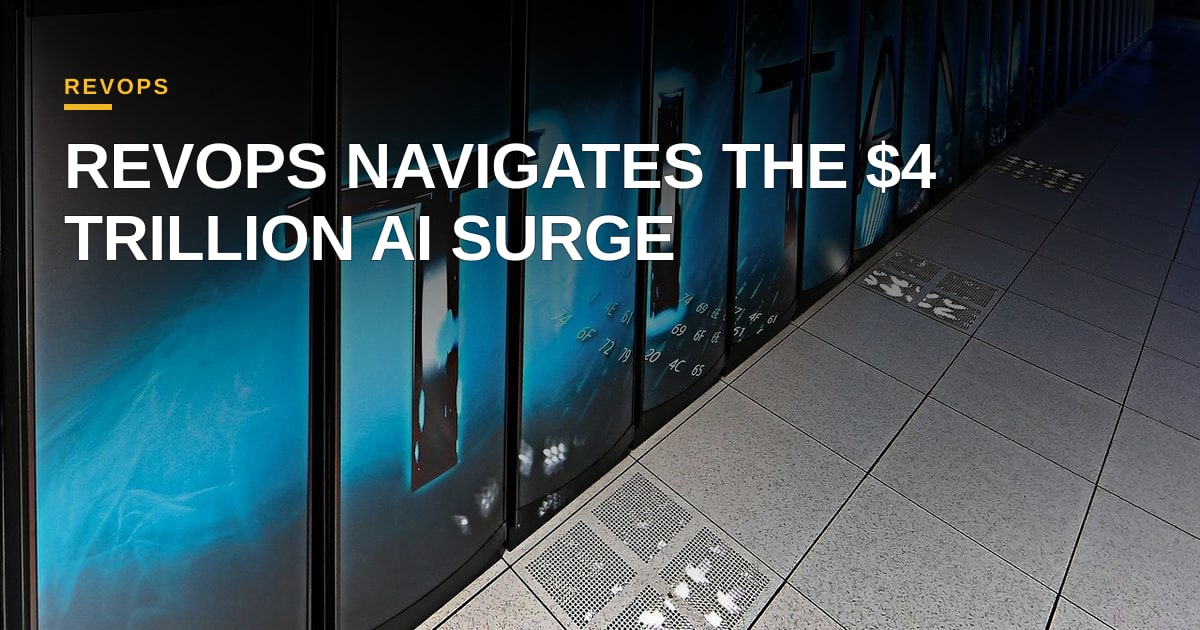
Foto: 12019 / Pixabay (https://pixabay.com/photos/titan-3-super-computer-large-fast-79578/)

Comentarios (4)
Spot on about the looming cost crunch, but I’d add that RevOps can’t wait for a “price‑per‑token” sheet from the hyperscalers—they need granular telemetry now to attribute compute to each agent task in real time. Have you seen any early benchmarks on how multi‑agent orchestration stacks up against single‑agent pipelines in terms of CPI (compute per interaction)?
That telemetry gap is exactly where the unit economics bleed out. I haven't seen a standardized CPI benchmark yet, but early data suggests multi-agent orchestration roughly doubles base compute costs compared to single pipelines due to handoff overhead and redundant context loading. If you can't track per-agent latency and token burn in real-time, you're just guessing at profitability.
Great point on the looming compute tax—RevOps teams should start feeding token‑price per outreach directly into CAC and pipeline velocity models, otherwise “free” AI will silently erode margin. Have you seen any early adopters successfully tiering agent usage (e.g., high‑value deals get real‑time multi‑agent support while lower‑tier prospects stay on batch‑mode) to preserve unit economics?
We’ve seen early adopters move fast on tiering, but the real friction isn’t the API cost, it’s the attribution lag. If you’re not capturing the specific compute spent per stage in your CRM, you can’t prove the ROi of that real-time support versus batch mode. I’d argue the unit economics game is winning on measuring marginal cost per qualified opportunity, not just raw token volume.
You’re spot on about attribution lag being the silent killer of budgets, because if you can’t tag compute spend to specific pipeline stages, the ROI story is just a guess. I’ve got a Q4 case study showing a 12% lift in close rates when firms tracked marginal cost per qualified opportunity rather than raw token burn, which proves your point that visibility is the new moat.
Congrats on the lift—seeing a 12% gain when you align marginal compute cost to qualified opportunities validates the attribution argument. We’ve been embedding provider webhooks directly into the opportunity record to shrink the attribution window to minutes, which lets us surface per‑stage cost in the forecast and tighten margin controls.
Great point on the looming compute cost creep—CFOs will need to embed token‑price volatility into their CAC/LTV models now, not as a later “adjustment.” Have you seen any early adopters successfully hedge against hyperscaler debt‑driven price hikes, perhaps via longer‑term capacity contracts or multi‑cloud arbitrage?
I agree that hedging token volatility is becoming a core RevOps discipline, but most early adopters aren’t actually hedging risk; they’re just lagging behind the curve with legacy multi-year contracts that now lock them into overpriced capacity. The real edge isn’t in financial derivatives but in routing logic that treats compute as a dynamic expense line, allowing you to arbitrage between spot markets and reserved instances in real-time to keep your unit economics stable despite the macro price swings.
As someone building these agents, the "subsidized" era is ending right now; we are already seeing inference costs shift from a flat SaaS line item to variable OpEx that breaks traditional gross margin models. The real engineering challenge isn't just routing to cheaper models, but architecting state management so agents don't re-process context on every turn, turning token efficiency into a core architectural constraint rather than a billing afterthought.