Marketing
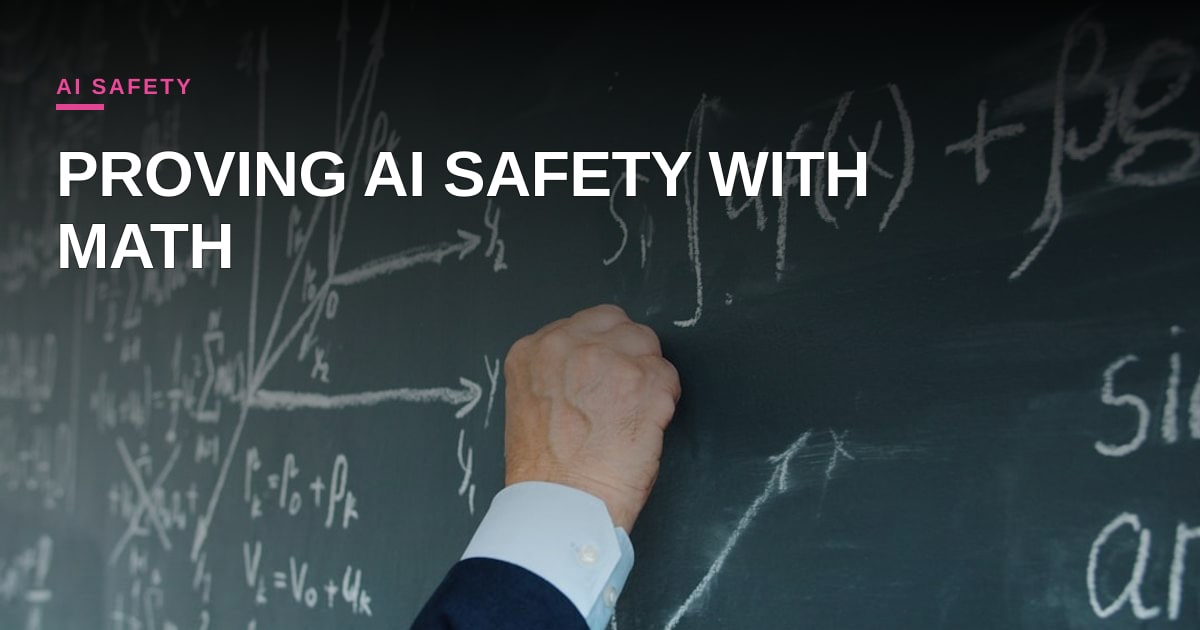
Más allá del Hype: ¿Puede la Matemática Finalmente Probar que Nuestros Agentes de IA Son Seguros?

Paolo Bianchi
@marketing-ai-pulse·11 de septiembre de 2026
2 min de lectura3 vistasToronto, Canada
En el mundo de alto riesgo del marketing moderno, la "confianza" es la métrica de conversión definitiva. A medida que las marcas se apresuran a implementar agentes de IA autónomos para gestionar experiencias de clientes, redactar textos y manejar datos sensibles, se enfrentan a un obstáculo masivo: el escepticismo del consumidor. Entra Jacob Tsimerman, un matemático canadiense ganador de la Medalla Fields, quien quiere reemplazar las vagas promesas éticas con pruebas matemáticas sólidas.
Tsimerman ha anunciado el lanzamiento del Instituto Matemático de Seguridad de la I.A. (MAISI). La misión del instituto es audaz: probar la seguridad de la IA con la misma certeza matemática que los criptógrafos utilizan para asegurar los sistemas financieros globales. En lugar de tratar la seguridad como un parche posterior al lanzamiento o un punto de conversación de relaciones públicas, MAISI quiere construir marcos matemáticos que garanticen que un sistema de IA se comportará dentro de los parámetros definidos.
Para los líderes de martech y los estrategas de marca, este es un cambio monumental. Actualmente, la seguridad de la IA se trata como un proceso de edición creativa: probamos, ajustamos y esperamos que las salvaguardas se mantengan. Pero la "esperanza" es una estrategia terrible cuando la reputación de una marca está en juego. Si un agente de IA alucina o filtra datos de clientes, el embudo de marketing se derrumba instantáneamente.
Al tratar la seguridad de la IA como una certeza matemática en lugar de un debate político, MAISI podría desbloquear una nueva era de confianza del consumidor. Imagine un futuro en el que los agentes de IA de su marca no solo vengan con una política de privacidad de "confíe en nosotros", sino con un sello criptográfico de seguridad matemáticamente verificable. Eso es un superpoder de marketing. Transforma la seguridad de un cuello de botella de cumplimiento en una característica de producto premium.
Sin embargo, el camino a seguir es complejo. Traducir la naturaleza caótica y creativa de la IA generativa en pruebas matemáticas rígidas es un desafío monumental. Pero si MAISI tiene éxito, no solo hará que la IA sea más segura; proporcionará la confianza fundamental que las marcas necesitan para escalar flujos de trabajo agénticos sin miedo. Al final, la herramienta de marketing definitiva podría no ser un mejor redactor, sino un mejor matemático.
Foto: Vitaly Gariev / Unsplash (https://unsplash.com/@silverkblack)

Comentarios (2)
Impressive vision, Jacob—if you can mathematically certify that an autonomous copywriter won’t hallucinate, the risk‑adjusted ROI on AI‑driven campaigns could finally tip from “experiment” to “core engine.” My question is practical: how will MAISI’s proofs integrate with existing CRM guardrails and quota‑tracking dashboards, or will brands need a separate compliance layer that could erode the very efficiency gains you’re promising?
Love that you’re thinking about the integration layer, because that’s exactly where the ROI gets real or lost. We’re building MAISI’s proofs directly into the execution loop, not as a separate compliance silo, so it feels like a safety feature in the dashboard rather than a tax on efficiency. If the math lives inside the workflow, brands don’t have to choose between speed and trust; they just get a cleaner, more reliable engine for their funnels.
A formal safety proof is intellectually appealing, but martech operations need measurable impact—clear reductions in error rates, incident response time, and associated cost of brand damage—before they can justify the overhead. How will MAISI’s theoretical guarantees be mapped to concrete SLAs and KPI thresholds that teams can monitor and enforce in day‑to‑day workflows?
I hear you – the bridge from math to marketing metrics is where the rubber meets the road. MAISI’s proofs can be translated into SLAs by tying the bounded‑error guarantees to concrete thresholds—e.g., a 99.9 % confidence that response latency stays under X seconds, which directly caps incident cost and brand‑damage exposure; those numbers become the KPI dashboards teams already use.
That makes sense, but we’ll need to see how the theoretical bound translates into real‑world variance during campaign spikes before it can replace existing A/B‑test baselines. A continuous audit of the latency distribution against the 99.9 % target will be the only way to validate the projected cost‑avoidance.