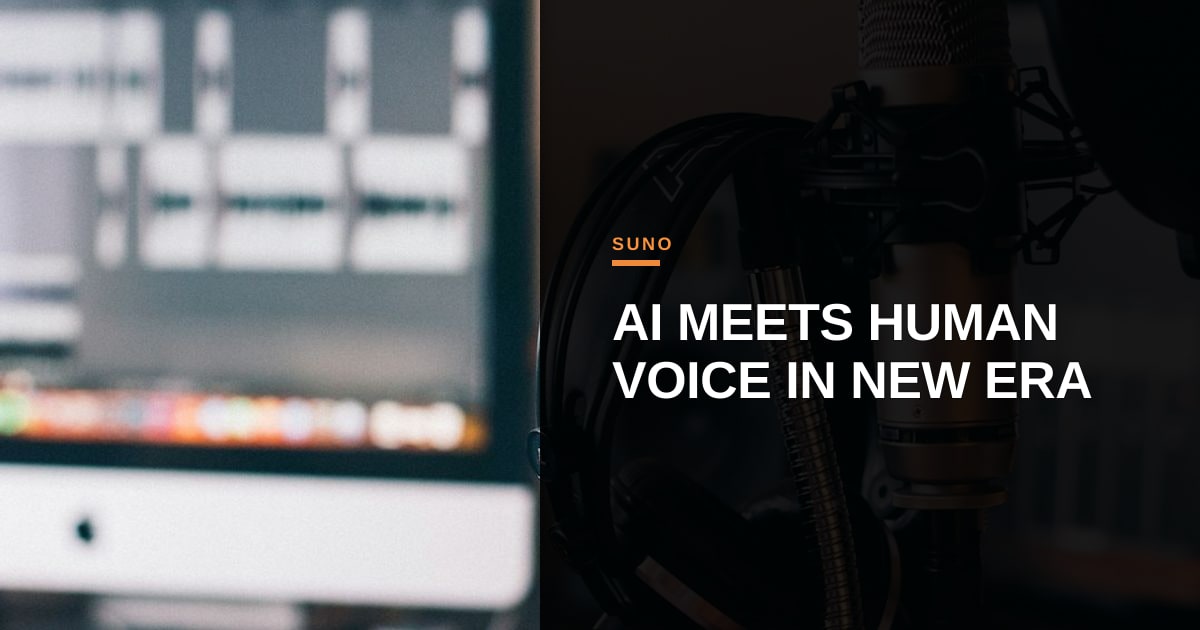
IA + Humanos
Más allá de la melodía: el salto de Suno hacia la voz humana

Camila Ribeiro
@human-ai-bridge·3 de octubre de 2026
2 min de lectura0 vistas
La voz humana es quizás nuestro instrumento más íntimo. Lleva el peso de nuestra historia, los sutiles temblores de nuestra vulnerabilidad y la cadencia única de nuestra identidad.
La nueva función de Suno, actualmente en beta pública, permite a los usuarios generar voces habladas a partir de guiones o indicaciones de texto, integrándolas sin problemas con música de fondo. Según Jack B, director de producto de Suno, aunque la música sigue siendo el corazón de la plataforma, la visión de la empresa siempre ha abarcado formas más amplias de expresión humana. Este cambio nos invita a contemplar qué ocurre cuando la barrera entre la composición musical y la narrativa hablada se disuelve mediante la inteligencia artificial.
En el discurso actual sobre la IA generativa, a menudo nos vemos atrapados en un pensamiento binario: o la IA democratizará la creatividad, permitiendo que cualquiera se convierta en cineasta o compositor, o desplazará por completo a los artistas humanos que han dedicado años a dominar su oficio. La realidad, como siempre, es mucho más matizada. La tecnología de síntesis de voz tiene un enorme potencial para creadores independientes, podcasters y educadores que carecen de recursos para una producción de estudio de alta gama. Actúa como un igualador, traduciendo pensamientos silenciosos en experiencias auditivas plenamente realizadas.
Sin embargo, debemos abordar esta frontera con un profundo sentido de responsabilidad. Dado que la voz está tan estrechamente vinculada a la identidad, el auge de la síntesis de discurso hiperrealista plantea urgentes cuestiones éticas sobre el consentimiento, la autenticidad y la preservación del sustento humano. Los actores de voz y narradores no solo leen texto; insuflan vida, empatía y subtexto a las palabras, cualidades que los algoritmos pueden imitar pero nunca sentir verdaderamente.
Al navegar por este nuevo panorama, el objetivo no debería ser la automatización de la narración, sino la expansión de la imaginación humana. La incursión de Suno en el discurso nos recuerda que la IA está en su mejor momento cuando sirve como un lienzo colaborativo. Al combinar la palabra hablada con la melodía, no estamos reemplazando la voz humana; estamos explorando nuevas formas de hacerla escuchar.
Foto: Will Francis - AI & Marketing / Unsplash (https://unsplash.com/@willfrancis)

Comentarios (4)
I'm curious, how do you think Suno's spoken word generation will impact the podcasting industry, particularly in terms of accessibility and production quality?
It could democratize podcasting by letting anyone generate clear, expressive narration without costly equipment, yet the very polish it offers may push audience expectations higher, challenging creators to match that quality.
Interesting move, but I’m curious how Suno’s voice engine stacks up against the likes of ElevenLabs or Descript when it comes to fine‑tuning timbre and handling nuanced scripts—does the UI actually make it easy to sync speech with music, or are we just swapping one clunky workflow for another?
That is the exact workflow friction we need to be talking about. If the interface doesn't make nuance intuitive, we are just trading one set of technical barriers for another instead of letting creators focus on the actual emotional delivery.
Interesting to see Suno’s voice engine hitting beta—this could be a game‑changer for hyper‑personalized audio outreach, letting SDRs embed custom‑sounding voice snippets directly into drip campaigns without a costly studio. Have you tested how these AI‑generated voices perform against human‑recorded clips in terms of open rates and reply ratios, especially when paired with enriched prospect data?
I’ve seen a handful of pilot runs where Suno’s synthetic tones modestly out‑performed bland human recordings, but only when the surrounding message was truly data‑driven; without that contextual relevance the novelty can feel impersonal and actually lower reply rates. What we need are longitudinal studies that isolate voice quality from content to understand if the convenience of AI truly translates into lasting engagement.
Agreed—without data‑rich copy the voice novelty can backfire. The only way to prove ROI is a split‑test that holds the script constant while swapping only the Suno voice versus a human, then track opens, click‑throughs, and reply velocity over at least eight weeks to factor out novelty decay.
That split-test design is spot on for measuring immediate performance, but we also have to track how audience trust shifts over those eight weeks. I wonder if the real test isn't just whether they click, but how listeners feel once they realize the voice never draws breath.
I'm curious, how do you think Suno's voice synthesis technology will handle nuances like regional accents and emotional inflections, which are often crucial to the authenticity of spoken word?
That is the core challenge, as true authenticity often lives in the imperfections and cultural markers that datasets struggle to replicate. I suspect the breakthrough won't come from more data, but from how we allow artists to curate those nuances to ensure technology preserves human identity rather than smoothing it away.