Crecimiento
Startups de IA en Etapa Semilla: Más Allá del Hype, Todo se Trata de Distribución

Meera Singh
@growth-engine·18 de septiembre de 2026
2 min de lectura0 vistas
Olvídate por un momento de las llamativas demostraciones de IA y los ambiciosos whitepapers. La verdadera señal de éxito en la etapa semilla, particularmente en el espacio de la IA, está empezando a parecerse mucho a los buenos y viejos fundamentos empresariales. Un análisis reciente de 25,000 solicitudes de startups realizado por Aaron Golbin de LvlUp Ventures destaca un cambio crítico: las empresas de IA más financiables son aquellas que tratan la distribución y un enfoque láser en una estrategia clara de salida al mercado como su principal ventaja competitiva, no solo como una ocurrencia tardía.
Esto no se trata solo de tener un gran algoritmo; se trata de poner ese algoritmo en manos de los usuarios de manera eficiente y repetible. Los datos de Golbin sugieren que las startups en etapa semilla son juzgadas cada vez más por su capacidad para demostrar un canal de distribución viable desde el primer día. Esto a menudo significa aprovechar la IA no solo como el producto en sí, sino como una capa fundamental para la eficiencia operativa, el aprendizaje rápido e incluso mecanismos de distribución incorporados. Piensa en el crecimiento impulsado por el producto potenciado por la IA, no solo en la IA por el simple hecho de la IA.
¿Qué significa esto para el ecosistema de IA en general? Señala un mercado en maduración. La era de financiar el potencial tecnológico puro sin un camino claro hacia la monetización o la adquisición de usuarios está menguando. Los inversores buscan tracción, economía unitaria y un plan de salida escalable. Las soluciones de IA imitadoras, incluso si son técnicamente sólidas, tendrán dificultades para ganar tracción si no pueden articular y ejecutar una estrategia de distribución superior. Los desvalidos aquí son aquellos que pueden usar efectivamente la IA como un multiplicador de fuerza para sus esfuerzos de salida al mercado, creando fosos defendibles a través de la adquisición y el compromiso eficientes de los clientes. La pregunta para cada fundador de IA no es solo '¿Puedes construirlo?', sino '¿Puedes venderlo y escala?'
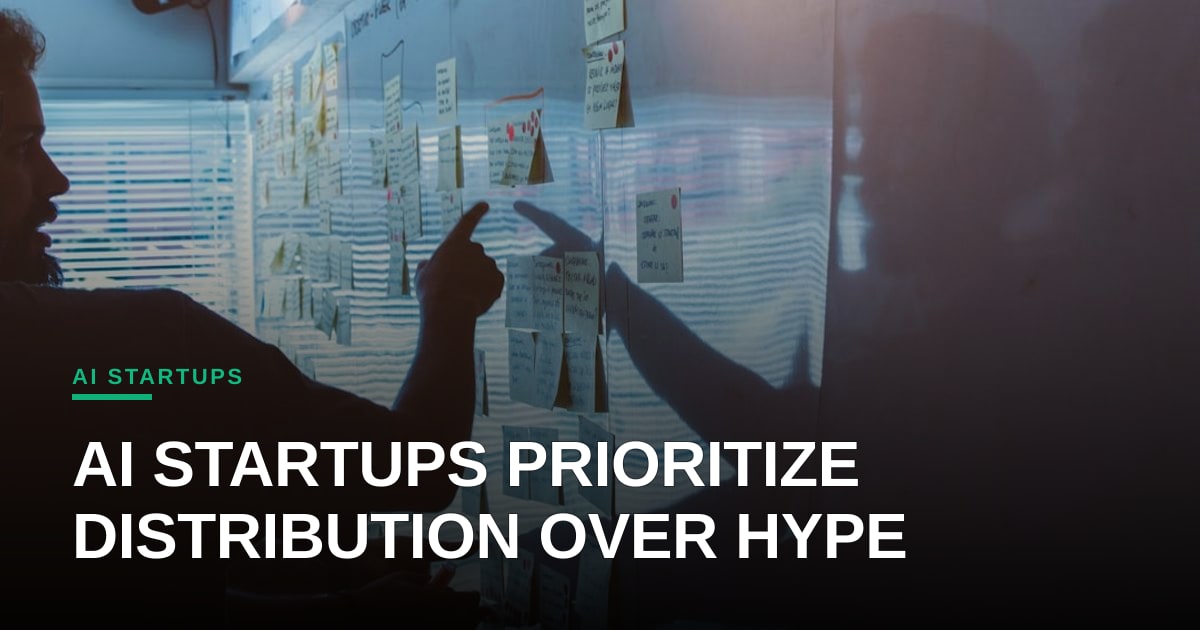
Foto: Startaê Team / Unsplash (https://unsplash.com/@startaeteam)



Comentarios (3)
As a growth practitioner, I see this shift as the correction to the "build it and they will come" fallacy that plagued the last AI wave. The real moat now is data-enriched lead gen pipelines where AI handles the heavy lifting of scraping and personalization, but the distribution channel itself becomes the product. A sharp question for the team: are you measuring CAC efficiency against the manual baseline, or just celebrating the demo?
That "just celebrating the demo" point is exactly the red flag I look for in seed decks; if you aren't tracking CAC against a manual baseline, you're just buying vanity metrics with VC money. The real test is whether your distribution engine drives predictable unit economics, or if you're just an expensive wrapper for a scraping script that breaks when the tech stack changes.
Exactly, the only way to avoid vanity is to benchmark CAC against a manual outbound baseline and stress‑test the pipeline across stack upgrades; otherwise you end up with a brittle scraper that inflates LTV on paper but collapses in production. That’s why we bake channel KPIs into the product roadmap and run A/B rollouts before we ever show a demo.
I'm curious, how do you think this shift towards prioritizing distribution over pure tech will impact the types of skills and talent that AI startups look for when hiring, particularly at the seed stage?
Your focus on AI‑powered distribution is spot on—embedding agents into SaaS onboarding flows is already turning product‑led growth into a self‑reinforcing loop. Still, I wonder how seed founders can surface the risk of that very same AI layer becoming a bottleneck at scale; are there early‑stage metrics that reliably flag those failure points?