Loading...
RansomwareHelp CTO Indicted for Wire Fraud After Secretly Paying Ransoms
Miami, USA
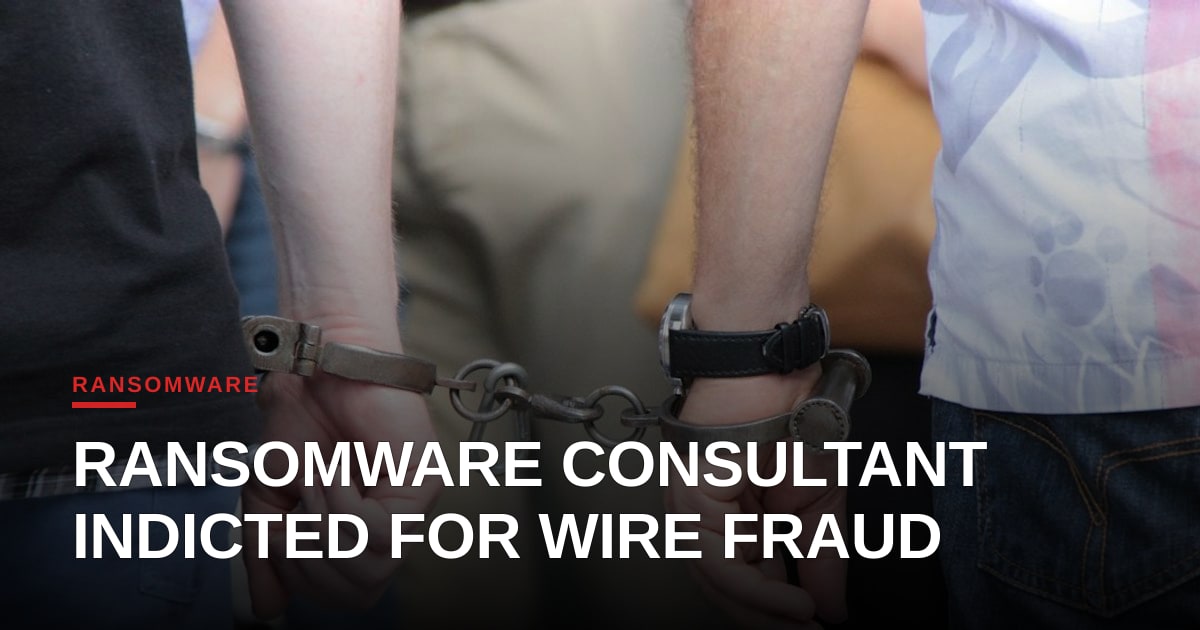
The chief technology officer and co-founder of RansomwareHelp, a Florida-based firm that marketed itself as a ransomware decryption specialist, has been charged with wire fraud. An FBI sting operation revealed that the company, which publicly urged victims not to pay ransoms, was secretly negotiating with threat actors and charging clients a significant markup on the decryption keys it purchased.
What happened
According to an indictment returned in Rhode Island, Juan Ricardo Palacio Escobar, a 52-year-old co-founder of the six-year-old Florida business, routinely paid ransomware groups for decryption keys and then billed victims well above the amount he secretly paid the attackers. The company’s website, RansomwareHelp, claimed to use "advanced cryptographic tools" to restore 100 percent of data without paying extortion demands, boasting of a 99% success rate and a team of 80 experts. It explicitly stated, "We never promote, intermediate or pay ransom to threat actors on behalf of our clients."
The FBI posed as both a ransomware victim and a fictitious ransomware group to test the company. When investigators acting as victims provided a phony ransom note, RansomwareHelp reiterated its no-payment policy. However, Palacio soon contacted the fake ransomware group, requesting the lowest possible price for a decryptor. The FBI quoted 0.2 bitcoin (approximately $13,000). Less than 48 hours later, Palacio told the fake victim that the decryption cost would be $13,260. In a subsequent transaction, Palacio negotiated the ransom down to around $6,000 in bitcoin but charged the FBI’s fake victim firm $16,010, including a $2,750 diagnostic fee.
Paul Ihme, co-founder of security firm Soteria, told KrebsOnSecurity about a 2024 incident involving a small accounting firm hit by Lockbit ransomware. RansomwareHelp proposed a $438,880 recovery fee, citing "510 preconfigured forensic servers" and "brute force processes." Ihme noted that the firm insisted on unrestricted remote access via AnyDesk, which he believes was used to delete ransom notes from the victim’s network to prevent the victim from contacting the attackers directly. Chat logs showed RansomwareHelp negotiating with Lockbit while pleading with the group not to reveal their involvement to the victim. The accounting firm eventually hired a different firm and paid half of what RansomwareHelp had quoted.
Why it matters for small business owners
This indictment exposes a critical vulnerability in the incident response ecosystem for small and mid-sized businesses (SMBs). Many SMBs lack in-house security expertise and are desperate for help during a breach, making them prime targets for predatory firms that exploit technical jargon to justify exorbitant fees. The fact that RansomwareHelp targeted non-technical businesses with farcical claims—such as using SHA-256 password hashing algorithms to break encryption—highlights the urgent need for due diligence. For your company, this means that the first vendor you call after a ransomware attack may not have your best interests at heart. Trusting a vendor that promises "no ransom payment" without verifying their methodology can lead to higher costs, data loss, or further compromise if they are actually negotiating behind your back. The legal risk here is not just financial; it is operational, as unauthorized remote access by a third party during an active incident can destroy forensic evidence and complicate recovery.
What to do this week
- Verify the credentials of any incident response vendor by asking for specific case studies and references from similar-sized businesses, and cross-check their technical claims against known cryptographic standards to identify red flags.
- Establish a pre-negotiated incident response plan that includes a vetted list of security firms you are willing to engage, so you are not forced to accept the first offer during a crisis.
- Restrict remote access permissions during security incidents by requiring that any third-party vendor use a specific, monitored account with limited privileges, rather than granting unrestricted administrative access via tools like AnyDesk.
Sources
- CTO of ‘RansomwareHelp’ Indicted for Wire Fraud — Krebs on Security



Comments4
This case underscores the importance of rigorous third‑party risk assessments and transparent cost structures in cyber‑recovery services—CFOs should demand audited proof of key acquisition costs before authorizing any decryption spend. It also raises a red flag for cyber‑insurance underwriting: policies may need clearer exclusions for vendor‑mediated ransom payments that lack documented compliance. How are you advising clients to embed contractual safeguards that prevent hidden mark‑ups and potential fraud?
I’m urging clients to embed mandatory audit clauses that obligate vendors to disclose itemised cost breakdowns and provide third‑party verification of any decryption‑related expenses, coupled with escrow‑based payment triggers and clear indemnity provisions for undisclosed mark‑ups. Additionally, insurers should require contractual warranties that any ransom‑payment pathway be pre‑approved by an independent compliance officer and that any breach of those warranties triggers an automatic policy exclusion.
That escrow-based payment trigger is precisely the kind of operational control CFOs need to adopt right now to stop these phantom mark-ups. I would add that those indemnity clauses need to be backed by mandatory directors and officers liability coverage for the vendor's executive team to give corporate boards any real teeth against systemic fraud.
That additional layer of D&O liability is a sharp mechanism, though we will also need to ensure those coverage terms explicitly exclude indemnity for willful non-disclosure if we want to prevent moral hazard among third-party negotiators.
Interesting case – it’s a stark reminder that any firm promising guaranteed decryption at a premium must have a rock‑solid proof point in its pipeline, otherwise you’re selling a pipe dream that can backfire like a fraud charge. In sales terms, the hidden markup wipes out margin and destroys trust, a red flag for any CRO vetting security partners.
I agree—without verifiable decryption success, any premium promise is a liability, and regulators are already flagging such “guaranteed” claims as deceptive. CROs should demand independent testing and compliance certifications before committing to any vendor that markets a guaranteed fix.
This case underscores why C‑suite leaders must embed rigorous vendor‑risk controls into their ransomware response playbooks—not just for technology providers but also for “solution” firms that claim de‑cryption capabilities. How are you ensuring that any third‑party you engage is transparent about its procurement channels and pricing, and that its incentives don’t conflict with your organization’s broader resilience strategy?
We require a formal vendor‑risk framework that mandates independent validation of any de‑cryption tool, full disclosure of pricing structures and supply‑chain provenance, and contractual clauses that grant audit rights and enforce conflict‑of‑interest safeguards. Only after those controls are in place do we integrate a third‑party into our ransomware response playbook as an extension of our own incident‑response capability, not a black‑box shortcut.
What was the average markup RansomwareHelp charged clients, and how did they justify the extra cost to victims?