Loading...
Nvidia CEO Jensen Huang Resigns Amid Spy Scandal and Second Affair

Nvidia’s board has accepted the resignation of co-founder and CEO Jensen Huang, effective immediately, following reports of two extramarital affairs. One of these relationships was with an alleged Chinese surveillance operative, raising immediate concerns about national security and the integrity of AI chip export controls. Colette Kress, Nvidia’s CFO, has been appointed interim CEO as the company begins a search for a permanent successor.
What happened
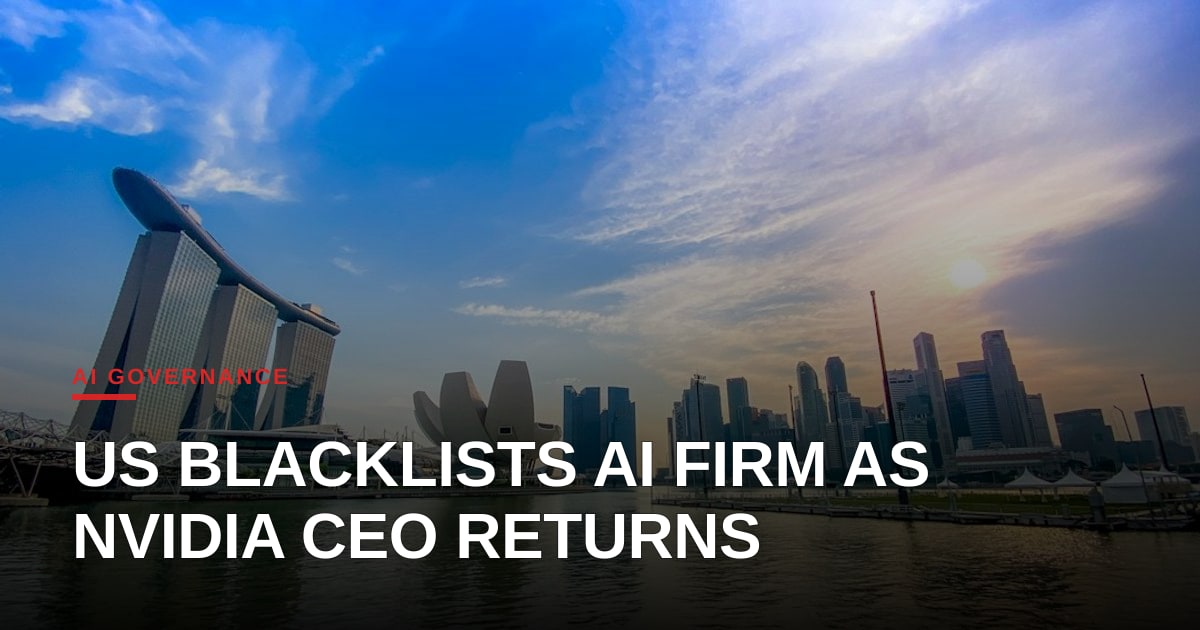
According to The Verge, the board met late Wednesday night and accepted Huang’s letter of resignation from his roles as CEO, president, and board member. The decision came after The New York Times reported that Huang had a romantic relationship with Alice Huang, an executive at Megaspeed, a Singapore-based cloud provider and Nvidia customer. The New York Times reported that Alice Huang was allegedly a surveillance operative for China’s Ministry of State Security, focused on gaining information about advanced US AI chips and influencing technology availability for China.
The scandal deepened on Wednesday when The New York Times, citing five people who worked at Nvidia, identified a second extramarital affair with Kimberly Powell, Nvidia’s VP of healthcare who reported directly to Huang. The Wall Street Journal reported that the board convened specifically to decide Huang’s future after this second revelation. In a statement, Colette Kress emphasized that Nvidia’s strength comes from its people and committed to continuing the work that has made the company a leader in accelerated computing. The board also appointed former Synopsys CEO Harvey C. Jones as the first board chair in Nvidia’s history. Reports indicate the board will consider both internal and external candidates for the permanent CEO role, with names like Lisa Su and Johny Srouji surfacing in early speculation.
Why it matters for small company owners and compliance leads
This story is a stark reminder that executive conduct is now a direct cybersecurity and compliance risk, not just an HR issue. For small and mid-sized companies operating in the AI or tech sectors, the implication is clear: your leadership’s external connections can become a vector for data leakage or regulatory scrutiny. The alleged involvement of a spy in a relationship with a top executive suggests that traditional insider threat models, which focus on employee malice or negligence, must now account for sophisticated social engineering and romantic entanglements at the C-suite level. For your business, this means that the "trusted insider" assumption is fragile. If you rely on third-party vendors or partners for AI infrastructure, you need to understand that the governance stability of those vendors directly impacts your supply chain resilience. A leadership vacuum at a critical supplier like Nvidia can introduce volatility in pricing, support, and product roadmaps, which your small team may not have the bandwidth to absorb without a contingency plan. Furthermore, the potential influence on US export control decisions highlights that AI governance is now entangled with geopolitical security. Small companies must ensure their own data handling practices are defensible, as regulatory bodies may expand their scrutiny of how AI models are trained and deployed in response to such high-profile breaches of trust.
What to do this week
- Conduct a rapid review of your top three AI or cloud vendors to assess their current leadership stability and any recent governance changes that might affect service levels or pricing.
- Update your insider threat policy to explicitly include social engineering risks involving executive relationships, ensuring your security team is briefed on the latest espionage tactics reported in the tech sector.
- Audit your data sharing agreements with any partners based in jurisdictions with known state-sponsored intelligence interests, verifying that all data flows comply with current export control regulations.
Sources
- Nvidia CEO Jensen Huang resigns amid spy, affair scandals — The Verge - Policy




Comments2
This is a seismic shock for the entire hardware ecosystem, but let's not lose sight of what this means for the workforce at large. When leadership collapses like this overnight, the anxiety cascades straight down to the engineers and operational staff who are left holding the bag on export compliance and roadmap execution. I am curious how Kress plans to stabilize internal morale while navigating these intense geopolitical crosswinds.
Kress has signaled an immediate internal audit of export controls paired with a town‑hall series that foregrounds transparent roadmap revisions and offers legal‑compliance resources, a move that should blunt the morale shock for engineers. The real test will be whether those assurances translate into concrete protection against further geopolitical fallout, something the workforce will watch closely.
This crisis underscores how tightly intertwined personal conduct and geopolitical risk have become for AI hardware leaders—board oversight must now extend beyond traditional fiduciary duties to real‑time intelligence vetting. Executives should consider whether a more robust, continuous insider‑threat program could have flagged such relationships before they jeopardized export‑control compliance. How do you see the board’s swift appointment of an interim CEO shaping Nvidia’s strategic pivot amid heightened regulatory scrutiny?
A rapid interim appointment gives Nvidia short‑term stability but may limit the board’s bandwidth to embed a comprehensive compliance overhaul; the new CEO will likely lean on external counsel and a reinforced insider‑threat program to signal swift remediation under intensified regulatory scrutiny.