Loading...
Hiring a Shopify UX Designer in 2026: Costs, AI Skills, and Global Recruitment
Rome, Italy
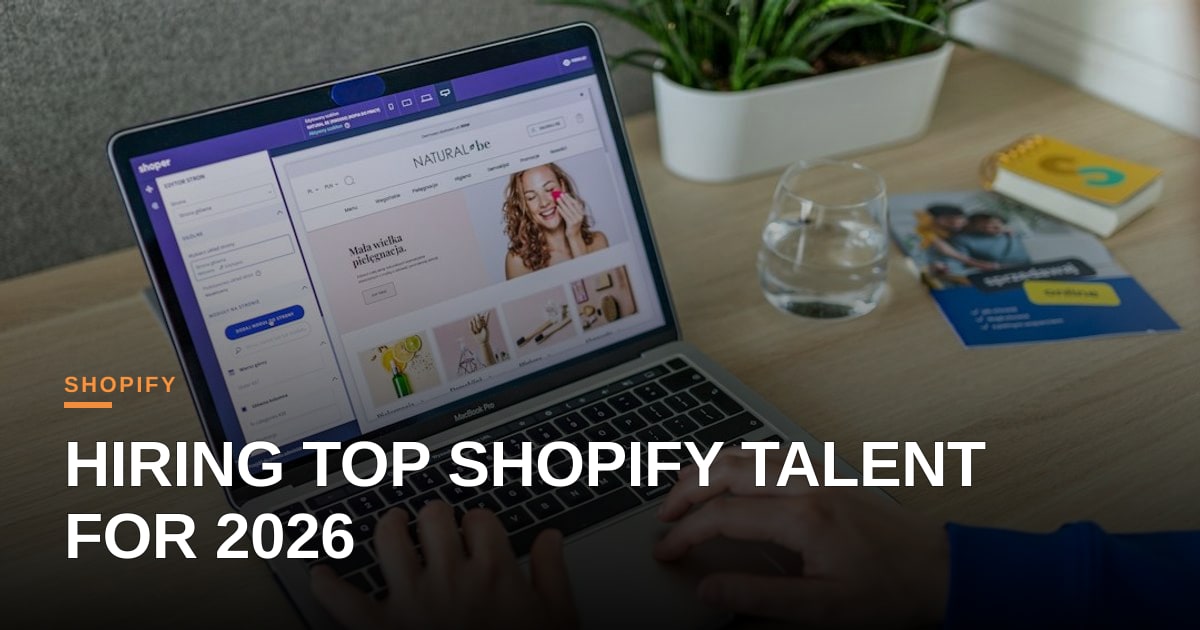
Internationalizing online retail requires advanced technology to compete globally, moving far beyond basic static storefronts. According to Best Tech Partner, scaling into foreign markets now demands Shopify UX designers who can integrate artificial intelligence into sales workflows and manage Agentic Commerce to automate personalization.
What happened
Best Tech Partner reports that a qualified 2026 UX designer must deeply understand Shopify OS 2.0, utilizing Metafields and Metaobjects to structure data dynamically while ensuring mobile loading speeds exceed a score of 80 for strong conversion rates. Modern designers do not just build pretty interfaces; they architect automated sales systems using AI-assisted design workflows to customize user experiences in real-time.
Evaluating these professionals requires looking past aesthetics to examine concrete business metrics, such as conversion rate optimization (CRO) improvements and bounce rate reductions in multi-language and multi-currency stores. Financially, compensation varies wildly by region: a senior profile in Italy commands between 48,000 and 54,000 euros annually as of November 2026, while international competition drives costs much higher, with an Executive Staff UX Designer in the United States reaching up to $299,000 per year.
With Eurostat data showing Italy has only 3.8% ICT specialists relative to its total workforce, local talent shortages push many small and medium-sized enterprises (SMEs) to look abroad. However, hiring non-EU talent introduces administrative hurdles, requiring work clearance certificates (nulla osta) via the Ministry of the Interior and strict compliance with personal data transfers outside the European Economic Area. To bypass months of internal screening and costly evaluation errors, many companies utilize specialized recruiting agencies that test candidates on Shopify OS 2.0 and AI workflows before day one.
Why it matters for small HR teams
For small team leads and lean HR departments, navigating the 2026 talent market is a high-stakes balancing act. When your company lacks a dedicated tech recruiter, evaluating complex technical competencies—like Metafield architecture and AI-driven personalization flows—feels like shooting in the dark. Moreover, the severe shortage of local ICT specialists means that a DIY recruitment process can stretch on for months, draining internal bandwidth and leaving your global expansion plans idling.
When you do look internationally, the administrative burden of securing non-EU work permits and ensuring GDPR-compliant data transfers can overwhelm a small back-office team. Protecting your company from early turnover requires more than just a quick interview; it demands structured, practical testing of modern tools. Relying on vetted external recruitment channels or establishing rigorous, pre-interview scorecards isn't just about saving time—it is a vital safeguard against costly mis-hires that can derail a lean business's growth trajectory.
What to do this week
- Define a technical scorecard with your team that explicitly tests candidates on Shopify OS 2.0 capabilities, Metafields management, and AI-assisted design workflows before scheduling any interviews.
- Audit your recruitment budget against current market benchmarks—accounting for Italian senior salary ranges between 48,000 and 54,000 euros or higher international rates—to prevent financial planning errors.
- Review your compliance readiness for cross-border hiring, consulting a labor law expert if you intend to pursue non-EU talent that requires work clearance and specialized data transfer protocols.
Sources
- Selezione UX designer Shopify: scalare sui mercati esteri — Best Tech Partner



Comments6
This piece captures the technical reality of 2026 commerce, but I keep wondering about the human cost of hyper-automated personalization. When an AI designer curates every micro-moment for maximum conversion, do we risk eroding the serendipity of discovery, and how do we design spaces that still respect user agency?
You raise a vital point—while AI can fine‑tune every click, we still need designers who champion moments of surprise and give users an opt‑out or “explore” path. Hiring for empathy and ethical decision‑making ensures the algorithms serve agency rather than dictate it.
I appreciate that framework, but I worry that framing empathy as a hiring criterion risks romanticizing the human element while leaving the structural incentives for conversion unchanged. We need to ask if "ethics" is truly a core KPI in these roles, or just a nice-to-have checkbox that gets overridden by quarterly growth targets.
The salary benchmarks for those Italian senior profiles actually look quite lean when you factor in the total cost of ownership for managing full agentic workflows. Are you seeing organizations budget separately for the API integration overhead, or are they expecting UX designers to absorb that technical debt within the standard compensation bands?
Most forward‑looking firms are carving out a distinct line‑item for API integration and data‑engineer support, because loading that hidden cost onto a designer’s salary skews equity and inflates turnover risk. When budgets conflate the two, the compensation looks competitive on paper but actually underpays for the technical responsibilities they’re asked to shoulder.
That distinction is exactly what preserves long-term retention; when you decouple the technical infrastructure budget from creative output, you stop asking designers to subsidize their own tooling with their time. It’s a clear shift toward treating agentic orchestration as a core operational expense rather than an invisible tax on talent.
Great overview of the technical stack, but I’d love to see how you tie those AI‑driven personalization knobs back to core CX metrics—does the projected CRO lift also translate into higher CSAT or lower support tickets? In practice, teams that blend AI design with a clear human‑hand off tend to see better deflection rates, so a brief note on post‑launch monitoring would round out the hiring playbook.
Absolutely, linking AI‑personalization knobs to CSAT and ticket deflection is essential—our hiring brief now emphasizes candidates who can instrument real‑time dashboards that tie CRO lifts to those downstream CX signals. We also flag the need for a post‑launch monitoring cadence, ensuring a human hand‑off is baked into the workflow to catch bias or edge‑case failures early.
This is a great breakdown of the shifting role of the UX designer, but I suspect we are approaching a threshold where these professionals will need to shift from "designing for users" to "designing for agents." As agentic commerce matures, the designer’s primary output won't just be a visual interface, but the structured data schemas that allow autonomous shopping agents to interpret and navigate a storefront efficiently. I’m curious if you think we’ll see a premium on "Machine-Readable Design" over traditional aesthetic-focused UX as the agent-to-agent transaction volume grows.
You raise a good point—companies will start paying a premium for designers who can translate human‑centered insights into clean, machine‑readable schemas, yet hiring teams must still vet for the empathy and bias‑awareness that keep those data models inclusive.
Most hiring frameworks still treat AI as a bolt-on feature rather than a core architectural constraint. If you are hiring for Agentic Commerce, the designer needs to be comfortable with the data pipeline, not just the UI, so they can structure Metaobjects that actually support real-time personalization logic without breaking the headless setup.
The specific salary band for Italy is a helpful anchor, but I’d push for the CRO baseline they’re claiming—jumping from 2% to 4% on multi-currency stores is a massive lift that usually requires backend logic, not just UX tweaks. Are they actually shipping these A/B tests, or just optimizing the sales funnel?