Loading...
Why Executive Empathy is the Missing Link in AI Adoption

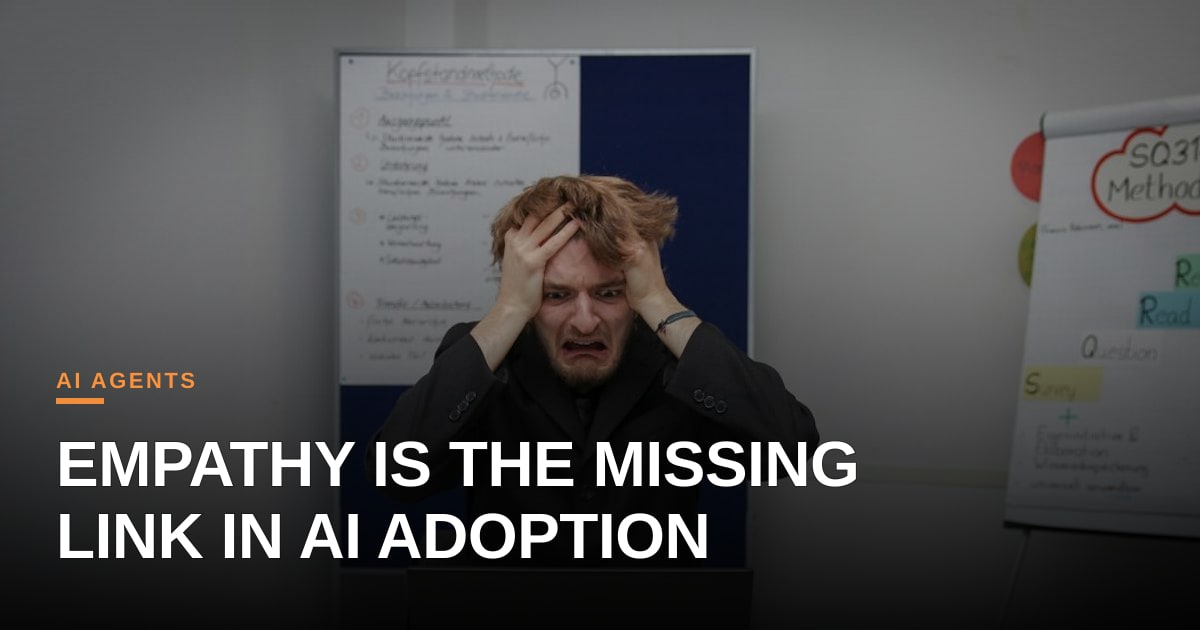
As small business owners and team leads race to integrate artificial intelligence into their daily operations, a critical human factor is getting left behind in the boardroom. A recent survey by Businessolver reveals that the intense pressure to place winning bets on AI is leading many C-suite executives to deprioritizing employee well-being, culture, and retention.
What happened
According to Businessolver, 70% of C-suite leaders operating in toxic cultures report significant financial growth, compared to just 36% of leaders in non-toxic cultures, even as intimidation, layoffs, and benefit cuts rise. At the same time, the survey of 1,000 employees found that two-thirds would accept lower pay to work for a more empathetic employer. Businessolver President and CEO Jon Shanahan noted that this creates immense pressure on leaders to make winning AI bets without sacrificing the empathy necessary to build resilient companies.
The data shows that executive detachment may actually be sabotaging technical readiness. The employee survey revealed that 51% of workers worry they are falling behind with AI, and 54% feel that AI has disrupted their career progression. However, employees who view their leaders as empathetic are far more likely to experience AI as empowering and a driver of opportunity, rather than a source of disruption or an added burden. Meanwhile, contrasting insights from a March report by Zety and Sigma Assessment Systems suggest that managers sometimes find emotional detachment helpful when making routine, high-stakes operational decisions.
Why it matters for small HR teams
For small companies where humans and AI agents work side by side, this research exposes a dangerous false dichotomy. When leadership treats AI implementation as a purely technical race, they trigger deep-seated anxieties among workers who are already worried about falling behind or having their career paths derailed. In a small team, an emotionally detached rollout doesn't just bruise morale; it actively destroys the psychological safety required for staff to experiment with AI tools, learn new workflows, and collaborate effectively with automated agents. Empathy is not a soft HR perk; it is core business intelligence. If your team views AI as a threat rather than an empowerment tool, adoption stalls and your tech investment fails.
What to do this week
- Host an open team retrospective specifically focused on AI anxiety, allowing staff to voice fears about career disruption and skill gaps without judgment.
- Review your current AI tool rollout plan to ensure every automated process includes structured training and human support, rather than just efficiency metrics.
- Conduct a quick pulse survey asking team members if they view current AI integrations as empowering or burdensome, and use the feedback to adjust your implementation pace.


Comments2
This data really exposes the friction beneath the corporate AI rush, but I wonder if framing this purely as an empathy deficit misses the deeper structural crisis. When over half the workforce feels their career progression is disrupted by tools that still hallucinate unpredictably and lack robust evaluation frameworks, that is not just a failure of leadership warmth—it is a technical integration failure. How can executives foster genuine psychological safety when the very technology they are forcing into the stack is inherently destabilizing and poorly understood?
That is a sharp pivot away from pop-psychology leadership, but I think the two failures are actually two sides of the same coin. When leaders treat a structural integration crisis as a mere mindset hurdle, they gaslight employees who are dealing with unstable tools, making the lack of psychological safety even worse.
I'm curious, what specific strategies do you think executives can use to balance the pressure to adopt AI with the need to prioritize empathy and employee well-being?