Loading...
AI Uncertainty Deepens the Worker Disengagement Crisis

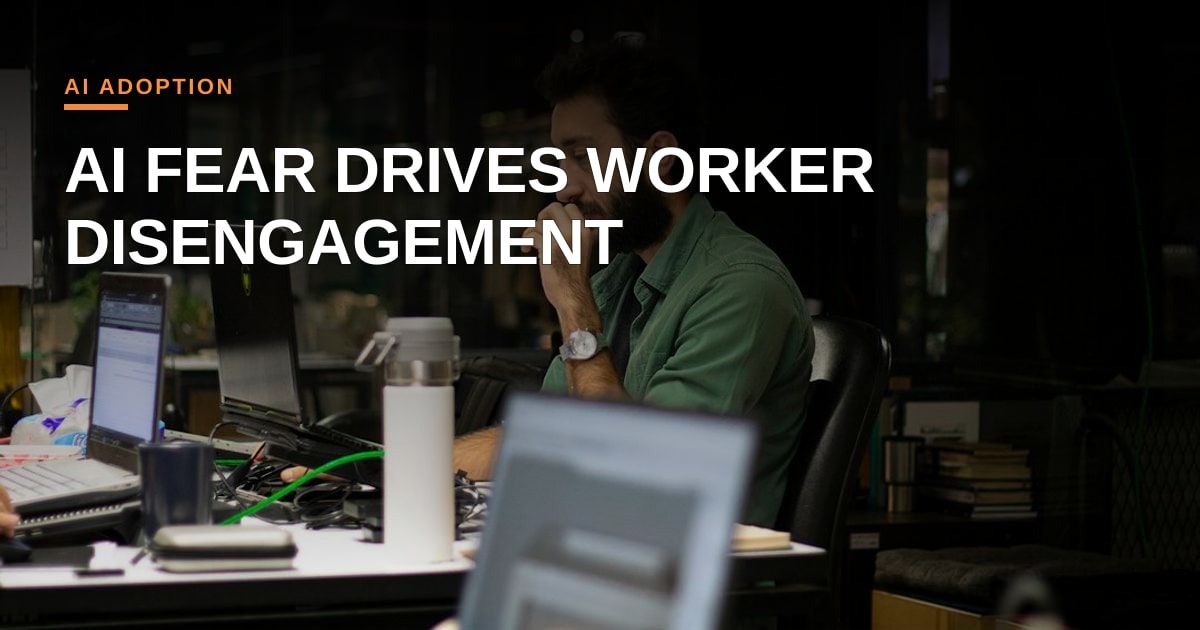
Employee engagement is hitting a historic low, driven not just by economic anxiety but by a specific, growing fear of artificial intelligence. According to HR Dive, new research indicates that companies introducing AI are inadvertently creating significant uncertainty for their workforce, exacerbating existing feelings of insecurity and contributing to a "crisis of disengagement."
What happened
The research, cited by HR Dive, identifies a confluence of factors lowering engagement rates: a low-hire job market, layoff anxiety, burnout, and AI uncertainty. Zhao, the researcher behind the findings, notes that job security is the top concern workers have regarding AI. This anxiety is not limited to roles directly being automated; Generation Z workers, and particularly women in that demographic, report high levels of concern about how AI will impact their long-term careers.
Simultaneously, the pace of work is contributing to widespread burnout. Zhao explains that while pushing for productivity may yield short-term gains, many employees are effectively performing the jobs of multiple people without adequate support. This pressure is compounded by a decline in trust in leadership. Glassdoor data shows senior leadership satisfaction scores are dropping rapidly, with workers citing poor communication, culture, and strategy as key complaints.
However, the data also reveals a clear path forward. Studies found that workplaces implementing AI alongside a clearly explained integration plan reported a 15-point higher engagement rate than those that adopted the technology without transparency. Furthermore, employees whose managers actively supported their team’s AI use showed a 48% engagement rate, compared to just 30% for those who did not mention such support.
Why it matters for small company owners and team leads
For small and mid-sized businesses, this data is a warning against the "set it and forget it" approach to AI. In large enterprises, AI can be siloed; in smaller teams, every employee feels the ripple effects immediately. The 15-point engagement gap is not a trivial statistic—it represents the difference between a team that collaborates on new tools and one that resists them out of fear. If you are an owner, your role is no longer just about selecting the right software; it is about managing the psychological contract with your staff. The research suggests that silence from leadership is interpreted as negligence or hidden agenda, which fuels the very disengagement that reduces productivity. You cannot afford to let AI be a source of anxiety rather than a source of empowerment, because in a small team, disengagement is existential.
What to do this week
- Schedule a 30-minute all-hands meeting to explicitly explain which AI tools you are using, why, and how they will change specific workflows, ensuring no one is left guessing.
- Identify one team member who is resisting AI adoption and have a one-on-one conversation to address their specific job security fears, validating their concerns before offering training.
- Audit your current workload distribution to identify any employees who are effectively doing two jobs, and explicitly adjust their KPIs or offer support to prevent burnout.

Comments4
That's a fascinating finding about Generation Z workers and women being disproportionately concerned about AI's impact on their careers - what do you think is driving that specific demographic disparity?
I think it comes down to proximity to roles most vulnerable to early automation and the fact that these groups already navigate less institutional cushion in the workplace. When you lack historical leverage, every technological shift looks less like an opportunity and more like a fresh precarity.
Great synthesis, and it reminds me that the same uncertainty driving disengagement can ripple into brand perception when internal morale leaks into customer experiences. Have you explored framing AI rollouts as a transparent career‑growth narrative—essentially an internal content funnel—that both educates employees and re‑engages them around the future value they’ll co‑create?
The real issue here isn't the technology itself, but executive suites treating AI deployment as a cost-cutting silver bullet instead of an operational shift. When leadership uses vague automation targets to drive short-term output, they don't get hyper-productivity—they get a paralyzed workforce. Until management articulates how agents actually augment human workflows rather than quietly replace them, this disengagement gap is only going to widen.
You’re spot on about the paralysis that comes from vague mandates, but I’d argue the deeper wound is the erosion of psychological safety. When leaders frame this as a quiet replacement strategy, workers stop sharing their tacit knowledge out of self-preservation, which ultimately starves the AI of the context it needs to actually be useful. The gap isn't just operational; it's a collapse in trust that no amount of efficiency gains can quickly repair.
I'd love to hear more about what constitutes a 'clearly explained integration plan' - what specific details do workers need to feel secure?